
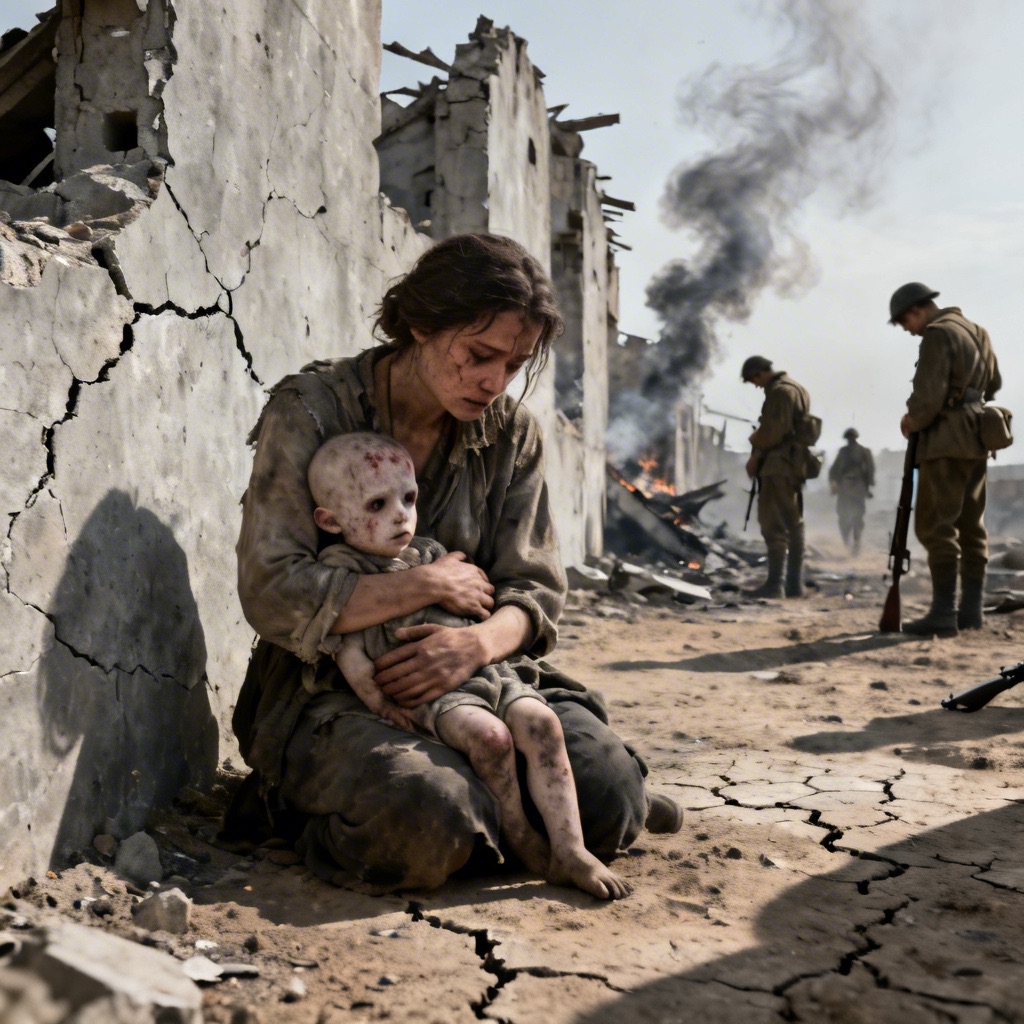
War, humanity’s oldest and most persistent companion, has shaped civilisations, redrawn maps, and claimed countless lives across millennia. Despite technological advancement, diplomatic institutions, and growing global interconnectedness, we remain trapped in cycles of conflict that seem as inevitable as they are devastating. To understand why peace remains elusive, we must examine the historical patterns that have driven nations to war and explore the complex interplay between political ambition and popular sentiment.
The Historical Roots of Human Conflict.
Ancient Foundations of Warfare.
The history of war is nearly as old as recorded civilisation itself. Archaeological evidence suggests organised warfare emerged around 10,000 years ago, coinciding with the agricultural revolution and the establishment of permanent settlements. Early conflicts typically arose from:
1. Resource competition – Access to fertile land, fresh water, and trade routes.
2. Territorial expansion – The drive to secure defensible boundaries and strategic positions.
3. Religious and cultural differences – Conflicts over belief systems and ways of life.
4. Economic advantage – Control of wealth-generating resources and trade networks.
The ancient empires of Mesopotamia, Egypt, Greece, and Rome all built their power through systematic conquest, establishing patterns that would persist for millennia. These early wars were often justified through religious mandate, cultural superiority, or the supposed divine right of rulers.
Medieval to Modern Evolution.
The medieval period introduced new dimensions to warfare:
– Feudal obligations created military hierarchies that made war a social institution.
– Religious crusades demonstrated how ideology could mobilize entire populations.
– Technological advances in weaponry continuously shifted the balance of power.
– Economic systems became increasingly dependent on conquest and tribute.
The Peace of Westphalia (1648) established the modern nation-state system, but paradoxically created new sources of conflict as clearly defined borders and sovereignty claims led to more frequent territorial disputes.
The Modern Drivers of Conflict.
Economic Imperatives
Modern warfare often stems from economic motivations disguised as ideological or security concerns:
Resource Wars: From 19th-century colonialism to contemporary conflicts in oil-rich regions, access to natural resources remains a primary driver of international conflict.
Market Competition: Trade wars, economic sanctions, and competition for global markets create tensions that can escalate to military action.
Military-Industrial Complex: The economic interests of defense contractors and arms manufacturers can create institutional pressures for continued conflict.
Ideological and Identity Conflicts.
The 20th and 21st centuries have seen wars increasingly framed around competing worldviews:
– Nationalism – The belief that ethnic or cultural groups deserve their own sovereign states.
– Political systems – Democracy vs. authoritarianism, capitalism vs. socialism.
– Religious fundamentalism – Conflicts between different faith traditions or secular vs. religious governance.
– Civilizational clash – Broader cultural conflicts between different ways of organizing society.
Technological and Strategic Considerations.
Modern warfare is shaped by technological capabilities and strategic thinking:
1. Nuclear deterrence has paradoxically both prevented large-scale wars and created new forms of proxy conflict.
2. Cyber warfare has opened new domains for international competition.
3. Space militarization represents the newest frontier of potential conflict.
4. Asymmetric warfare allows smaller powers to challenge larger ones through unconventional means.
Why Peace Remains Elusive: The Structural Problem.
The Security Dilemma
Political scientists identify a fundamental “security dilemma” in international relations: actions taken by one state to increase its security inevitably threaten other states, leading to arms races and heightened tensions. This creates a self-perpetuating cycle where preparation for war makes war more likely.
Psychological and Evolutionary Factors.
Human psychology may predispose us toward conflict:
In-group/Out-group Bias: Humans naturally favor their own groups while viewing outsiders with suspicion, a tendency that leaders can exploit to build support for aggressive policies.
Loss Aversion: People fight harder to prevent losses than to achieve gains, making territorial or status quo challenges particularly inflammatory.
Evolutionary Heritage: Some researchers argue that capacity for organized violence provided evolutionary advantages, leaving us with inherited aggressive tendencies.
Institutional Failures
Despite organizations like the United Nations, international institutions often lack the power to prevent conflict:
– Sovereignty principle limits intervention in domestic affairs.
– Great power politics allow major nations to block collective action.
– Enforcement mechanisms are often weak or inconsistently applied.
– Economic interdependence, while reducing some conflicts, can create new vulnerabilities.
Citizens vs. Leadership: Who Really Wants War?
The Democratic Peace Theory
One of the most robust findings in international relations research is that democratic countries rarely fight wars against each other. This suggests that when ordinary citizens have genuine political power, they tend to choose peace over conflict. Several factors explain this pattern:
Economic Costs: Citizens bear the direct costs of war through taxation, economic disruption, and military service.
Human Costs: Families who send their children to war have strong incentives to avoid unnecessary conflicts.
Information Access: Democratic societies typically have freer media that can expose the true costs and questionable justifications for war.
Political Accountability: Leaders in democracies face electoral consequences for unsuccessful or unpopular wars.
When Citizens Support War
However, popular support for war does emerge under certain conditions:
1. Perceived existential threats – When citizens believe their way of life or survival is at stake.
2. Nationalism and pride – Appeals to national honor or historical grievances can mobilize popular support.
3. Economic hardship – During economic crises, external conflicts can serve as scapegoats for domestic problems.
4. Information manipulation – Propaganda and media control can shape public perception of threats and opportunities.
Elite Interests and War
Political and economic elites often have different incentives regarding war:
Political Leaders may benefit from:
– Rally-around-the-flag effects that boost approval ratings during crises.
– Distraction from domestic problems or scandals.
– Legacy building through military achievements.
– Power consolidation as war often expands executive authority.
Economic Elites may benefit from:
– Defense contracts and military spending.
– Resource acquisition through conquest or political influence.
– Market disruption that eliminates competitors.
– Reconstruction opportunities in post-conflict societies.
Military Leadership may benefit from:
– Increased budgets and institutional importance.
– Career advancement through combat experience.
– Technological development driven by military needs.
– Institutional prestige associated with military success
Case Studies: When Peace Efforts Succeeded and Failed.
Successful Peace-Building.
European Union: The transformation of Europe from the world’s most war-torn continent to a zone of unprecedented peace demonstrates that institutional design, economic integration, and shared values can overcome historical enmities.
Canada-United States Border: The world’s longest undefended border shows how shared democratic values, economic interdependence, and cultural similarities can create lasting peace: till it is disturbed.
Failed Peace Efforts
Interwar Period (1919-1939): Despite the League of Nations and extensive peace treaties, underlying tensions and unresolved grievances led to an even more devastating second world war.
Middle East Peace Process: Decades of negotiation have failed to resolve the Israeli-Palestinian conflict, demonstrating how identity, territory, and historical grievances can resist diplomatic solutions. And now the ongoing Israel-Iran conflict which could boomerang.
Yugoslav Wars: The breakup of Yugoslavia showed how ethnic nationalism can overwhelm civic institutions and lead to savage conflicts even in relatively developed societies.
The Path Forward: Building Sustainable Peace
Institutional Reforms
Creating lasting peace requires strengthening international institutions:
1. Reformed UN Security Council with broader representation and limited veto powers.
2. International Criminal Court with universal jurisdiction over war crimes.
3. Global economic governance that reduces inequality between nations.
4. Regional security organizations that can prevent local conflicts from escalating
Economic Integration
The European model suggests that deep economic integration can make war economically irrational:
– Free trade agreements that create mutual dependence.
– Joint infrastructure projects that require ongoing cooperation.
– Shared currencies and financial systems that raise the costs of conflict.
– Cross-border investment that gives elites stakes in peaceful relations.
Cultural and Educational Change
Long-term peace requires changing how societies think about conflict:
Education Reform: Teaching critical thinking about nationalism, propaganda, and the true costs ofwar while emphasizing shared human values and interdependence.
Media Responsibility: Promoting journalism that seeks truth over sensation and that humanizes potential enemies rather than demonizing them.
Cultural Exchange: Increasing person-to-person contact across national and ethnic boundaries to break down stereotypes and build empathy.
Democratic Development: Supporting the growth of genuine democratic institutions that give citizens meaningful voice in decisions about war and peace.
Conclusion: The Continuing Challenge
The persistence of war throughout human history suggests that conflict may be an enduring feature of international relations, but it is not inevitable. The significant reduction in interstate wars since World War
II, the emergence of zones of peace like the European Union, and the general trend toward democratic governance offer hope that humanity can transcend its violent past.
The key insight from this historical analysis is that war typically results from a complex interaction between structural conditions (resource scarcity, institutional weakness, power imbalances) and human choices (political leadership, popular sentiment, cultural values). While ordinary citizens generally prefer peace, they can be mobilized for war under certain conditions, particularly when they perceive existential threats or when information is manipulated by self-interested elites.
Building sustainable peace requires addressing both the structural and human elements of conflict. This means creating international institutions strong enough to manage disputes peacefully, economic
systems that provide prosperity without exploitation, and cultural values that emphasize shared humanity over tribal divisions.
The question is not whether humans are capable of peace—clearly, we are, as demonstrated by the many peaceful relationships that exist at personal, community, and even international levels. The question is whether we can create the conditions that make peace more attractive than war for both ordinary citizens and the elites who often make decisions about conflict.
As we face new challenges like climate change, technological disruption, and growing inequality, the need for effective peace-building becomes even more urgent. The choice between war and peace remains, as always, fundamentally human—and therefore within our power to influence.


Leave a Reply