
PRODUCTIVITY · MINDSET · WELLNESS
Stop Fighting Your Habits. Start Watching Them.
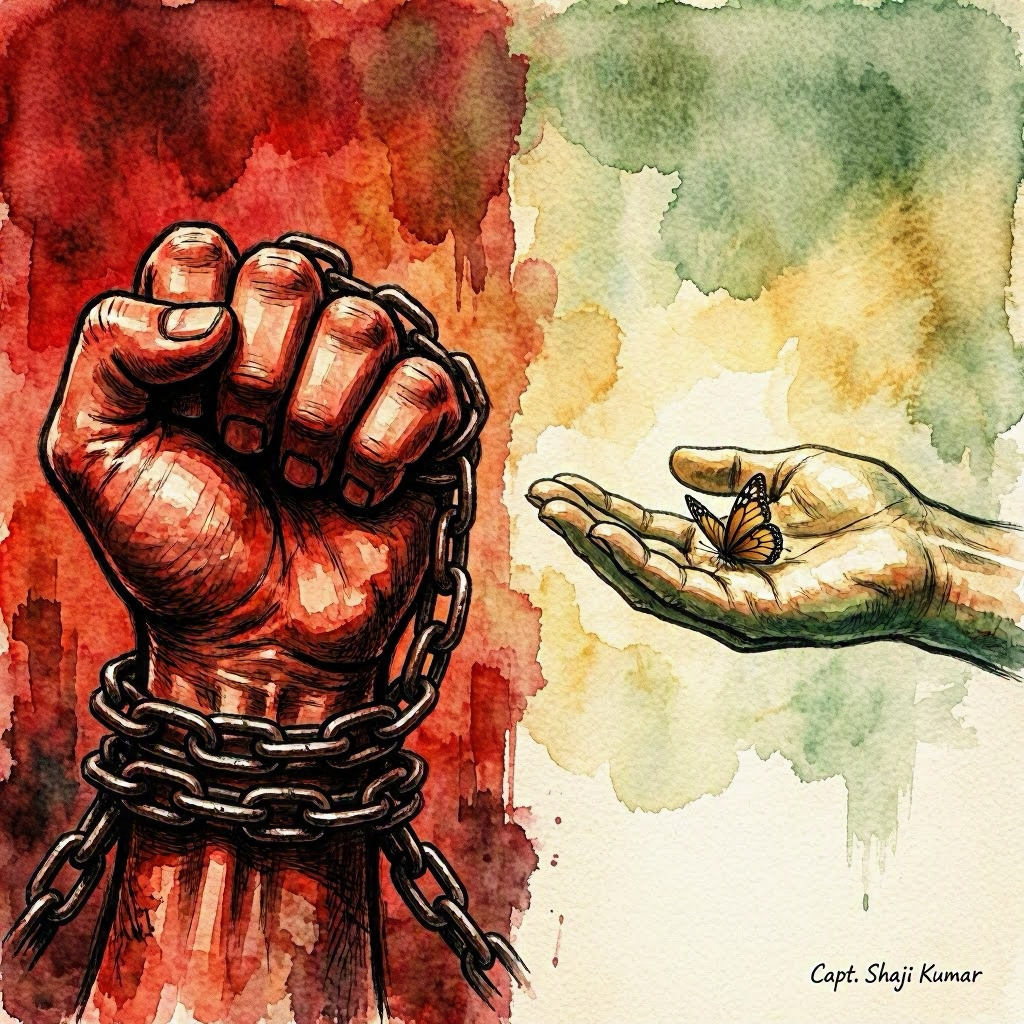
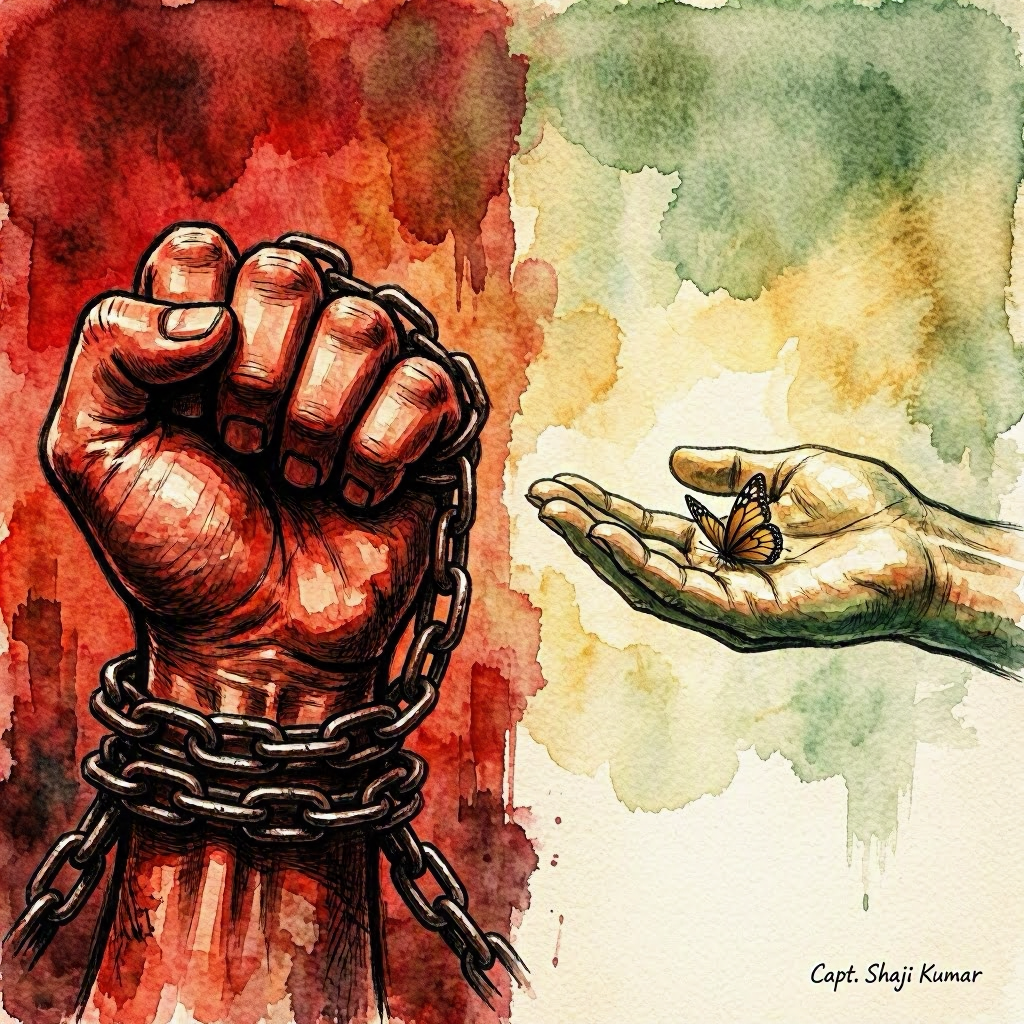
The harder you push against a bad habit, the stronger it pushes back. There is a Japanese approach that flips this completely — and it actually works.
By Capt. Shaji Kumar · 8 min read · Habits & High Performance
You have been here before. You decide — really decide — that this time you are quitting. No more mindlessly checking your phone before bed. No more skipping the gym. No more that third cup of coffee at 4 PM. You white-knuckle it for a few days, maybe a week. Then, like a compressed spring, the habit snaps back harder than before.
This is not weakness. This is not lack of discipline. This is what happens when you bring a sword to a philosophy fight.
Most high-performers are wired to tackle problems head-on — push harder, want it more, build stronger systems. But when it comes to habits, brute-force willpower is the wrong tool. And the Japanese have known this for centuries.
“You cannot fight your way out of a pattern you have unconsciously chosen to live in.”
Why Willpower Fails — Every Single Time
Here is the science behind the frustration. Every habit lives in a loop: cue → craving → routine → reward. When you try to suppress a habit by sheer force, you are attacking the routine while leaving the craving completely intact. You have not solved the loop. You have just added tension to it.
Neuroscience backs this up. The habit pathways in your brain are carved deep — through the basal ganglia, not the prefrontal cortex where rational decision-making lives. When you fight a craving, you are using your newest, most exhaustible neural resource (willpower) against one of the oldest, most efficient systems your brain has. You will lose. Not because you are weak — but because it was never a fair fight.
The relapse is not a failure. It is physics.
| THE WESTERN APPROACH Resist the craving Suppress the urge Force the behavior Punish the relapse Define yourself by failures | THE JAPANESE APPROACH Observe the craving Acknowledge the urge Understand the reward Redirect with curiosity Detach identity from behavior |
The Japanese Frameworks You Have Never Applied to Habits
CONCEPT 01
Mushin — “No Mind”
In Zen martial arts, mushin (無心) refers to a state of mental clarity where the practitioner does not react — they simply move. Applied to habits, mushin means creating a gap between the cue and your response. You notice the urge to reach for your phone. You do not fight it. You do not obey it. You simply observe it — like watching a cloud pass. That gap is where your power lives.
CONCEPT 02
Kaizen — Small, Relentless Improvement
Everyone knows kaizen as “continuous improvement.” But its real power in habit change is the idea that smallness is not weakness — it is strategy. Do not try to overhaul the habit. Shrink it. If you scroll social media for 90 minutes a night, do not quit cold turkey. Observe when you reach for the phone. Notice the emotion. Then reduce by five minutes. The goal is not dramatic transformation — it is quiet, undeniable momentum.
CONCEPT 03
Wabi-Sabi — Embracing Imperfection
Wabi-sabi (侘寂) is the Japanese aesthetic of finding beauty in imperfection and impermanence. For professionals trying to break habits, this is liberating: you do not need a perfect streak. The relapse is not the enemy — treating it as catastrophic is what drives people back into the habit loop in shame. Wabi-sabi says: the crack in the bowl is part of the bowl. Begin again without drama.
CONCEPT 04
Ikigai — The Deeper “Why”
Ikigai (生き甲斐) is often translated as “reason for being.” When applied to habit change, it asks a sharper question: what deeper need is this habit actually serving? The late-night doom-scrolling might be avoidance of an unresolved decision. The excess caffeine might be masking low-grade anxiety. Until you meet that underlying need, no surface-level habit fix will hold.
The 5-Step Practice: Observe, Do Not Fight
Here is how you actually apply this — not as a system, but as a daily practice.
| 1 | Name it before you do it The moment you feel the pull of the habit, say it out loud or in your head: “I want to check my phone.” This small act of labeling activates the prefrontal cortex and creates the mushin gap. You are no longer inside the urge — you are watching it. |
| 2 | Get curious about the cue Ask: what triggered this? Was it boredom, stress, a specific time of day, a person, a location? Habits are far more situational than we think. Curiosity — not judgment — is the detective tool here. |
| 3 | Identify what reward you are actually seeking Dig one layer deeper. The reward is never the surface thing — it is connection, relief, stimulation, validation, or escape. Name the actual reward. Now you have something to redirect toward, not just something to suppress. |
| 4 | Take the smallest possible different action Kaizen in action. Do not replace the habit with a heroic new behavior. Replace it with something fractionally better. Reaching for your phone? Put it face-down for two minutes first. The two minutes becomes five. Five becomes the new norm. |
| 5 | Review without self-punishment At the end of each day, spend 90 seconds noting: when did the habit appear, what cue preceded it, did I observe or obey? No grades. No streaks. Just data. Wabi-sabi in practice. |

Why This Works for High-Performers Specifically
Most productivity literature targets the average person trying to build basic routines. You are not that person. You have already built systems. You have read the books. You are still here because the habits you are fighting are not about lack of knowledge — they are about unmanaged cognitive load, performance pressure, and identity.
High-performers often develop habits as coping mechanisms for high-stakes environments. The scrolling is decompression. The late nights are control. The avoidance is protection. These are not weaknesses to be crushed — they are signals to be decoded.
“The executive who cannot stop checking email at midnight is not undisciplined. They are anxious about losing control. Fix the anxiety — the email habit dissolves.”
The Japanese observational approach respects your intelligence. It does not ask you to follow a 30-day plan or reward yourself with stickers. It asks you to think more clearly about what is actually happening — and to trust that clarity, not force, is what changes behavior at the root.
The Uncomfortable Truth About Habit Change
Here it is: the habits you most want to break are usually serving you in some way you have not fully acknowledged yet. They are efficient solutions your brain found to real problems. Fighting them without understanding them is like ripping out a load-bearing wall because you do not like where it is.
The Japanese approach does not ask you to be more disciplined. It asks you to be more honest. To sit with discomfort long enough to understand it. To be, for a few minutes each day, less warrior and more witness.
That shift — from combatant to curious observer — is where lasting change begins. Not with a dramatic declaration. Not with a new app. With the quiet, repeated act of watching yourself clearly, and choosing, one small moment at a time, something different.
The habit is not the enemy. The unawareness is. Start there.
TAKE THIS FURTHER
Go Deeper With These Books by Capt. Shaji Kumar
If this article resonated with you, these two books take the conversation much further — with practical, body-based tools for lasting transformation.
| Book 1 Health in Your Hands Discover how your body holds the power to heal. This book puts practical health tools directly in your hands — literally. Available on Amazon → https://www.amazon.in/gp/product/B0FV4BCC7K |
| Book 2 Stress: The Silent Killer Within A 21-Day Acupressure system to reset your Nervous System, Reduce Anxiety and Reclaim your health naturally. The science of stress has never been more accessible — or more urgent. This 21-day system uses ancient acupressure techniques to rewire your nervous system response from the ground up. Get it now → https://books2read.com/u/bMLojv |
#HabitChange #JapaneseWisdom #Mushin #Kaizen #WabiSabi #Ikigai #Mindfulness #ProductivityMindset #HighPerformance #LeadershipDevelopment #BehaviorChange #MentalClarity #ProfessionalGrowth #WellnessAtWork #StressManagement #NervousSystemHealth #Acupressure #HolisticHealth #MindBodyConnection #HealthInYourHands


Leave a comment