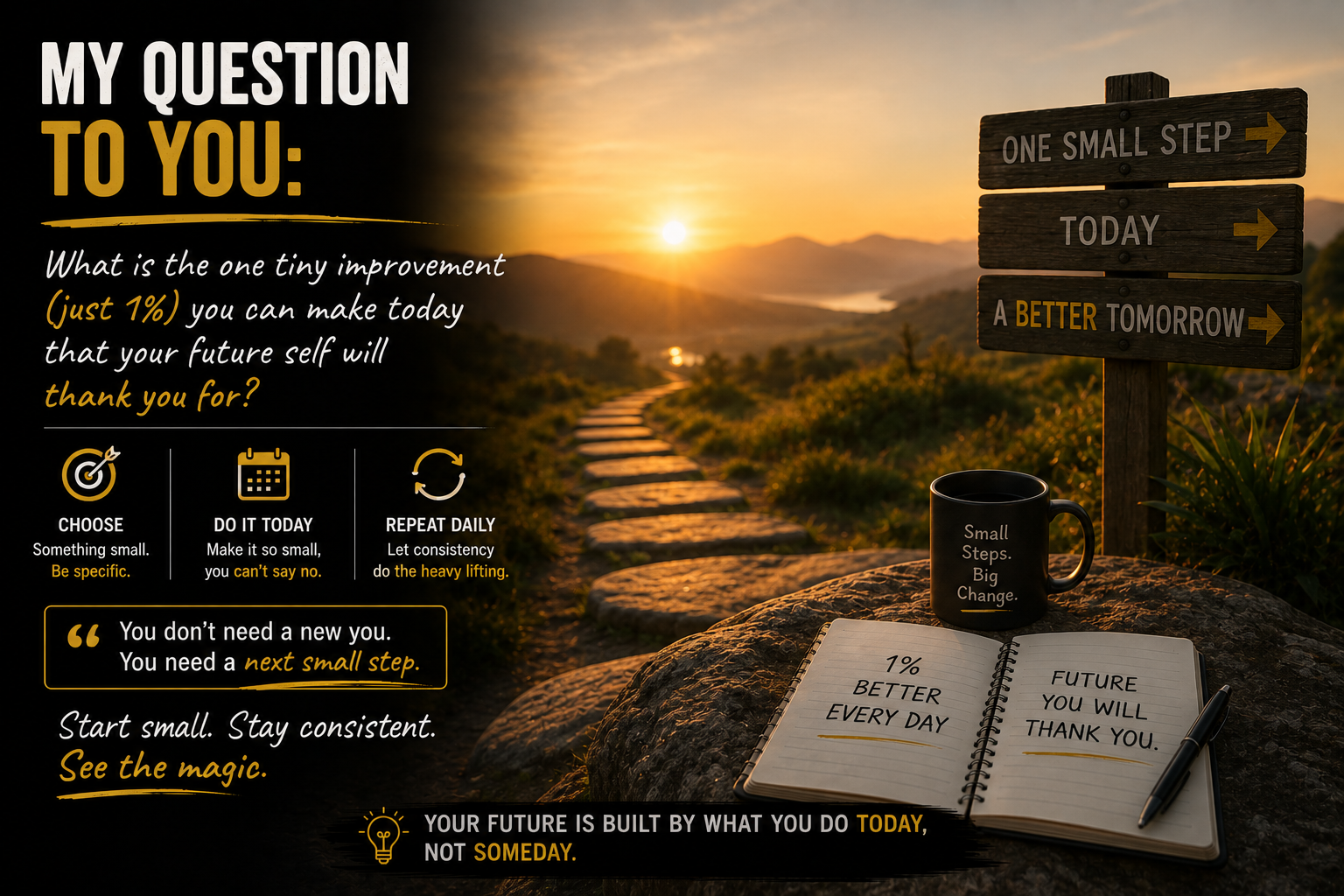

There comes a point in every person’s life when excuses begin to lose their meaning.
You can continue blaming the economy, your employer, your background, your age, your qualifications, or your circumstances. Many of those reasons may even be valid. Life has never promised a level playing field.
But at some point, one question refuses to go away.
What are you going to do about it?
That single question separates people who remain spectators from those who become creators of their own future. For decades we have conditioned ourselves to believe that success follows a predictable path. Study hard. Get a good job. Work for someone else. Wait for promotions. Retire comfortably.
The world has changed.
Jobs are changing. Industries are changing. Technology is changing. The skills that made people successful yesterday may not guarantee relevance tomorrow.
If there was ever a time to take charge of your own future, it is now.
Many people think entrepreneurship is only for a privileged few. They imagine billion dollar startups, venture capital funding, sophisticated offices, and teams of hundreds. Nothing could be farther from the truth.
Entrepreneurship begins with a problem. A problem you understand. A problem that frustrates you. A problem you genuinely want to solve.
It may be teaching children in your neighbourhood.
Helping senior citizens use technology.
Preparing students for interviews.
Creating healthy food for working professionals.
Repairing appliances.
Building websites.
Writing content.
Growing organic vegetables.
Offering bookkeeping services.
Designing homes.
Training people in communication.
Helping small businesses market themselves.
Every successful enterprise that exists today started because someone decided that a problem deserved a solution. Not every enterprise has to become a unicorn. Some simply have to become meaningful. That is enough.
I have spent decades working with people from different walks of life. I have seen extraordinary talent hidden behind ordinary appearances. The biggest obstacle has rarely been capability. It has almost always been belief. People underestimate themselves.
They wait until they feel ready.
They wait for the perfect opportunity.
They wait for more money.
They wait for someone to discover them.
They wait for confidence.
Sometimes they spend years waiting.
Confidence rarely arrives before action.
It usually arrives because of action.
You begin.
You stumble.
You learn.
You improve.
You grow.
Every entrepreneur has experienced uncertainty.
Every successful professional has made mistakes.
Every meaningful journey begins before certainty arrives.
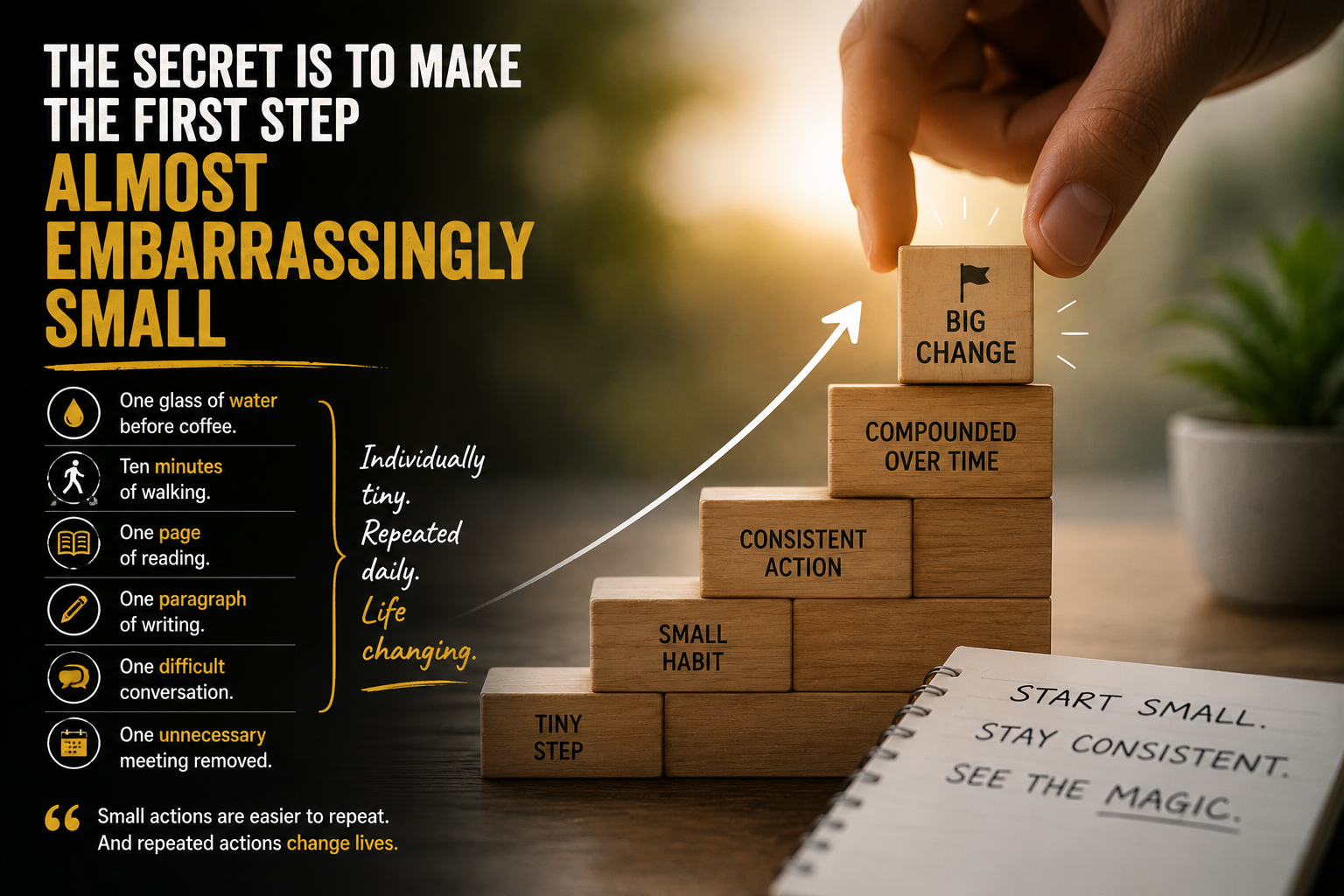
Do not confuse small beginnings with small futures.
The size of your first step has nothing to do with the distance you can eventually travel.
What matters is whether you are moving.
Building your own enterprise is not merely about earning an income.
It changes something much deeper.
It changes the way you think.
Instead of asking, “Who will give me an opportunity?”
You begin asking, “How can I create one?”
Instead of asking, “Who will solve this problem?”
You begin asking, “Can I solve it?”
That shift changes everything.
The future belongs to people who create value.
It does not matter whether you are twenty-five or sixty-five.
It does not matter whether you begin from a garage, a spare bedroom, your dining table, or a mobile phone.
Every meaningful enterprise begins with one person deciding to act.
Not tomorrow. Today.
At the Global Learning Centre, this is the mindset we want to nurture. We are not trying to produce people who simply look for jobs. We want to develop people who can create opportunities for themselves and for others.
People who think independently.
People who solve problems.
People who build with integrity.
People who contribute to society while creating livelihoods.
The world does not need more people waiting for permission.
It needs more people willing to take responsibility.
Your future is not hidden somewhere waiting to be discovered.
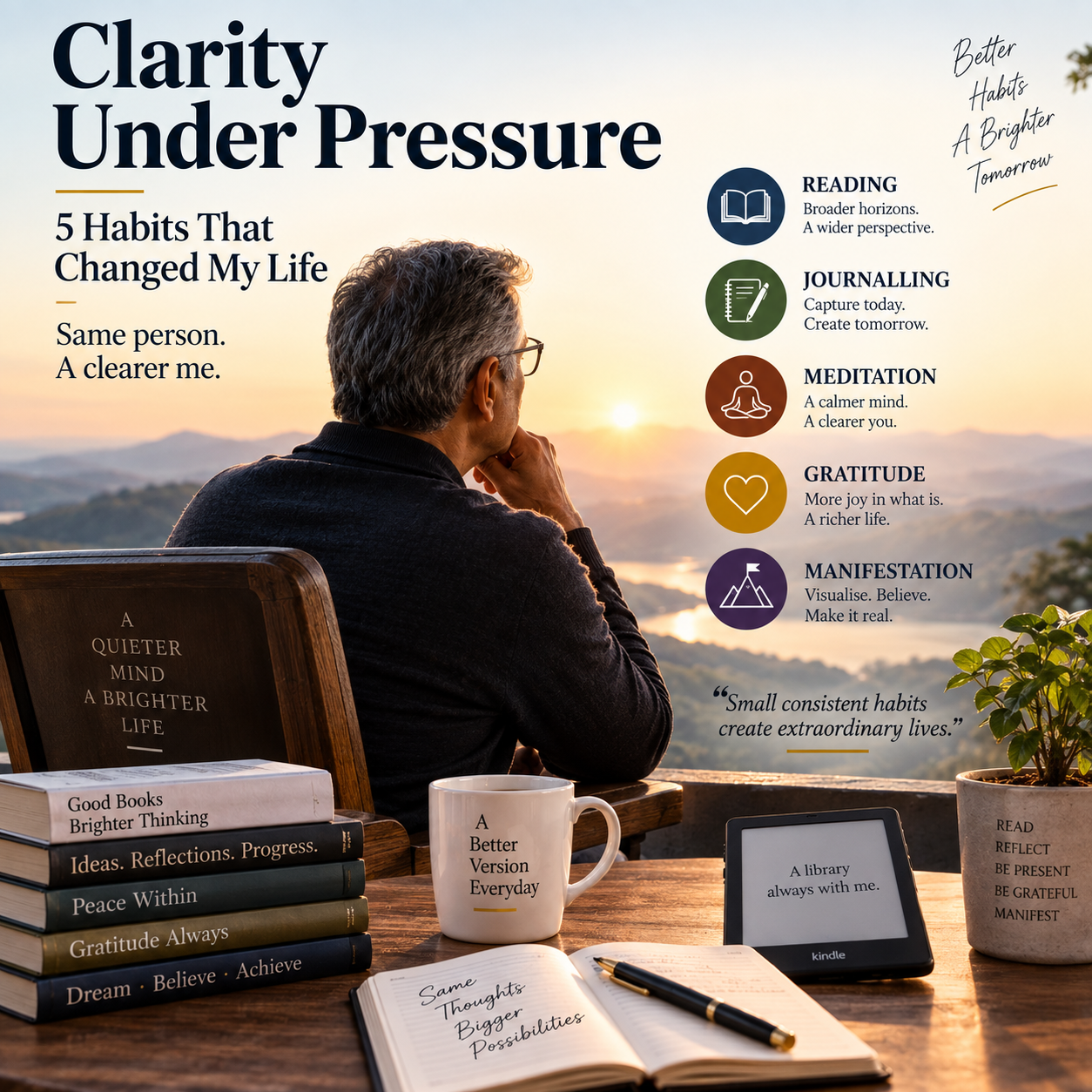
Field notes for first-generation founders — building calm, judgment, and momentum when everything’s on the line.
Pressure Was Never the Problem
Picture the founder at 11 p.m. Payroll runs in nine hours. The number in the account doesn’t cover it. He opens the same spreadsheet for the fourth time, as if the figures might have changed since the third.
They haven’t.
Here’s what’s actually happening in that room — and it has nothing to do with the money. Under that kind of pressure, his thinking has narrowed to a tunnel. He isn’t weighing options anymore. He’s bracing. And a man who is bracing makes bad calls, because bracing is not the same as deciding.
That’s the whole game. Pressure doesn’t break you by making you afraid — fear is manageable. It breaks you by quietly removing your judgment at the exact moment you need it most. The first casualty isn’t your nerve. It’s your ability to think clearly.
I learned this young, in uniform. Commissioned in March 1988. The Army never trains you to feel no pressure — that’s a fantasy, and a dangerous one. It trains you so that when the pressure arrives, your judgment is still standing. The drill, the repetition, the checklist run a hundred times — none of it exists to make the moment calm. It exists so you can still make a sound decision inside a moment that isn’t.
Then I spent 28 years building a staffing & Facility Management business from nothing. Bootstrapped. No safety net. No family money behind me, no investor to call at midnight. Just payroll that had to clear, clients who had to be served, and a team that had to be paid whether or not the receivables came in on time. Pan-India, sixteen cities, one decision at a time.
And I found the same law operating that I’d first met in uniform: the people who survive pressure aren’t the ones who feel less of it. They’re the ones who keep their judgment intact while everyone around them loses theirs.
That’s the difference between built and given. Nobody handed me a calm nervous system. I built one — under load, on the job, the hard way. And the good news, the reason this newsletter exists, is that it’s *buildable*. It’s a system, not a personality trait. You don’t have to be born unshakeable. You can train it.
**That’s what this is for.**
Clarity Under Pressure™ is a fortnightly field manual for first-generation founders and professionals making hard transitions — the ones doing it without a template, without a network that already believes in them, without the luxury of a soft landing if it goes wrong. Every edition gives you one usable tool for keeping your head when the stakes spike: in the business, in the boardroom, in the room where the decision actually gets made.
No theory you can’t use by Friday. No motivational noise. Field notes from someone who’s been bracing at 11 p.m. and learned how to stop.
This edition’s tool: the 90-second triage
Next time pressure spikes and you feel the tunnel closing, don’t decide anything yet. First, run three questions out loud — on paper, not in your head, because the head is where the spiral lives:
1. **What’s actually true right now?** Facts only. Not the fear, not the worst case — the verifiable situation in front of you.
2. **What’s the single next action?** Not the whole solution. The *next step*. One.
3. **What can wait until morning?** Most of it can. Pressure lies about what’s urgent.
Ninety seconds. That’s a triage drill, and triage is what soldiers do when everything is on fire and the worst response is to freeze. It won’t make the problem smaller. It will keep your judgment standing while you solve it — which is the only thing that ever actually mattered.
Stop Managing Your Time. Start Managing the Pressure.
A soldier-founder’s take on why your calendar isn’t the problem — and what actually is.
There is a game at every fair. A row of holes, a soft mallet, and a plastic mole that pops its head up. You hit it. It drops. Another appears somewhere else. You hit that one. A third pops up. The faster you swing, the faster they come. You never win. You only get tired.
That game is the most honest picture I know of how most of us manage our time.
We feel stressed, so we go looking for a better system. A new planner. A new app. Time-blocking. The two-minute rule. Eat the frog. Inbox zero. Each one works — for about a week. The relief drains away, the pressure resurfaces somewhere else, and off we go to buy the next mallet.
I played that game for the better part of twenty years. I want to tell you what I finally understood, because it changed how I work — and, more importantly, how I feel while I work.
I had it backwards
I am a former soldier and a first-generation businessman. I built a services business across India from almost nothing — no outside investor, close to four decades around people and pressure. Solving problems by force of will is, frankly, what I am good at. Give me an objective and I will take it head-on, with discipline, one task at a time.
That approach worked on everything except one thing: the constant, low-grade hum of feeling stressed and behind.
I treated it the way I treated every other problem — as a time problem. If I felt stressed, I must be disorganised. So I organised harder. Better lists. Tighter schedules. Earlier mornings. And every system handed me the same result: a short burst of control, then the pressure quietly seeping back in.
It took me an embarrassingly long time to see the obvious. I was hitting moles. I was never touching whatever sent them up.
Your to-do list is a symptom, not a cause
Here is the distinction that finally set me free.
Your overflowing to-do list is not the cause of your stress. It is a symptom of it.
Sit with that for a moment, because everything turns on it.
When you are calm, a long list is just a long list. You pick up the item on top and you start. When you are already stressed, that same list becomes a threat. Every item shouts at once. You freeze, you scatter, you refresh your inbox for the ninth time, and three hours vanish with nothing real to show for them.
Same list. Same hours. Completely different experience.
The difference was never the schedule. It was the state of the person reading it.
This is why the productivity hack always disappoints in the end. It is excellent at trimming the branches — and the branches do need trimming. But it never goes near the root. So the tree keeps producing. You stay busy, you stay behind, and you stay tired.
The hidden tax of a hot nervous system
We talk about stress as if it were only a feeling. It is also a thief of time, and a quiet, expensive one.
A stressed mind makes worse decisions, so you redo work. It cannot hold attention, so simple tasks take twice as long. It catastrophises, so you spend energy on problems that never arrive. It reaches for distraction, so an hour leaks away in scrolling you barely remember. None of this shows up on your calendar, but all of it is billed to your day.
So when you feel you have no time, look closer. Often you have plenty of time — you are simply paying a heavy tax on every hour because the operator is running hot. Lower the temperature, and hours you thought were lost quietly come back.
I have watched this in my own week, plainly. On the days I am calm, I do a full day’s work by mid-afternoon and wonder where the pressure went. On the days I am wound tight, I am at my desk from dawn to dark and finish convinced I never caught up. The workload on both days is roughly the same. The only variable that moved was me.
Which means the real work happens on two levels at once. The branch and the root. Let me give you one practical thing for each. Today. No app required.
The trap of the perfect system
There is a particular cruelty in the productivity industry, and it took me years to name it. The search for the perfect system becomes a stressor of its own.
Think about what actually happens when you adopt a new method. There is the reading. The setting up. The migrating of old lists into the new format. The learning curve. The quiet guilt the first time you fall off it. And then, when it inevitably fails to deliver the calm it promised, there is the disappointment — followed by the search for the next one. The tool that was meant to reduce your load has become another item on it.
I am not telling you to throw your systems away. A sensible list and a clear calendar are good servants. I am telling you to stop expecting them to do a job they were never built for. A calendar can order your hours. It cannot calm your mind. Asking it to is like asking a sharper axe to make the tree stop growing. The axe is fine. You are aiming it at the wrong place.
Once you stop demanding peace from your planner, something relaxes. The planner goes back to being a simple, useful thing. And your attention is freed for the two moves that genuinely change how a day feels.
The branch: do one thing at a time
We have been sold a lie about multitasking. We were told it makes us efficient. It does the opposite.
Your attention is not a floodlight that fills the whole room. It is a torch. It points at one thing. When you “multitask,” you are not doing two things at once — you are whipping the torch back and forth, and every swing leaves a smear of the last task on the next. Researchers call it attention residue. You know it as that foggy, frazzled feeling of being busy all day and accomplishing nothing.
Here is the fix, and it is almost insultingly simple.
One thing. Phone in another room.
Not on silent. Not face-down. In another room. The mere sight of it on your desk taxes you, because some part of your mind is standing guard over it. Move it, and that guard goes off duty.
Then take the single most important task on your list and give it one clean, undivided hour. When your mind reaches for something else — and it will, within ninety seconds — notice the pull and gently bring the torch back. Drift, notice, return. That is the whole discipline.
You will get more done in that one clean hour than in a whole frantic morning of switching. And — this is the part that matters for stress — you will finish it calmer than you started. Focus is not only productive. It is settling. A mind doing one thing is a mind at rest.
That is branch work. It is real and it works. But it is first-aid, not the cure.
The root: the most productive thing you will do all day is nothing
Now the part almost nobody wants to hear.
If your nervous system is running hot, no system on earth will hold. You will time-block a flawless day and then spend it anxious. You will clear your inbox and feel no lighter. Because the pressure was never in the inbox. It was in you — a stored backlog of stress that colours everything you look at.
You cannot out-organise that backlog. You can only drain it. And it drains through rest — a specific, deliberate kind of rest, not collapsing in front of a screen.
For me, that rest is meditation. Twenty minutes, twice a day. Sit comfortably, eyes closed, let your attention rest lightly on the breath or on a soft repeated word. When you drift, return. Drift, notice, return. That is all of it. No incense, no perfect posture, no belief required.
“But I don’t have forty minutes”
I know exactly how that sounds to a results-driven person. Forty minutes a day doing nothing, while the list is screaming? It feels like the least productive thing imaginable.
It is the most productive thing I do, and I do not say that loosely.
Those forty minutes change the quality of the other fifteen hours. The same workload stops feeling like a threat. I make sharper decisions. I stop reacting and start choosing. I waste far less of the day on the scattered, frantic busywork that stress manufactures. The reservoir lowers, and the moles stop popping up so fast.
You will not feel any of this from reading about it. That is the honest truth of the thing. The reservoir does not drain because you understood the idea. It drains because you sit.
A day rebuilt around the root
Let me show you the shape of it. Not theory — something you could copy tomorrow.
Begin with the rest, before the noise. Twenty minutes before the inbox owns you. You are not stealing time from your work; you are setting the temperature of everything that follows.
Then, one clean hour on the thing that matters most. Phone in another room. Torch on one task.
Do the small, sane things that keep the branches in check. When the work feels like too much, stop and empty your head onto a single page — every loose task, every worry, out of the mind and onto paper. Then pick the one item that, once done, makes the rest lighter. Do that one. The list shrinks faster than you expect, and the panic shrinks with it.
In the late afternoon — when most people hit the slump and reach for caffeine and another round of frantic switching — sit again. The second rest. It carries you into the evening as a person rather than a wrung-out version of one.
I watched a young founder I mentor try exactly this. He came to me convinced he needed a better app. His real problem was that he started every morning by opening his phone in bed, and by the time his feet hit the floor he was already behind, already reacting, already at a sprint. We changed nothing about his tools. We changed the first and the last forty minutes of his day. Within a fortnight he told me the work hadn’t got any smaller — but it had stopped feeling like it was chasing him.
Notice what that is. It is not a tighter schedule. It is a calmer operator running an ordinary one.
The belief to carry
I will leave you with the line I now keep close, because it reframes the whole business.
Stress is not happening to you. It is happening in you — and what happens in you, you can learn to tend.
Your calendar is not your enemy. Your task list is not your enemy. The frantic swinging is. The belief that if you could just find the perfect system the pressure would finally lift — that is the mole you have to stop chasing.
So trim the branches: one thing at a time, phone in another room. But do the quieter, harder, more valuable work as well. Tend the root. Sit. Drain the reservoir.
Manage the pressure, and you will find the time was never really the problem.
— Capt. Shaji Kumar
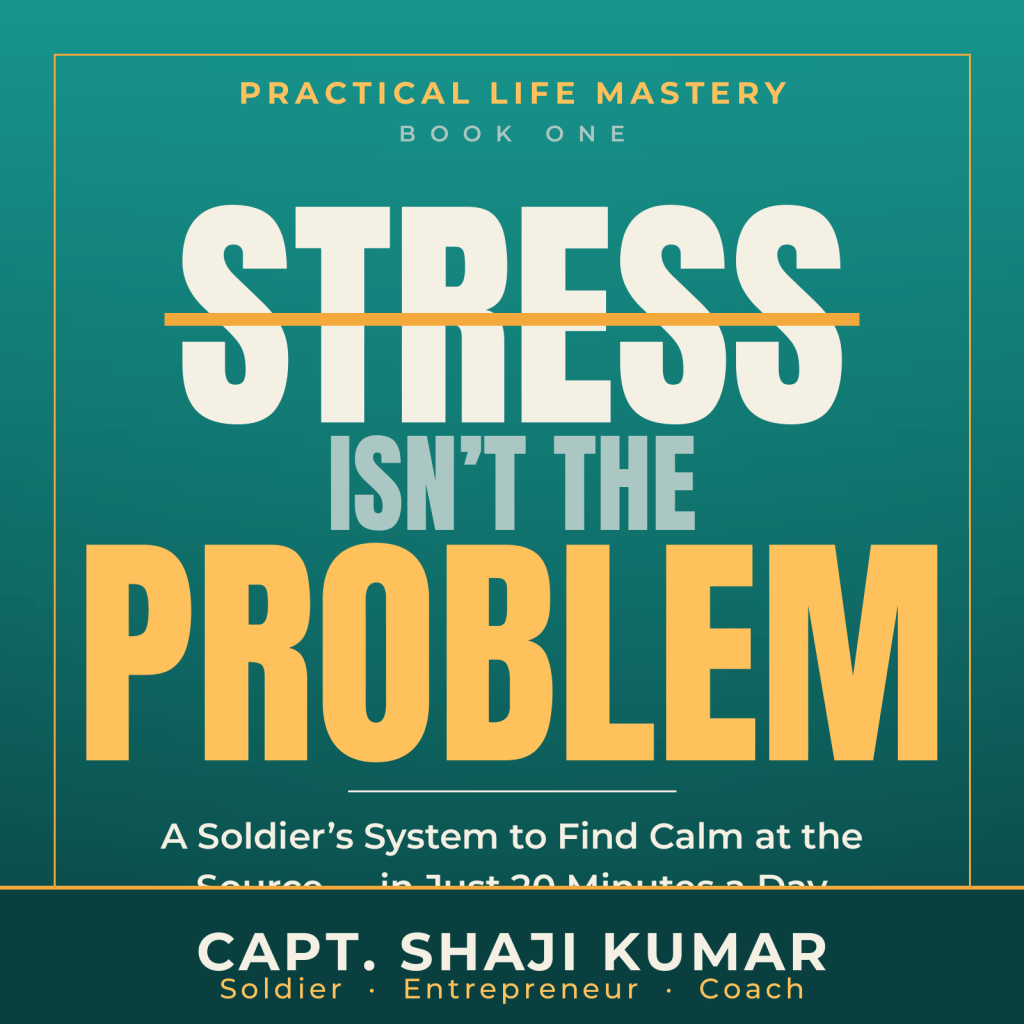
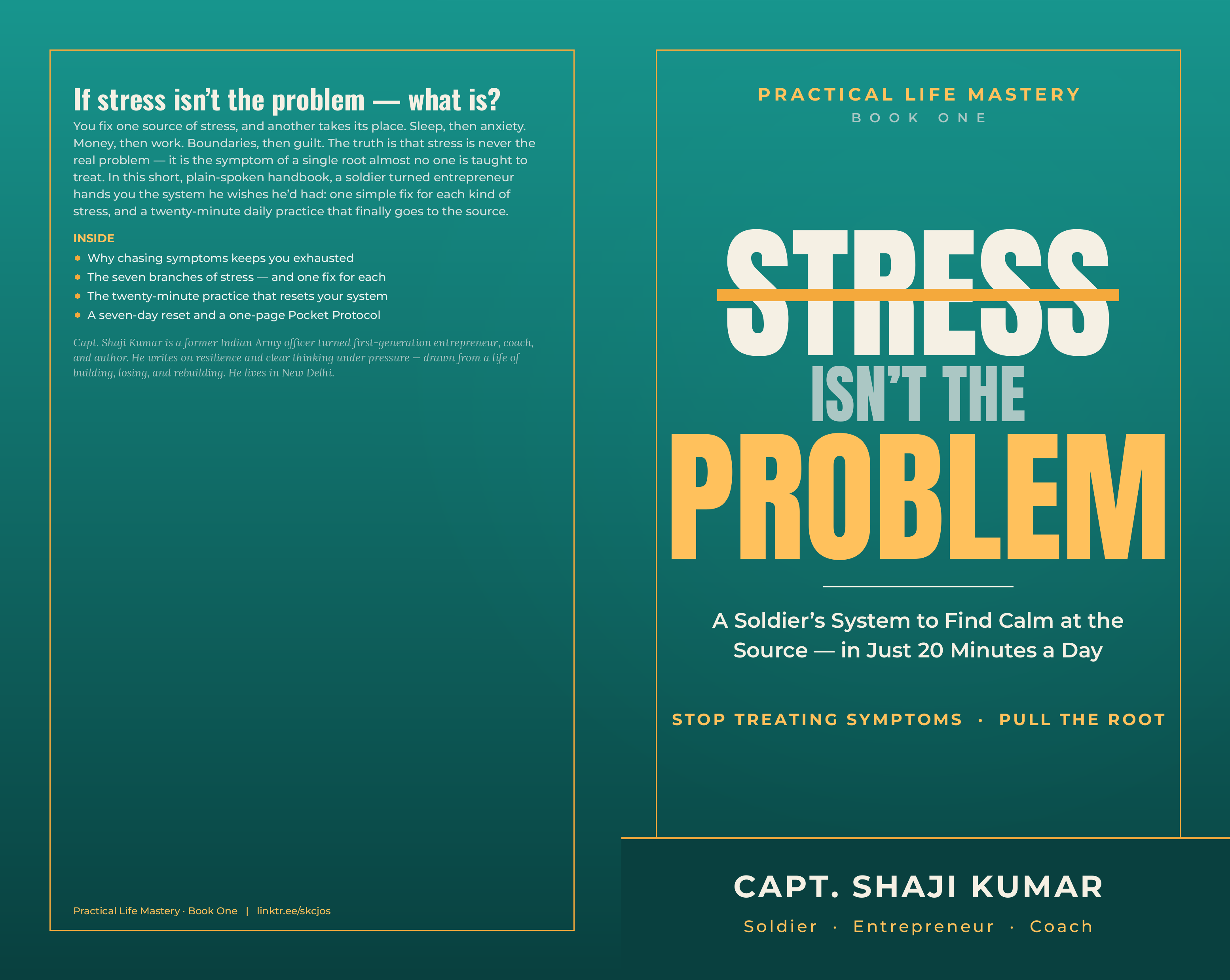
If this landed, it’s the spine of a handbook I’ve been working on — Stress Isn’t the Problem: A Do-It-Yourself Handbook to Stop Chasing Stress and Solve It at the Source. It’s the full method: the seven branches and the one root. Out on Amazon, first week of July. I’ll share the link here the day it’s live. 🌱
On the weight that only one person in the room can never put down — and why that weight, carried rightly, is the highest privilege of leadership.
By Capt. Shaji Kumar · The Reflection Series
There is a phrase that has echoed through every corridor of power, every boardroom, every command post, and every founder’s office since Harry Truman first placed a small wooden sign on his desk in the Oval Office.
The buck stops here.
Five words. No ambiguity. No footnotes. No asterisk leading to a clause that redistributes the weight.
Most people who quote it have never truly felt its meaning. Because understanding those five words intellectually is entirely different from waking up at 3am with them sitting on your chest.
The leader is the only person in the organisation who does not have the luxury of pointing anywhere but inward.
The Architecture of Accountability
Here is the truth that no leadership manual fully prepares you for: every person in your organisation has an exit from accountability that you do not.
The team member who made the error can apologise. They can resign. They can move to another company, update their LinkedIn profile, and begin again with a largely clean slate. Their mistake follows them — but at a manageable distance. Time erodes it. A new role reframes it.
The middle manager who missed the target can point upward. They were working within a framework they did not design, executing a strategy they did not author, with resources that were not sufficient. There is always something above them to gesture toward.
Even the senior executive, one step below the top, carries the comfort of collective decision-making. The board approved it. The committee endorsed it. The consensus was clear.
But the leader — the one at the top, the founder, the CEO, the head of the organisation — has none of these exits. The apology is not enough. The resignation is not a resolution. The pointing upward finds only open sky. Every decision, every failure, every consequence of every call ever made under their watch circles back — inevitably, reliably, without exception — to their table.
The Word Everyone Else Gets to Use
Let us talk honestly about the word “sorry.”
It is a powerful word. In the right hands, offered with genuine remorse and a commitment to repair, it can rebuild trust, restore relationships, and close wounds that seemed permanent.
For most people in an organisation, sorry is also sufficient. It is the price of the mistake. Pay it, absorb the consequences — which may include losing the job — and move forward. The maximum cost is bounded. A job lost is a job that can be found again. A career disrupted is a career that can be rebuilt.
The leader does not have this arithmetic.
For everyone else, sorry is a settlement. For the leader, sorry is only the beginning of a much longer reckoning.
When a leader says sorry — genuinely, publicly, with weight — they are not closing the file. They are opening it. Because what follows sorry, for the person at the top, is a cascade of consequences that cannot be contained by a single word or a single act of contrition.
Investors who trusted the vision reassess.
Teams who believed in the direction begin to question their own loyalty to it.
Clients who built their own plans around yours recalibrate.
Competitors who were watching take note — and move.
Boards who extended confidence begin to sharpen their pencils.
And the market — indifferent, unsentimental, and without mercy — simply adjusts its valuation.
Sorry does not stop any of that. For the leader, accountability is not an event. It is a condition. Permanent, unrelenting, and non-negotiable.
The Catch-22 That No One Warned You About
Here is where leadership becomes genuinely, structurally unfair — and the sooner a leader accepts this, the more effective they become.
The leader must take the risk. That is the job. Without risk, there is no vision, no growth, no transformation, no reason for the organisation to exist beyond the maintenance of the status quo. Risk is not a feature of leadership — it is the definition of it.
And yet every risk the leader takes is a risk that, if it fails, lands entirely and exclusively on them.
They did not design the economic conditions that shifted. They did not engineer the competitor’s move that changed the landscape. They did not anticipate the geopolitical event, the regulatory change, the technology disruption. And yet — when the outcome falls short — the risk was theirs. The judgment was theirs. The decision to proceed was theirs.
This is the Catch-22: You must take the risk to lead. But there is no one to share it with when it does not work. You step forward alone. You carry it alone. And you answer for it alone.
The Leader’s Catch-22 — No Exit, Only Ownership
EVERYONE ELSE • Can say sorry and move on • Can lose the job — and start again • Risk is bounded and recoverable • Reputation is personal, containable • Can point upward — “I was told to” • Tomorrow is still relatively clean
THE LEADER • Sorry is not a strategy • Losing the role is the beginning, not the end • Risk is total — financial, reputational, human • Reputation carries the weight of every decision • There is no upward to point to • Tomorrow carries everything that happened today
The columns above are not a complaint. They are a contract. A contract that every genuine leader signs — usually without reading the fine print — the moment they accept the responsibility of the top seat.
The Loneliness That Comes With the Title
Leadership at the top is lonely. Not in the way that word is sometimes used casually — as a synonym for solitude or introversion. Lonely in a structural, existential sense.
Everyone around the leader has someone above them to consult, to defer to, to share the weight with. The leader has no one above. The board is not above — they are alongside, with their own interests and mandates. The mentor is not above — they advise, but they do not carry.
And this loneliness is not something to be fixed. It is something to be inhabited. The leader who spends their time searching for someone to share the ultimate accountability with is a leader who has not yet truly accepted the role.
The loneliness of the top is not a problem to be solved. It is a condition to be led from.
The most effective leaders I have worked with have made a quiet peace with this. They build strong teams — not to distribute the accountability, but to increase the quality of the decisions that accountability demands. They seek counsel — not to avoid the weight, but to carry it more wisely. They stay close to people who tell them the truth — not because truth makes the burden lighter, but because it makes the decisions cleaner.
The Reframe That Changes Everything
Here is where I want to shift the arc of this reflection. Because everything I have written above is true — and it is only half the story.
The buck stops here is not only a burden. It is a distinction.
In an entire organisation — sometimes hundreds, sometimes thousands of people — there is exactly one person for whom the full weight of every outcome, every decision, every risk, and every result is non-negotiable. One person whose name is on the line in a way that no one else’s is.
That is not a curse. It is the mark of genuine leadership. And it is extraordinarily rare.
Most people will live their entire professional lives never truly knowing what it means to be the final answer. Never experiencing the particular clarity — and the particular terror — of a decision that is entirely, irreversibly, consequentially yours. They will always have someone above them. Always have a committee to hide in. Always have the word sorry available as a genuine resolution.
You do not. And that is not a misfortune. It is an identity.
The leader who understands this — who stops grieving the exits they do not have and starts inhabiting the seat they do — becomes something qualitatively different from the people around them. Not better. Not superior. But different in a way that matters. Tested in a way that cannot be faked. Forged in a way that cannot be replicated by anyone who has not stood where they stand.
The buck does not stop at your table because life is unfair. It stops there because you are the only one equipped to answer it.
What the Leader Who Carries It Well Looks Like
In my years of coaching leaders across industries, the ones who carry this weight with genuine effectiveness share a handful of traits that are worth naming.
They never pretend the weight isn’t there. They do not perform invulnerability. They acknowledge — to themselves, and often to their teams — that the accountability is real, the stakes are high, and the decisions are hard. This honesty does not weaken them. It earns the trust of everyone watching.
They decide anyway. The weight does not become paralysis. They take the council, absorb the analysis, listen to the room — and then they decide. Clearly. On time. Without the endless deferral that masquerades as due diligence.
They own the outcomes — all of them. Not only the ones that worked. They stand in front of the team, the board, the client, the market — when things fall short — and they say: this was mine. Not the team’s. Not the conditions. Mine. And then they say what comes next.
They do not confuse accountability with self-destruction. Owning the outcome does not mean flagellating yourself indefinitely. The leader who makes peace with a bad decision, extracts the lesson, and moves forward is infinitely more effective than one who carries every past failure as a permanent indictment.
They remember why they accepted the seat. The vision. The mission. The people they are building something for. On the days when the weight is heaviest, it is the reason for carrying it that makes it possible to keep going.
The Privilege in the Burden
I want to close this reflection with something that may seem counterintuitive — but which I believe with complete conviction, having seen it in the lives of the leaders who do this well.
The buck stopping at your table is a privilege.
Not a comfortable one. Not an easy one. Not one that comes without cost, without sleepless nights, without the particular exhaustion of being the person who cannot pass it on.
But a privilege nonetheless.
Because the alternative — a life in which nothing of ultimate consequence is ever yours, in which every decision can be softened with a committee and every failure can be redirected with an apology — is a life lived at a remove from the thing that makes leadership meaningful.
You were not put at the top of the table to be comfortable. You were put there to answer. And the fact that you are the only one who can — in your organisation, in your context, in your moment — is not a sentence.
It is a calling.
The weight of the buck is the price of the vision. Pay it. Carry it. And lead from it. Because no one else in the room can.
✦ FROM THE AUTHORWords that go deeper than the blog.If this reflection stirred something in you, these books were written for exactly that moment.
📖 Health in Your Hands Your body is your first boardroom. The leader who cannot manage their own health cannot sustain the weight of accountability. Read on Amazon →
🧠 Stress — The Silent Killer Within A 21-Day Acupressure system to reset your nervous system, reduce anxiety and reclaim your health naturally. Read on Amazon →
COMING SOONBuilt, Not GivenA new book for young entrepreneurs in Tier 2 and Tier 3 cities who were never handed a headstart — but refuse to let that be their story.Be the first to know when it drops → skcjos@gmail.com
ABOUT THE AUTHORCapt. Shaji Kumar Capt. Shaji Kumar is a Leadership Coach, Author, and Speaker working with professionals and entrepreneurs who are ready to lead with clarity and courage. He is the author of Health in Your Hands and Stress — The Silent Killer Within, and his upcoming book Built, Not Given is written for entrepreneurs who were never handed a headstart. Connect with him, access his books, and join his inner circle at: linktr.ee/skcjos
LET’S STAY CONNECTEDJoin the inner circle. Leadership insights. Early access to Built, Not Given. Coaching opportunities. No noise — just substance, when it matters. ✉️ Sign up here: linktr.ee/skcjos📅 Book a coaching appointment: LinkedIn →✉️ Write directly: skcjos@gmail.com
Why fear — not ignorance — is the silent executioner of leadership decisions, and what happens when the ghosts of the past and the shadows of the future converge at exactly the wrong moment.
By Capt. Shaji Kumar · The Reflection Series
There is a moment every leader knows.
It does not announce itself. It arrives quietly — usually in the middle of the night, or in the silence just before a meeting begins. It is the moment when you know exactly what decision needs to be made. You can see it clearly. You understand what it requires.
And you do not move.
Not because you lack information. Not because the timing is wrong. But because somewhere between your mind and your action, fear has built a wall. And on either side of that wall lies a ditch — one filled with the wreckage of the past, and one filled with the shadows of a future you cannot yet see.
This is the double ditch. And it has swallowed more leadership potential than failure ever has.
The Architecture of Leadership Fear
Fear in leadership is rarely the dramatic kind. It does not announce itself as cowardice. It wears more sophisticated disguises — prudence, patience, further due diligence, waiting for the right moment. It borrows the language of wisdom to justify inaction.
But underneath every delayed decision, every hedged commitment, every conversation that never quite happens — fear is the architect.
And it draws its blueprints from two very specific sources:
The first source is the past. The leader who once trusted the wrong person and paid dearly for it. Who launched with conviction and landed badly. Who spoke up in a room and was humiliated for it. That leader does not forget. And when a similar moment arrives — when the terrain looks familiar, when the stakes feel comparable — the past rises up like a witness for the prosecution.
The second source is the future. The formless, unwritten territory of what has not yet happened. The catastrophe that exists only as possibility. The judgment that has not yet been passed. The failure that is still entirely theoretical. And yet — the mind treats it as real. Vivid. Inevitable. The future, imagined in fear, is more paralyzing than any past defeat.
The Double Ditch — Where Leaders Fall
I call it the double ditch because it traps from both sides simultaneously. The leader stands at the point of decision — and finds themselves unable to move forward or backward. The past pulls one way. The future frightens from the other. And in between, the decision waits.
The Double Ditch — Where Leaders Get Trapped
DITCH 1 — The Past • Fear of repeating old mistakes • Replaying past failures in HD • Letting yesterday veto today • Over-analysis paralysis • “Last time I tried this…”
DITCH 2 — The Future • Fear of an unknown outcome • Dread of peer judgment • Catastrophising what hasn’t happened • Waiting for perfect conditions • “What if it all goes wrong?”
What makes the double ditch so lethal is its invisibility. From the outside, a leader trapped in it looks composed. Measured. Even considered. The paralysis is internal. The organisation moves on. Opportunities close. And the leader remains exactly where fear left them — frozen at the edge.
What the Regressed Past Actually Costs
When we explored “What If?” in our last reflection, we discussed how the past can be either a professor or a prison. Fear tips the balance decisively toward the prison.
A leader governed by the regressed past does not just make slower decisions. They make fundamentally different ones — ones shaped by the emotional residue of old wounds rather than the actual demands of the present moment.
They under-invest in people because they once trusted the wrong one.
They avoid bold market moves because one launch failed publicly.
They soften feedback until it loses all meaning, because directness once cost them a relationship.
They defer strategy decisions until the window closes, because they are still refighting an old battle.
Every one of these is not caution. It is fear wearing caution’s clothing. And the organisation pays the price — in missed opportunity, in eroded trust, in a culture that learns to read the leader’s hesitation as permission to hesitate themselves.
Fear is contagious in a leadership culture. When the leader flinches, the team learns to flinch.
The Shadow of the Uncertain Future
The second ditch is subtler — and in some ways, more powerful. Because the future has not yet happened, the mind fills it with whatever it fears most.
I have coached leaders who were extraordinarily capable by any measure — experience, track record, emotional intelligence — and yet were unable to commit to decisions because of what might happen. Not what would happen. Not even what was likely to happen. What might.
This is not strategic risk assessment. That is a cognitive process that weighs probability and prepares contingencies. What I am describing is something different — a paralysis born of imagined catastrophe. A ditch dug not by reality, but by the fearful imagination of a mind that has been burned before and is determined, above all else, never to be burned again.
The cruel irony: The determination never to fail again is precisely what guarantees a different kind of failure — the failure of the unlived decision. The strategy never executed. The team never mobilised. The moment never seized. Fear of failure produces its own, quieter variety of failure. And this one leaves no dramatic story to tell. Only absence.
The Falter at the Edge — Why Good Leaders Freeze
Let us be specific about what the double ditch looks like in practice. Because it is not limited to weak leaders. Some of the most accomplished people I have worked with have found themselves standing at the edge, unable to step forward.
It typically happens in three distinct moments:
The promotion or transition decision. The leader who has earned the next level but cannot claim it. Who second-guesses their readiness not because the evidence is ambiguous, but because a past failure — a role they stumbled in, a project that came apart — has convinced them the floor might give way again.
The people decision. The leader who knows a team member needs to be moved on, but cannot bring themselves to act. Previous guilt over a similar decision, or fear of conflict, or dread of being seen as ruthless — any one of these is enough to delay action that the team desperately needs.
The strategic bet. The leader who can see the opportunity. Who understands the window. Who has done the analysis. But who stands at the edge of commitment and retreats — because what if this is the time it all unravels? What if the past was not an anomaly but a pattern?
In each case, the decision is not difficult because it is unclear. It is difficult because fear has made it feel dangerous.
Crossing the Double Ditch — The Leader’s Path Forward
I want to be clear: the answer is not fearlessness. Fearlessness in a leader is not courage — it is recklessness with other people’s futures. The goal is not to eliminate the ditch. It is to build a bridge across it.
That bridge is built from three materials:
Honest reckoning with the past. Not replaying it. Not exorcising it. But sitting with it long enough to separate the lesson from the scar. The lesson is yours to keep. The scar does not have to drive.
Calibrated courage about the future. Not blind optimism. Not catastrophising. But a clear-eyed assessment of what is actually probable versus what fear has convinced you is inevitable. Fear is a terrible statistician. Challenge its numbers.
A committed first step. Not the entire journey — just the next step. The double ditch is crossed not in a single leap but in a series of deliberate moves. The first commitment breaks the paralysis. Everything after becomes possible.
“Courage is not the absence of fear. It is the decision that something else matters more.” — Ambrose Redmoon
A Word for the Young Leader in the Smaller City
I want to speak directly to a particular kind of leader right now — one who perhaps did not grow up with every advantage. Who built what they have from ground that was not always even. Who carries the weight of having come from somewhere that the world did not immediately take seriously.
You know the double ditch better than most. Because your past contains not just personal failures but systemic ones — moments when the doors were not opened, when the room did not make space, when the credibility had to be earned twice over just to be believed once.
And your future contains not just uncertainty but the particular anxiety of the first generation — the one who cannot afford to fall back on what was handed to them, because nothing was.
I am writing a book for you. It is called Built, Not Given. And its entire premise is this: the fact that you were not given it is not your disadvantage. It is your foundation. Because what is built is sturdier than what is handed. What is earned cannot be taken. And the leader who has wrestled their way to where they are carries a depth of conviction that no inheritance can replicate.
The double ditch is real. But so is the bridge. And you already know how to build things.
Built, Not Given — Coming Soon. A book for the entrepreneur who started with hunger instead of headstarts. To be among the first to hear when it drops, write to skcjos@gmail.com with the subject: “Built, Not Given — Notify Me”
The Decision That Changes Everything
Fear will always be present in leadership. The question is never whether it shows up. It always does. The question is whether you let it make the decision — or whether you make it anyway.
The leader who crosses the double ditch does not do so without fear. They do so in spite of it. They acknowledge the past, they respect the future, and they step forward anyway — because they understand that the cost of inaction is a bill that comes due slowly, quietly, and with compound interest.
Your next decision is already forming. Fear is already weighing in. Acknowledge it. Name it. Extract the lesson it carries.
Then step.
Because the leader your team needs is not the one who never fears. It is the one who moves despite it.
“The most courageous act a leader will ever perform is the one they were most afraid to make.” — Capt. Shaji Kumar
✦ FROM THE AUTHORWords that go deeper than the blog.If this reflection stirred something in you, these books were written for exactly that moment.
📖 Health in Your Hands Your body is your first boardroom. Take command of it. Read on Amazon →
🧠 Stress — The Silent Killer Within Understand the cortisol loop that hijacks every fearful decision. Read now →
COMING SOONBuilt, Not GivenA new book for young entrepreneurs in Tier 2 and Tier 3 cities who were never handed a headstart — but refuse to let that be their story. You were not given the connections, the capital, or the classroom. But you were given hunger. And hunger, channelled right, builds empires. Be the first to know when it drops → skcjos@gmail.com
LET’S WORK TOGETHERIs fear holding your leadership back? Capt. Shaji Kumar works with professionals and entrepreneurs who are ready to move from hesitation to decision — and from decision to momentum. If this blog spoke to something you are navigating right now, let us have that conversation. Two ways to connect: 📅 Book an Appointment: LinkedIn → ✉️ Send a DM: skcjos@gmail.comWant exclusive insights, early access to Built, Not Given, and leadership tools delivered to your inbox? Drop your email at skcjos@gmail.com with the subject line: “Add me to the list”
ABOUT THE AUTHORCapt. Shaji Kumar Capt. Shaji Kumar is a Leadership Coach, Author, and Speaker working with professionals and entrepreneurs who are ready to lead with clarity and courage. He is the author of Health in Your Hands and Stress — The Silent Killer Within, and his upcoming book Built, Not Given is written for entrepreneurs who were never handed a headstart. Connect with him, access his books, and join his inner circle at: linktr.ee/captshajikumar
LET’S STAY CONNECTEDJoin the inner circle. Leadership insights. Early access to Built, Not Given. Coaching opportunities. No noise — just substance, when it matters. ✉️ Sign up here: linktr.ee/captshajikumar📅 Book a coaching appointment: LinkedIn →✉️ Write directly: skcjos@gmail.com
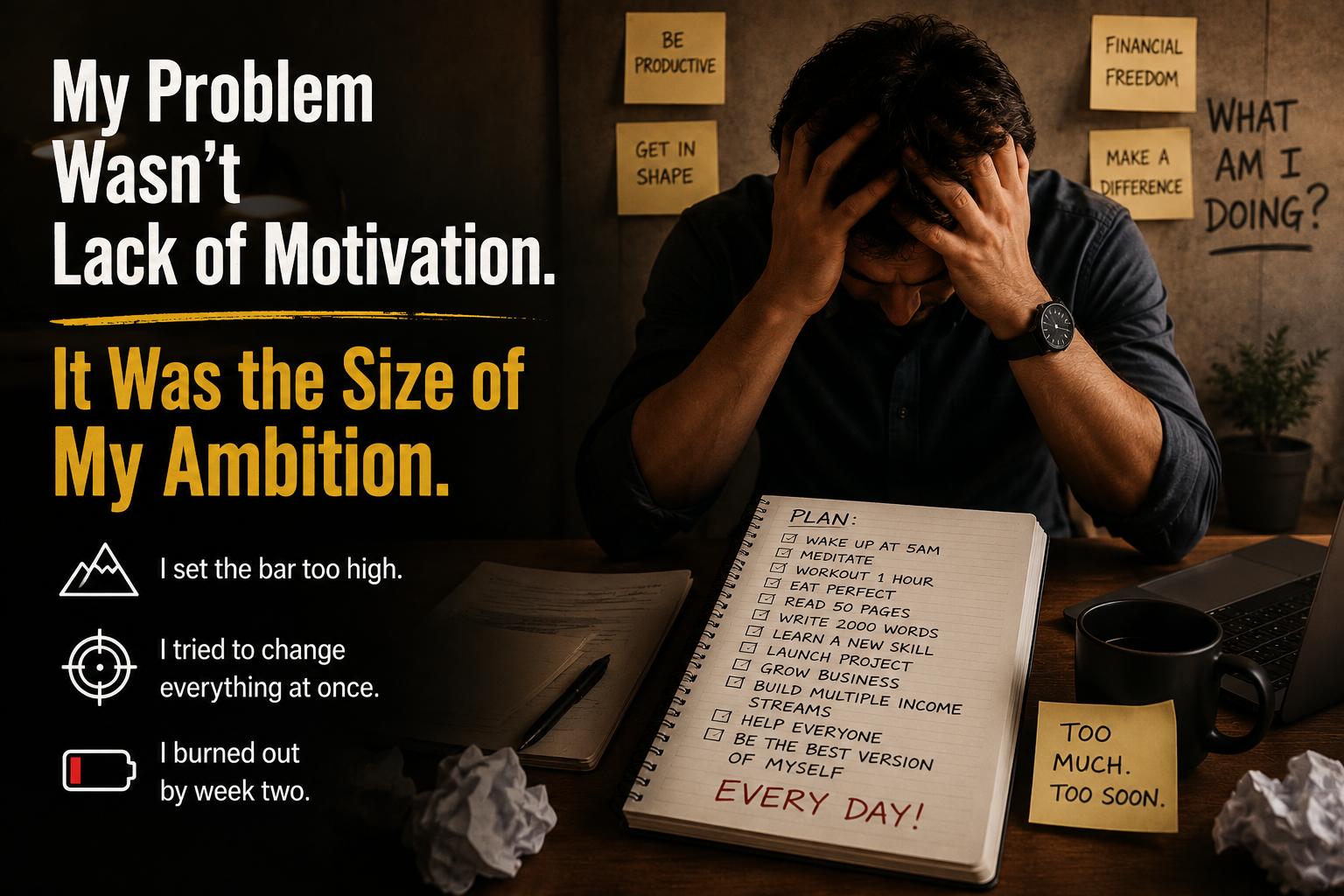
The harder you push against a bad habit, the stronger it pushes back. There is a Japanese approach that flips this completely — and it actually works.
By Capt. Shaji Kumar · 8 min read · Habits & High Performance
You have been here before. You decide — really decide — that this time you are quitting. No more mindlessly checking your phone before bed. No more skipping the gym. No more that third cup of coffee at 4 PM. You white-knuckle it for a few days, maybe a week. Then, like a compressed spring, the habit snaps back harder than before.
This is not weakness. This is not lack of discipline. This is what happens when you bring a sword to a philosophy fight.
Most high-performers are wired to tackle problems head-on — push harder, want it more, build stronger systems. But when it comes to habits, brute-force willpower is the wrong tool. And the Japanese have known this for centuries.
“You cannot fight your way out of a pattern you have unconsciously chosen to live in.”
Why Willpower Fails — Every Single Time
Here is the science behind the frustration. Every habit lives in a loop: cue → craving → routine → reward. When you try to suppress a habit by sheer force, you are attacking the routine while leaving the craving completely intact. You have not solved the loop. You have just added tension to it.
Neuroscience backs this up. The habit pathways in your brain are carved deep — through the basal ganglia, not the prefrontal cortex where rational decision-making lives. When you fight a craving, you are using your newest, most exhaustible neural resource (willpower) against one of the oldest, most efficient systems your brain has. You will lose. Not because you are weak — but because it was never a fair fight.
The relapse is not a failure. It is physics.
THE WESTERN APPROACH Resist the craving Suppress the urge Force the behavior Punish the relapse Define yourself by failures
THE JAPANESE APPROACH Observe the craving Acknowledge the urge Understand the reward Redirect with curiosity Detach identity from behavior
The Japanese Frameworks You Have Never Applied to Habits
CONCEPT 01
Mushin — “No Mind”
In Zen martial arts, mushin (無心) refers to a state of mental clarity where the practitioner does not react — they simply move. Applied to habits, mushin means creating a gap between the cue and your response. You notice the urge to reach for your phone. You do not fight it. You do not obey it. You simply observe it — like watching a cloud pass. That gap is where your power lives.
CONCEPT 02
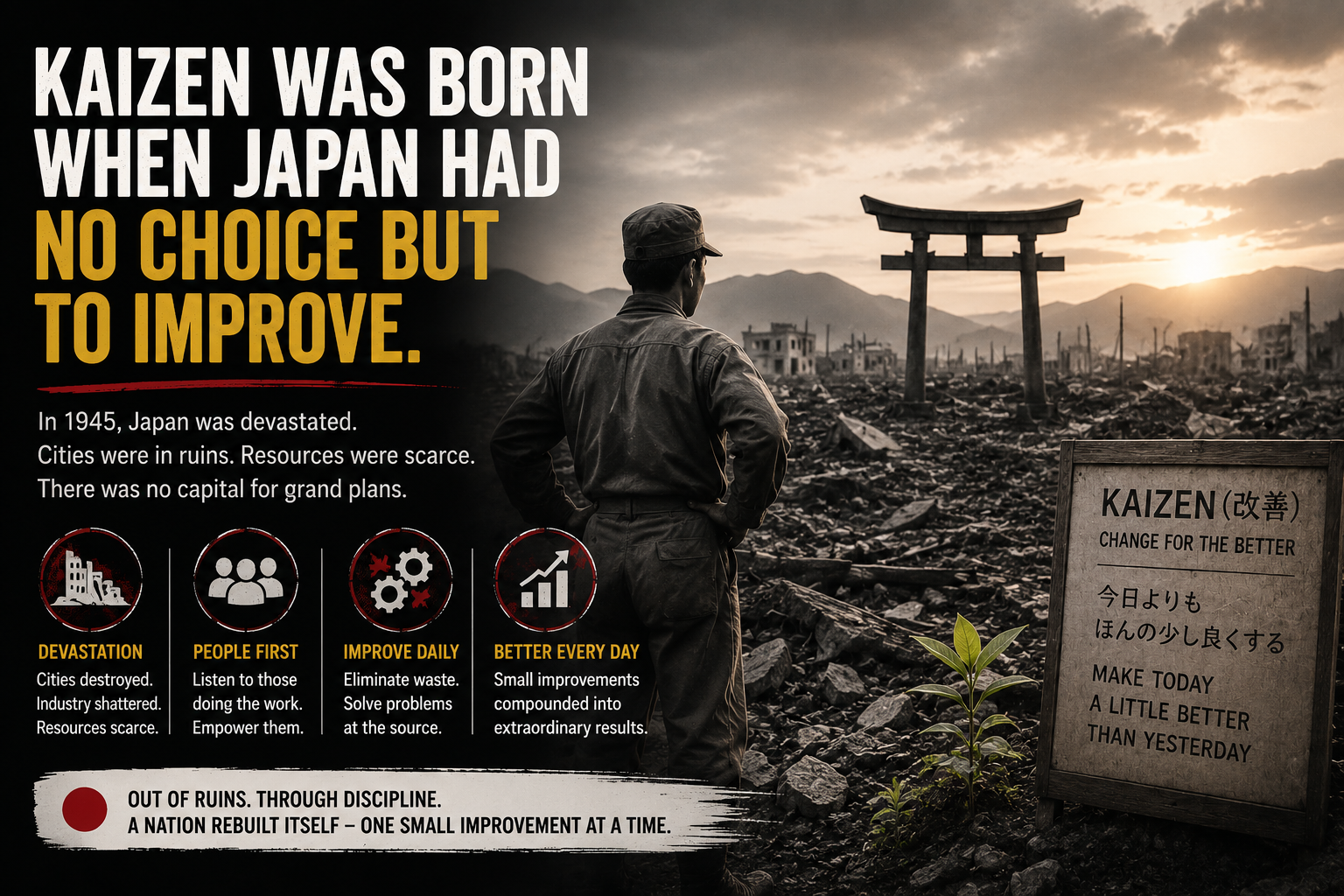
Kaizen — Small, Relentless Improvement
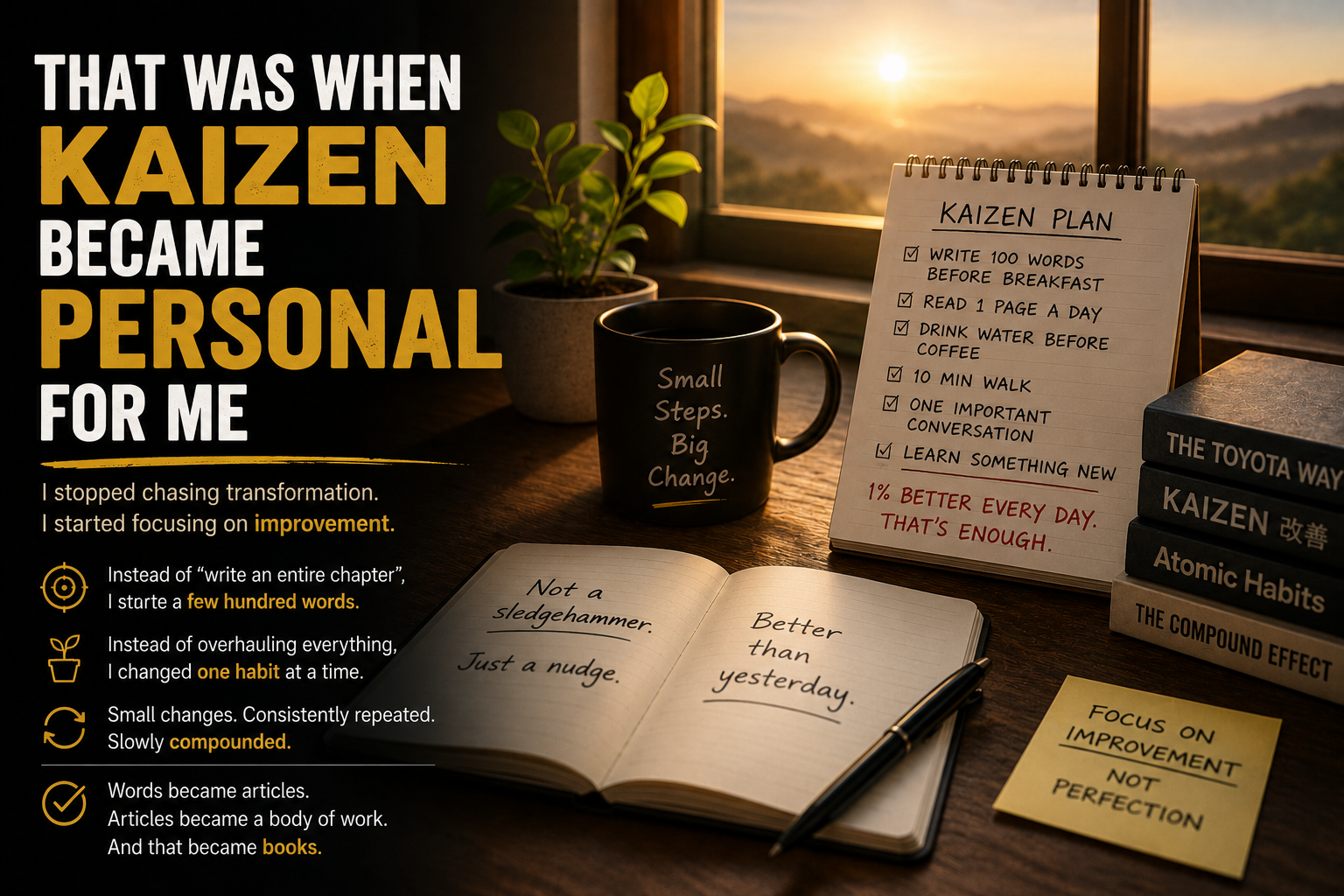
Everyone knows kaizen as “continuous improvement.” But its real power in habit change is the idea that smallness is not weakness — it is strategy. Do not try to overhaul the habit. Shrink it. If you scroll social media for 90 minutes a night, do not quit cold turkey. Observe when you reach for the phone. Notice the emotion. Then reduce by five minutes. The goal is not dramatic transformation — it is quiet, undeniable momentum.
CONCEPT 03
Wabi-Sabi — Embracing Imperfection
Wabi-sabi (侘寂) is the Japanese aesthetic of finding beauty in imperfection and impermanence. For professionals trying to break habits, this is liberating: you do not need a perfect streak. The relapse is not the enemy — treating it as catastrophic is what drives people back into the habit loop in shame. Wabi-sabi says: the crack in the bowl is part of the bowl. Begin again without drama.
CONCEPT 04
Ikigai — The Deeper “Why”
Ikigai (生き甲斐) is often translated as “reason for being.” When applied to habit change, it asks a sharper question: what deeper need is this habit actually serving? The late-night doom-scrolling might be avoidance of an unresolved decision. The excess caffeine might be masking low-grade anxiety. Until you meet that underlying need, no surface-level habit fix will hold.
The 5-Step Practice: Observe, Do Not Fight
Here is how you actually apply this — not as a system, but as a daily practice.
1
Name it before you do it The moment you feel the pull of the habit, say it out loud or in your head: “I want to check my phone.” This small act of labeling activates the prefrontal cortex and creates the mushin gap. You are no longer inside the urge — you are watching it.
2
Get curious about the cue Ask: what triggered this? Was it boredom, stress, a specific time of day, a person, a location? Habits are far more situational than we think. Curiosity — not judgment — is the detective tool here.
3
Identify what reward you are actually seeking Dig one layer deeper. The reward is never the surface thing — it is connection, relief, stimulation, validation, or escape. Name the actual reward. Now you have something to redirect toward, not just something to suppress.
4
Take the smallest possible different action Kaizen in action. Do not replace the habit with a heroic new behavior. Replace it with something fractionally better. Reaching for your phone? Put it face-down for two minutes first. The two minutes becomes five. Five becomes the new norm.
5
Review without self-punishment At the end of each day, spend 90 seconds noting: when did the habit appear, what cue preceded it, did I observe or obey? No grades. No streaks. Just data. Wabi-sabi in practice.
Why This Works for High-Performers Specifically
Most productivity literature targets the average person trying to build basic routines. You are not that person. You have already built systems. You have read the books. You are still here because the habits you are fighting are not about lack of knowledge — they are about unmanaged cognitive load, performance pressure, and identity.
High-performers often develop habits as coping mechanisms for high-stakes environments. The scrolling is decompression. The late nights are control. The avoidance is protection. These are not weaknesses to be crushed — they are signals to be decoded.
“The executive who cannot stop checking email at midnight is not undisciplined. They are anxious about losing control. Fix the anxiety — the email habit dissolves.”
The Japanese observational approach respects your intelligence. It does not ask you to follow a 30-day plan or reward yourself with stickers. It asks you to think more clearly about what is actually happening — and to trust that clarity, not force, is what changes behavior at the root.
The Uncomfortable Truth About Habit Change
Here it is: the habits you most want to break are usually serving you in some way you have not fully acknowledged yet. They are efficient solutions your brain found to real problems. Fighting them without understanding them is like ripping out a load-bearing wall because you do not like where it is.
The Japanese approach does not ask you to be more disciplined. It asks you to be more honest. To sit with discomfort long enough to understand it. To be, for a few minutes each day, less warrior and more witness.
That shift — from combatant to curious observer — is where lasting change begins. Not with a dramatic declaration. Not with a new app. With the quiet, repeated act of watching yourself clearly, and choosing, one small moment at a time, something different.
The habit is not the enemy. The unawareness is. Start there.
TAKE THIS FURTHER
Go Deeper With These Books by Capt. Shaji Kumar
If this article resonated with you, these two books take the conversation much further — with practical, body-based tools for lasting transformation.
Book 1Health in Your Hands Discover how your body holds the power to heal. This book puts practical health tools directly in your hands — literally. Available on Amazon → https://www.amazon.in/gp/product/B0FV4BCC7K
Book 2Stress: The Silent Killer WithinA 21-Day Acupressure system to reset your Nervous System, Reduce Anxiety and Reclaim your health naturally. The science of stress has never been more accessible — or more urgent. This 21-day system uses ancient acupressure techniques to rewire your nervous system response from the ground up. Get it now → https://books2read.com/u/bMLojv