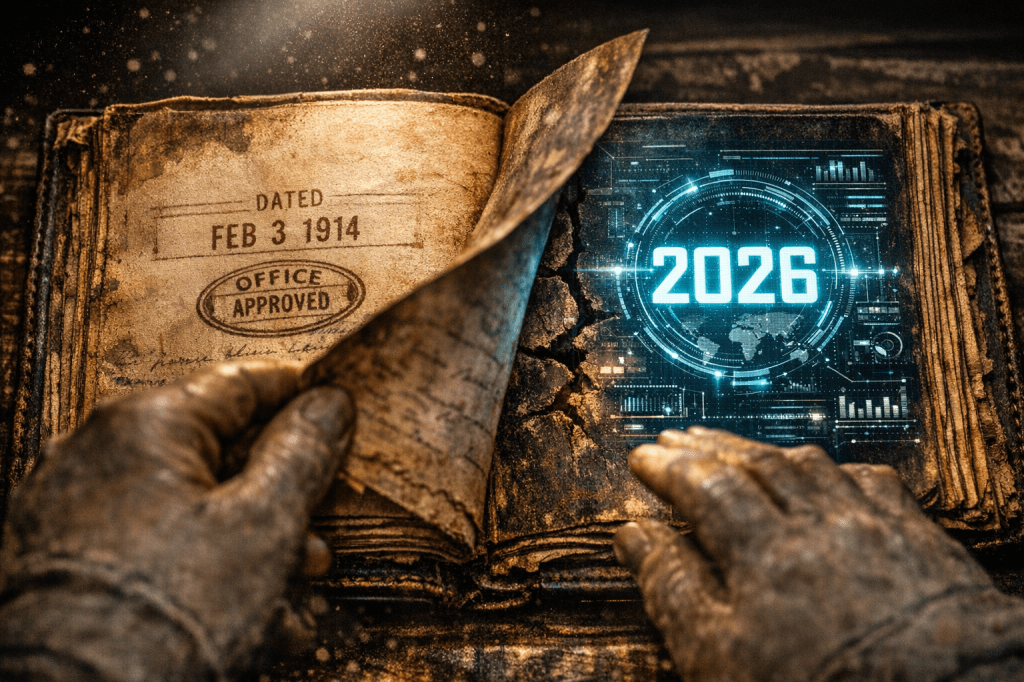
We are often told that history is a series of accidents—a stray bullet in Sarajevo, a sudden move across a border, a flash of lightning in the desert. But if you look at the ledger instead of the headlines, a different pattern emerges.
World Wars aren’t just tragedies; they are transitions. The Century of the Ledger.
In 1914, the world “stumbled” into the Great War. Yet, behind the mud of the trenches, the machinery of credit was humming. Thirty nations were pulled into a fire fuelled by $30 billion in loans. When the smoke cleared, the map of the Middle East had been redrawn, and the League of Nations rose as the first blueprint for a centralised world.
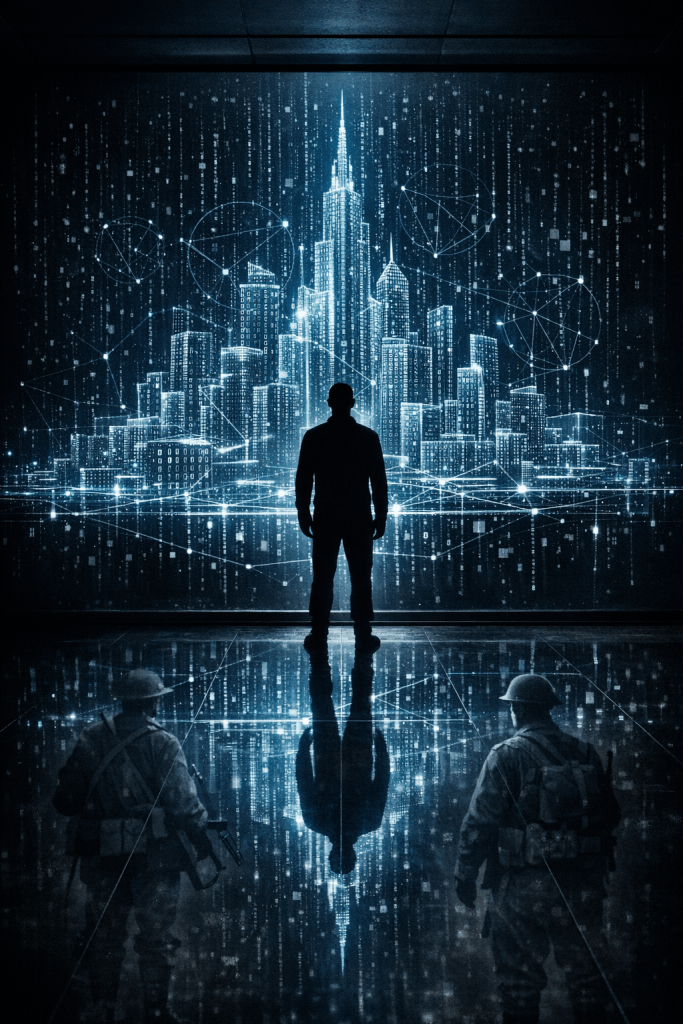
By 1939, the playbook had been refined. We are taught about the ideologies, but we rarely talk about the invoices. Even as the world split into Allies and Axis, the “neutral” banks processed the gold, and global corporations kept the assembly lines moving on both sides of the fence. The result of 85 million lives lost? The birth of the Dollar Hegemony at Bretton Woods. The world didn’t just find peace; it found a new CEO.

Fast forward to today. The headlines point to the Strait of Hormuz and Operation Epic Fury. They speak of assassinations and “cycles of violence.” But look at the boardrooms:
- Defence stocks are hitting all-time highs.
- Energy prices are being recalibrated.
- Trade routes are being forcibly shifted from West to East. What we are witnessing in 2026 isn’t a “war on terror”—it is the decommissioning of an old model. The petrodollar, the SWIFT system, and the unipolar world are being dismantled by the same hands that built them, because the contract has reached its expiration date.
- The Great Recalibration The shift toward 2030 isn’t about one nation winning. It’s about the Controlled Demolition of the Familiar. Digital Identity is replacing the passport.
- Programmable Currency (CBDC) is replacing the physical note.
- Supply Chains are becoming the new nuclear deterrent. While the world stares at the Middle East, the real movement is happening in the silence of the semiconductor labs and the rare-earth mines.

The Takeaway History doesn’t repeat, but it certainly rhymes in the same key. We are living through a “Global Reset” that was published in plain sight years ago. To be afraid is to be a spectator; to be aware is to be a participant. The map is being redrawn. The ink is still wet. The question isn’t “Who is to blame?” but “Where do we stand when the music stops?”


 Capt. Shaji Kumar