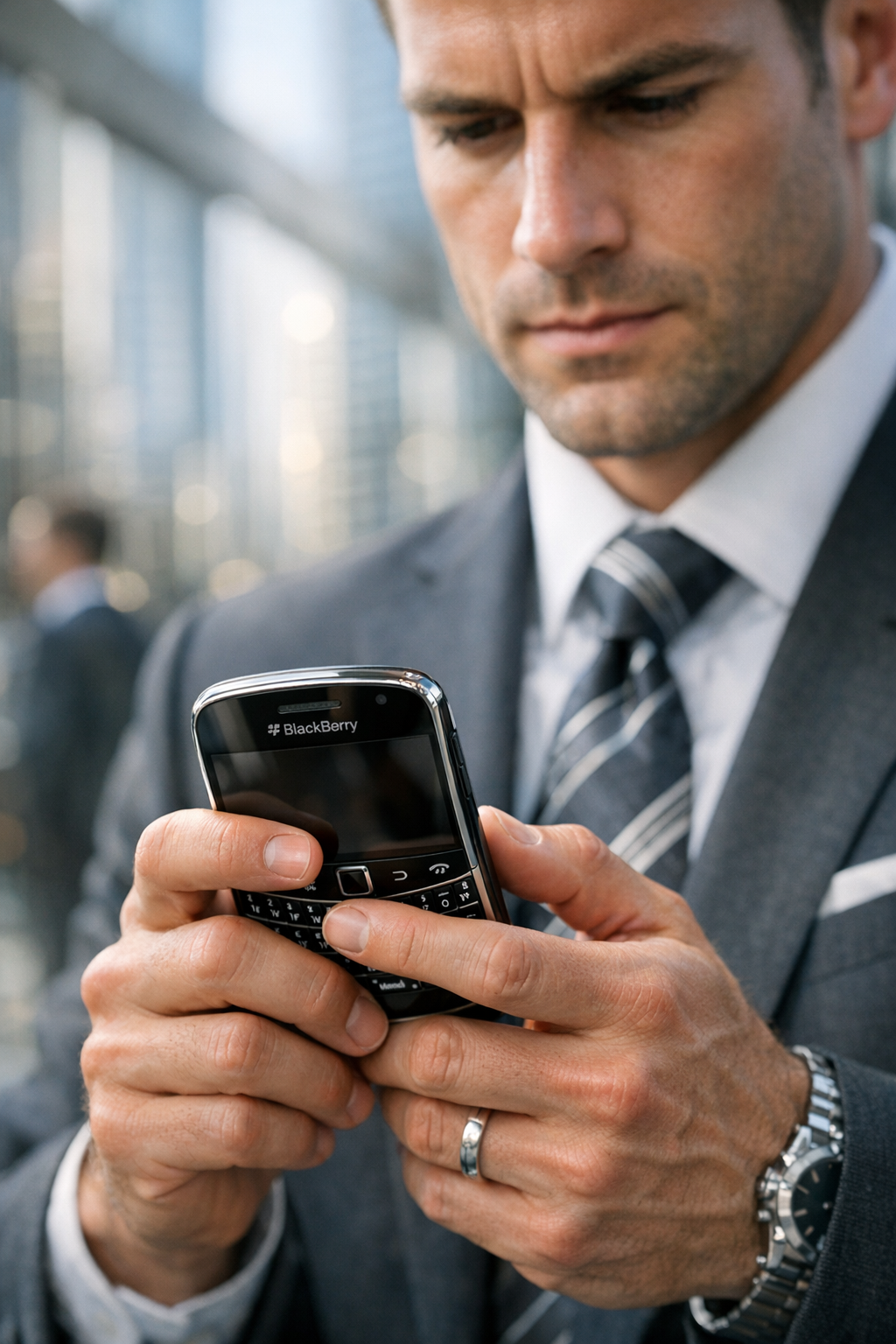
The Status Symbol…Your Thumbs will Never Forget.
If you’re under 25, a smartphone is basically an extra limb. It’s your TV, your bank, and your social life. But you’ll never quite get to understand what a phone meant in 2007.
Back then, owning a BlackBerry wasn’t about having a “device.” It was about having arrived. It was the ultimate “I’m busy, I’m important, and I’m connected” flag. We’re kicking off this nostalgia series with the king of the boardroom: the CrackBerry.
I am beginning a new series KALEIDOSCOPE dedicated to the lost relics of nostalgia, and there is only one place to start: the magnificent, unrivalled “BlackBerry.” This is the story of Research In Motion (RIM) and the tiny device that defined corporate status, hooked a generation, and established the blueprint for modern communication, only to be left behind.
The “Click” That Built Empires.
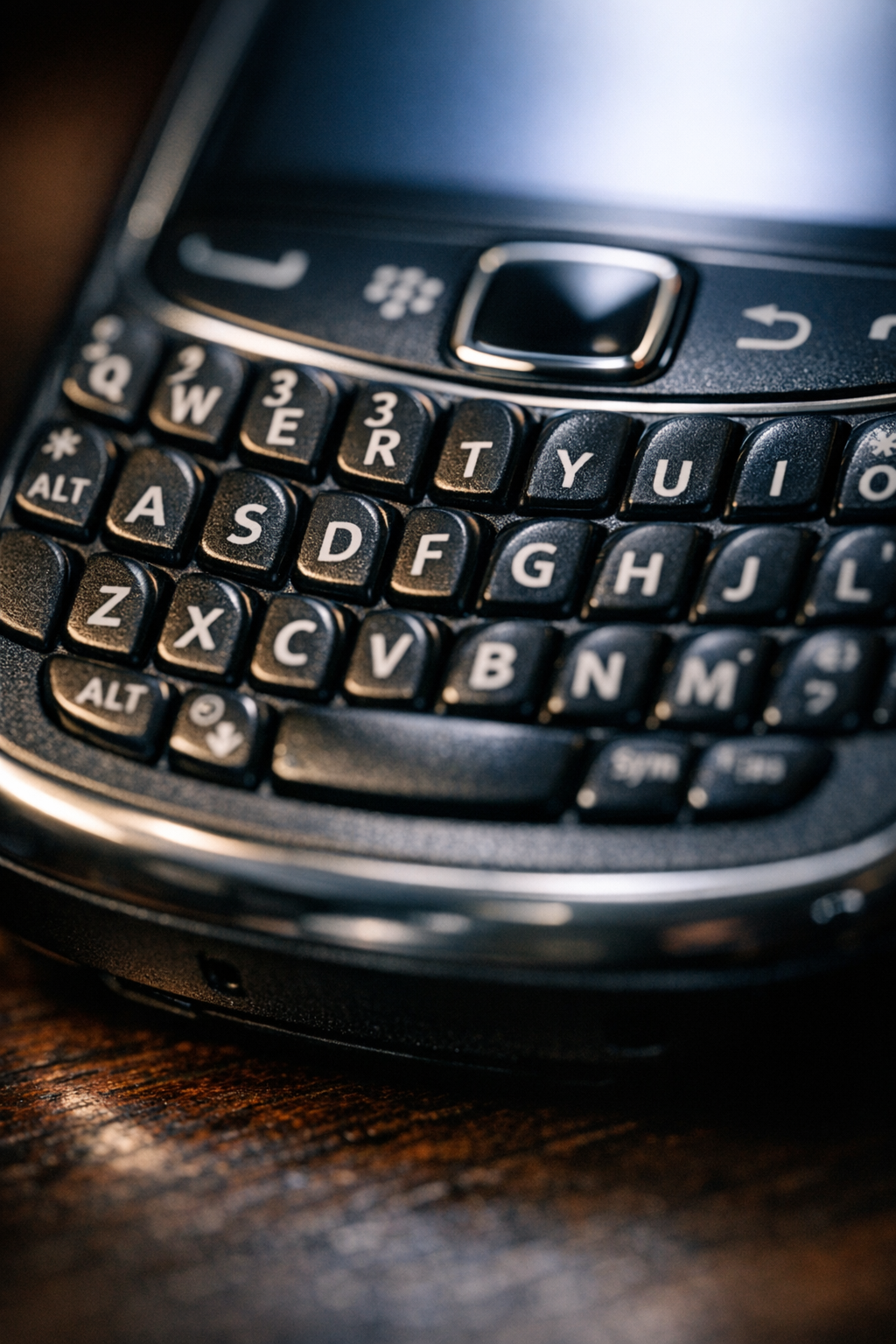
Modern screens are glass—cold, flat, and personality-free. The BlackBerry was tactile. It had soul.
Those tiny, slanted QWERTY keys weren’t just for typing; they were for working. There was a specific, mechanical “click” that provided a hit of dopamine every time you fired off a response. You didn’t just tap a screen; you engaged with a machine. You could type a three-paragraph email while walking through an Airport without looking down once. It was ergonomic perfection that modern touchscreens still haven’t touched.
The Red Blinking Light
If you knew, you knew. That little red LED in the corner was the heartbeat of the corporate world.
Before the chaos of WhatsApp etc, we had the “Hallmark” of communication: the BlackBerry Internet Service (BIS). It was seamless. Emails didn’t just “arrive”; they were pushed to you instantly, encrypted and reliable. When that red light blinked, it meant someone needed you. It meant you were in the loop. It was a status symbol that demanded attention, yet offered a strange sense of security.
Why We Cannot Go Back.
To a generation raised on “swipe to unlock,” the BlackBerry would look like a calculator from a bygone era. It’s hard to translate that feeling of holding a device that didn’t want to entertain you—it wanted to help you conquer the day.
The Relic.
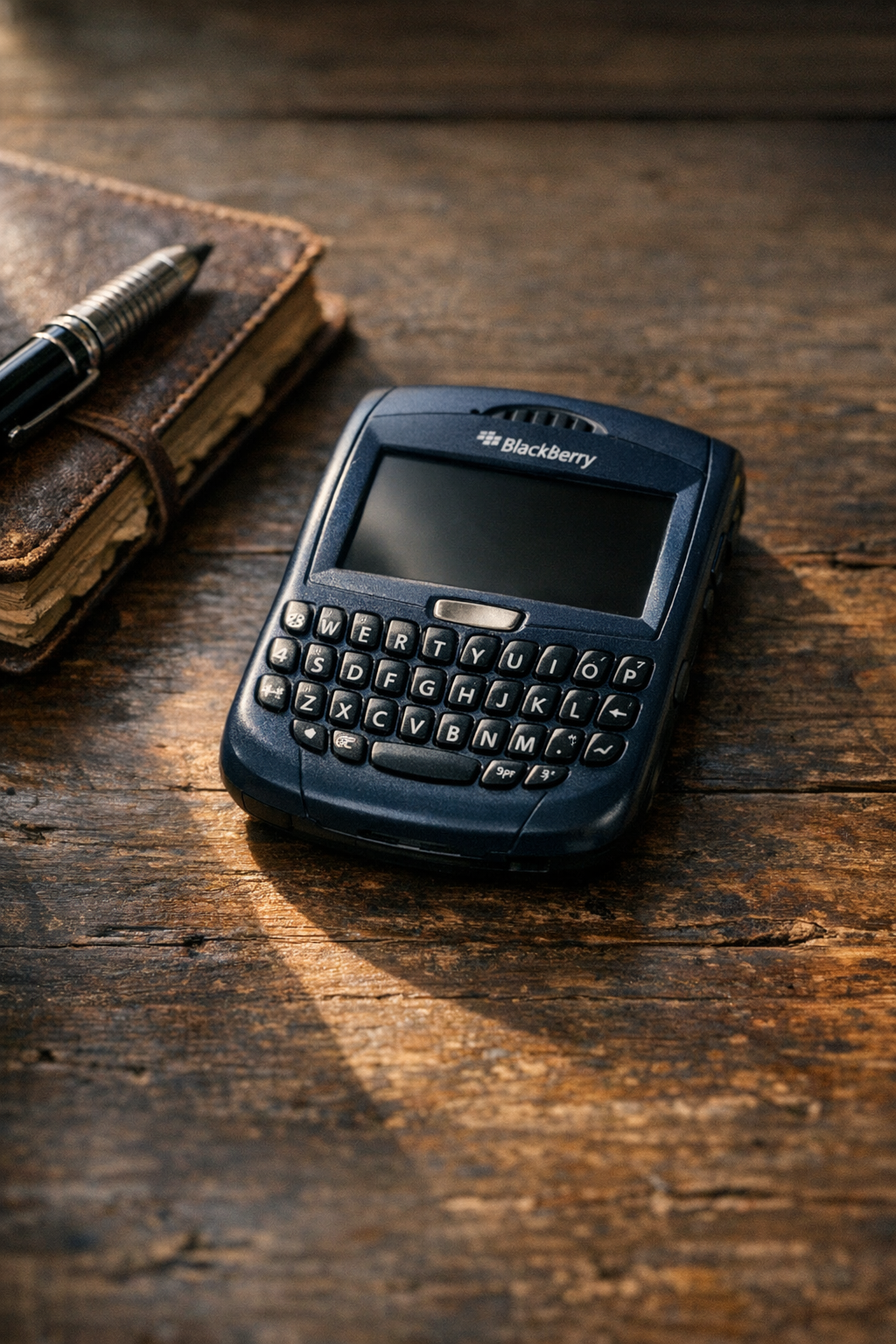
It was a tool for creators and leaders, not just consumers. As the world moved toward video and endless scrolling, the BlackBerry became a beautiful relic. We traded that satisfying physical click for a vibration motor, and that rock-solid reliability for “touches & swipes.”
The BlackBerry is gone, but for those of us who lived through the era of the blinking red light, it remains the unsurpassable peak of practical tech.


 Capt. Shaji Kumar