
Tag: writing

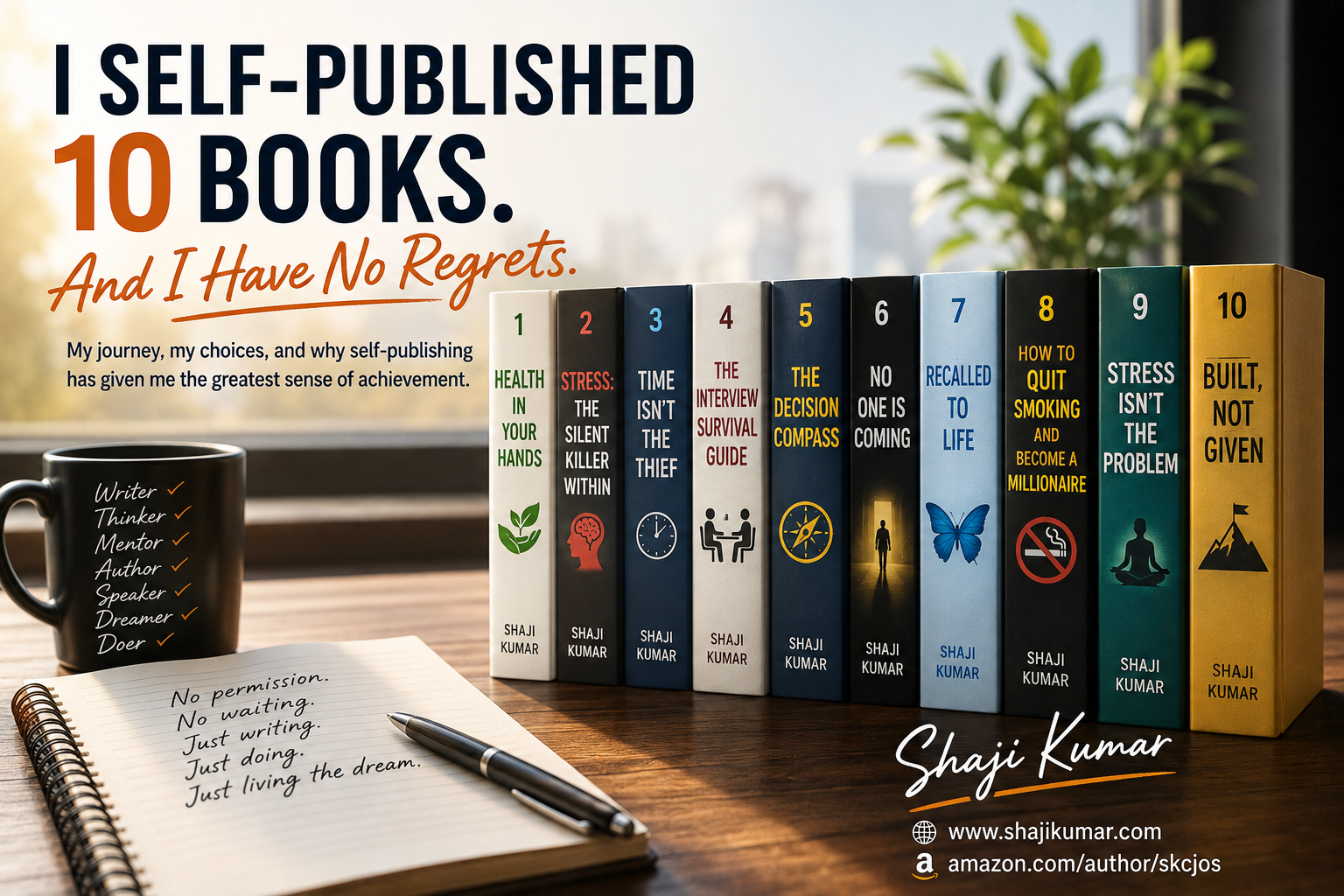
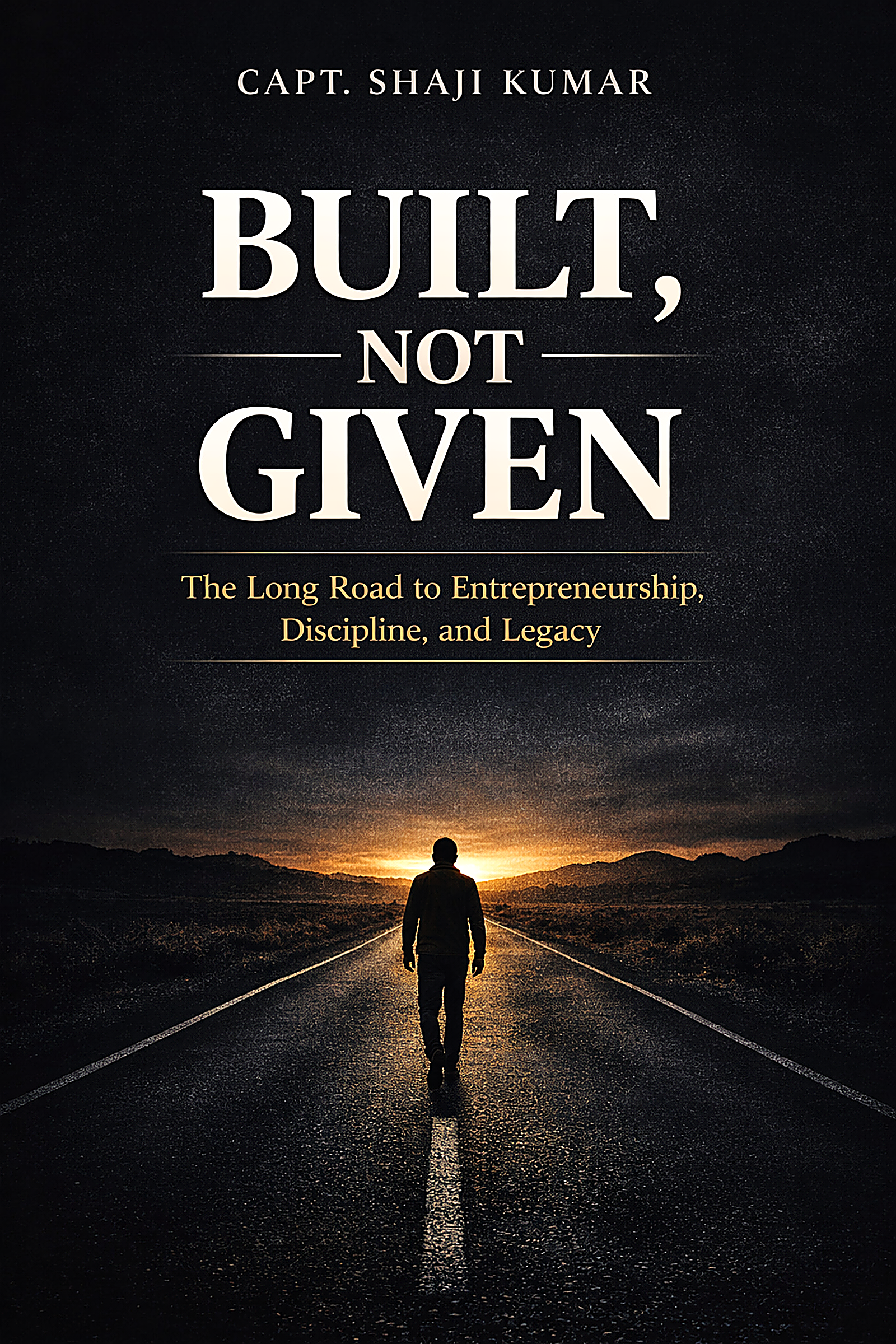
  • Built, Not Given: The Story Behind the Book.

    For the founder who was told to wait their turn.


    There’s a version of the founder story everyone tells: the idea, the risk, the breakthrough, the exit. It’s a good story. It’s also not the one that matters most.

    The one that matters most is the middle — the long stretch with no name, where you’re too far in to quit and too far out to see the end. I spent years there. Multiple times. There were mornings with no investor to call, no partner to lean on, and no certainty that things would hold. They held. I don’t always fully remember how.

    Those mornings weren’t unique to me. They’re not unique to founders, either — it’s what happens whenever someone chooses to build something with no guarantee it holds. Leaving the structure of the Army for the total uncertainty of business taught me a specific kind of discipline for exactly that stretch — not motivation, which runs out, but discipline, which doesn’t ask to feel like anything.

    I’ve spent nearly three decades building service enterprises from nothing — Chaque Jour Group now operates across 16 cities, bootstrapped from the start. Somewhere in those years, I kept meeting the same person over and over in different bodies: the first-generation founder with no safety net, the veteran wondering if the discipline that got them through service could get them through business, the MSME owner somewhere between “we started” and “we made it.” They kept asking me some version of the same question — how did you actually get through the years when nothing was working?

    I finally wrote the honest answer down. It’s called Built, Not Given.

    What the book actually is

    This isn’t a framework book, and it isn’t a highlight reel. It’s an honest, lived-in account of building something from scratch — the long middle where ventures are won by persistence, not brilliance, and by belief, not opportunity. If you’ve ever made a decision alone at an hour when no one else was awake to make it with you, this book was written for you.

    It’s for:

    • First-generation founders still in the grind, not the highlight reel
    • Veterans weighing whether the discipline of service translates to the uncertainty of business
    • MSME owners somewhere between “started” and “made it”

    Where to get it

    Built, Not Given is published wide — deliberately, so you can read it however suits you best, on whatever platform you already trust:

    Pick whichever is easiest for you. They all lead to the same book.

    Beyond the book

    Built, Not Given sits alongside my other books and the work I do now coaching founders through their own version of this middle, under the Clarity Under Pressure™ banner. If you want to see the rest — other titles, writing, or how to work with me directly — everything’s at www.shajikumar.com.

    If you read it, I’d genuinely like to know what landed. Reply, comment, or leave a review wherever you bought it — for a book this new, that’s the thing that helps it find the next reader who needs it.


    Success is not given. It is built.

    #BuiltNotGiven #FirstGenerationFounder #VeteranEntrepreneur #MSME #StartupJourney #Leadership #Entrepreneurship #IndianStartups #ClarityUnderPressure

  • Smoking Doesn’t Just Shorten Your Life. It Steals the Quality of the Years You Have Left.

    Why quitting today may be the most profitable decision you ever make.

    Every smoker knows smoking is harmful.

    Every cigarette packet says it.Doctors say it.Family members say it.Governments spend millions on campaigns saying it.

    Yet millions continue to smoke.

    Why?

    Because smoking is rarely about nicotine alone.

    It becomes a habit.A routine.A stress reliever.A companion during loneliness.A reward after work.A way of fitting in socially.

    Over time, the cigarette stops becoming a choice and starts becoming a command.

    The frightening part is that the damage begins long before you feel it.

    The Silent Damage Begins Early

    Many smokers proudly say,

    “I’ve been smoking for 20 years and I’m perfectly fine.”

    The truth is they are not.

    Human bodies are remarkably good at hiding damage until it reaches a tipping point.

    While you continue smoking, your body is quietly fighting a battle every single day.

    Inside your lungs, tiny air sacs called alveoli begin to lose their elasticity.

    Blood vessels gradually narrow.

    The heart works harder.

    Oxygen levels reduce.

    Inflammation spreads throughout the body.

    The immune system weakens.

    Cells begin accumulating genetic damage.

    Most people never notice these changes because they happen slowly.

    Then one day, climbing a flight of stairs becomes exhausting.

    A persistent cough refuses to go away.

    Breathing becomes laboured.

    The warning signs appear only after years of silent destruction.

    What Smoking Actually Does to Your Body.

    Smoking affects nearly every organ.

    Your Lungs

    Smoking destroys lung tissue permanently.

    It causes chronic bronchitis, emphysema and Chronic Obstructive Pulmonary Disease (COPD), conditions that make even simple activities like walking or talking exhausting.

    Lung cancer remains one of the leading causes of cancer deaths worldwide.

    Your Heart

    Every cigarette temporarily increases your heart rate and blood pressure.

    Over years, this dramatically increases the risk of:

    • Heart attacks
    • Stroke
    • High blood pressure
    • Peripheral artery disease

    Many smokers don’t die from lung disease.

    They die because their cardiovascular system simply gives up.

    Your Brain

    Nicotine creates one of the strongest addictions known.

    It rewires reward pathways.

    Without nicotine, the brain begins demanding another cigarette.

    This creates the illusion that smoking reduces stress.

    In reality, smoking temporarily relieves nicotine withdrawal.

    The stress returns quickly, creating an endless cycle.

    Your Mouth

    Smoking causes:

    • Bad breath
    • Yellow teeth
    • Gum disease
    • Tooth loss
    • Oral cancers

    Your smile often reveals your smoking habit before your lungs do.

    Your Skin

    Smoking accelerates ageing.

    Wrinkles appear earlier.

    Skin loses elasticity.

    Complexion becomes dull.

    Blood circulation decreases.

    Many people spend thousands on skincare while continuing to smoke.

    The two simply cannot coexist.

    The Financial Cost Nobody Calculates

    Most smokers underestimate how much they spend.

    Suppose someone smokes one pack a day costing ₹350.

    That becomes approximately:

    • ₹10,500 every month
    • ₹1,26,000 every year
    • ₹12.6 lakh in ten years

    Now imagine investing that amount instead.

    With disciplined investing and compounding, the figures become astonishing over time.

    Smoking doesn’t just burn tobacco.

    It burns wealth.

    It burns opportunities.

    It burns financial freedom.

    The Good News: Your Body Starts Healing Immediately

    This is perhaps the most encouraging part.

    Your body wants to recover.

    The moment you stop smoking, healing begins.

    Within 20 minutes, heart rate and blood pressure begin moving towards normal.

    Within 12 hours, carbon monoxide levels fall significantly and oxygen levels improve.

    Within weeks, circulation improves.

    Breathing becomes easier.

    Walking becomes less tiring.

    Within months, lung function improves noticeably.

    Within years, the risks of heart disease, stroke and several cancers decline substantially compared to continuing smokers.

    The body possesses an extraordinary ability to repair itself when given the opportunity.

    Why Most People Fail to Quit

    Most smokers don’t fail because they lack willpower.

    They fail because they fight the wrong battle.

    They focus only on resisting cigarettes.

    They don’t change:

    • their routines
    • emotional triggers
    • habits
    • environment
    • mindset

    The cigarette itself isn’t always the real addiction.

    The behaviour surrounding it is.

    Without changing that behaviour, quitting becomes unnecessarily difficult.

    Quitting Is Not About Suffering

    Many people imagine quitting means endless cravings and misery.

    It doesn’t have to be that way.

    Successful quitting follows a structured process.

    You prepare.

    You understand your triggers.

    You replace habits.

    You create accountability.

    You develop new routines.

    You learn how to manage cravings without feeling deprived.

    Once the mind accepts the decision, the body gradually follows.

    Your Future Self Is Waiting

    Imagine waking up without coughing.

    Walking without breathlessness.

    Travelling without looking for smoking zones.

    Playing with your children or grandchildren without fatigue.

    Sleeping better.

    Eating better.

    Smelling better.

    Feeling proud instead of guilty.

    Every cigarette you don’t smoke is a vote for that future.

    The Best Time to Quit Was Yesterday. The Second Best Time Is Today.

    There is never a perfect day.

    Never a perfect Monday.

    Never a perfect New Year.

    Never a perfect birthday.

    The decision begins with one cigarette not smoked.

    Then another.

    Then another.

    Eventually, the identity changes.

    You no longer become someone trying to quit.

    You become someone who simply does not smoke.

    That transformation changes everything.

    If You’re Serious About Quitting, I’ve Written the Roadmap

    Quitting smoking isn’t merely about giving up cigarettes.

    It’s about reclaiming your health, your confidence, your time and your financial future.

    That’s exactly why I wrote my book:

    📘 How to Quit Smoking and Become a Millionaire.https://www.amazon.com/dp/B0H4D5HN4W

    This isn’t another book filled with lectures or scare tactics.

    It is a practical, step-by-step guide that helps you:

    • Understand why you smoke.
    • Break the psychological addiction.
    • Handle cravings effectively.
    • Build habits that replace smoking.
    • Save the money you would have spent on cigarettes.
    • Turn those savings into long-term wealth through disciplined financial habits.

    Because quitting smoking is not just about living longer.

    It’s about living better.

    And becoming financially stronger along the way.

    You can get your copy on Amazon here or read for Free:

    📘 How to Quit Smoking and Become a Millionaire

    If this article made you pause and think, please share it. Someone in your network may be waiting for the one message that finally helps them make the decision to quit.

    Sometimes, changing one life begins with sharing one article.

  • Your Future Will Not Be Handed to You. It Has to Be Built.

    There comes a point in every person’s life when excuses begin to lose their meaning.

    You can continue blaming the economy, your employer, your background, your age, your qualifications, or your circumstances. Many of those reasons may even be valid. Life has never promised a level playing field.

    But at some point, one question refuses to go away.

    What are you going to do about it?

    That single question separates people who remain spectators from those who become creators of their own future. For decades we have conditioned ourselves to believe that success follows a predictable path. Study hard. Get a good job. Work for someone else. Wait for promotions. Retire comfortably.

    The world has changed.

    Jobs are changing. Industries are changing. Technology is changing. The skills that made people successful yesterday may not guarantee relevance tomorrow.

    If there was ever a time to take charge of your own future, it is now.

    Many people think entrepreneurship is only for a privileged few. They imagine billion dollar startups, venture capital funding, sophisticated offices, and teams of hundreds. Nothing could be farther from the truth.

    Entrepreneurship begins with a problem. A problem you understand. A problem that frustrates you. A problem you genuinely want to solve.

    It may be teaching children in your neighbourhood.

    Helping senior citizens use technology.

    Preparing students for interviews.

    Creating healthy food for working professionals.

    Repairing appliances.

    Building websites.

    Writing content.

    Growing organic vegetables.

    Offering bookkeeping services.

    Designing homes.

    Training people in communication.

    Helping small businesses market themselves.

    Every successful enterprise that exists today started because someone decided that a problem deserved a solution. Not every enterprise has to become a unicorn. Some simply have to become meaningful. That is enough.

    I have spent decades working with people from different walks of life. I have seen extraordinary talent hidden behind ordinary appearances. The biggest obstacle has rarely been capability. It has almost always been belief. People underestimate themselves.

    They wait until they feel ready.

    They wait for the perfect opportunity.

    They wait for more money.

    They wait for someone to discover them.

    They wait for confidence.

    Sometimes they spend years waiting.

    Confidence rarely arrives before action.

    It usually arrives because of action.

    You begin.

    You stumble.

    You learn.

    You improve.

    You grow.

    Every entrepreneur has experienced uncertainty.

    Every successful professional has made mistakes.

    Every meaningful journey begins before certainty arrives.

    Do not confuse small beginnings with small futures.

    The size of your first step has nothing to do with the distance you can eventually travel.

    What matters is whether you are moving.

    Building your own enterprise is not merely about earning an income.

    It changes something much deeper.

    It changes the way you think.

    Instead of asking, “Who will give me an opportunity?”

    You begin asking, “How can I create one?”

    Instead of asking, “Who will solve this problem?”

    You begin asking, “Can I solve it?”

    That shift changes everything.

    The future belongs to people who create value.

    It does not matter whether you are twenty-five or sixty-five.

    It does not matter whether you begin from a garage, a spare bedroom, your dining table, or a mobile phone.

    Every meaningful enterprise begins with one person deciding to act.

    Not tomorrow. Today.

    At the Global Learning Centre, this is the mindset we want to nurture. We are not trying to produce people who simply look for jobs. We want to develop people who can create opportunities for themselves and for others.

    People who think independently.

    People who solve problems.

    People who build with integrity.

    People who contribute to society while creating livelihoods.

    The world does not need more people waiting for permission.

    It needs more people willing to take responsibility.

    Your future is not hidden somewhere waiting to be discovered.

    It is built.

    One decision.

    One skill.

    One problem solved.

    One customer served.

    One day at a time.

    Take charge of your life.

    No one can build your future better than you.

  • Clarity under Pressure

    Field notes for first-generation founders — building calm, judgment, and momentum when everything’s on the line.

    Pressure Was Never the Problem

    Picture the founder at 11 p.m. Payroll runs in nine hours. The number in the account doesn’t cover it. He opens the same spreadsheet for the fourth time, as if the figures might have changed since the third.

    They haven’t.

    Here’s what’s actually happening in that room — and it has nothing to do with the money. Under that kind of pressure, his thinking has narrowed to a tunnel. He isn’t weighing options anymore. He’s bracing. And a man who is bracing makes bad calls, because bracing is not the same as deciding.

    That’s the whole game. Pressure doesn’t break you by making you afraid — fear is manageable. It breaks you by quietly removing your judgment at the exact moment you need it most. The first casualty isn’t your nerve. It’s your ability to think clearly.

    I learned this young, in uniform. Commissioned in March 1988. The Army never trains you to feel no pressure — that’s a fantasy, and a dangerous one. It trains you so that when the pressure arrives, your judgment is still standing. The drill, the repetition, the checklist run a hundred times — none of it exists to make the moment calm. It exists so you can still make a sound decision inside a moment that isn’t.

    Then I spent 28 years building a staffing & Facility Management business from nothing. Bootstrapped. No safety net. No family money behind me, no investor to call at midnight. Just payroll that had to clear, clients who had to be served, and a team that had to be paid whether or not the receivables came in on time. Pan-India, sixteen cities, one decision at a time.

    And I found the same law operating that I’d first met in uniform: the people who survive pressure aren’t the ones who feel less of it. They’re the ones who keep their judgment intact while everyone around them loses theirs.

    That’s the difference between built and given. Nobody handed me a calm nervous system. I built one — under load, on the job, the hard way. And the good news, the reason this newsletter exists, is that it’s *buildable*. It’s a system, not a personality trait. You don’t have to be born unshakeable. You can train it.

    **That’s what this is for.**

    Clarity Under Pressure™ is a fortnightly field manual for first-generation founders and professionals making hard transitions — the ones doing it without a template, without a network that already believes in them, without the luxury of a soft landing if it goes wrong. Every edition gives you one usable tool for keeping your head when the stakes spike: in the business, in the boardroom, in the room where the decision actually gets made.

    No theory you can’t use by Friday. No motivational noise. Field notes from someone who’s been bracing at 11 p.m. and learned how to stop.

    This edition’s tool: the 90-second triage

    Next time pressure spikes and you feel the tunnel closing, don’t decide anything yet. First, run three questions out loud — on paper, not in your head, because the head is where the spiral lives:

    1. **What’s actually true right now?** Facts only. Not the fear, not the worst case — the verifiable situation in front of you.

    2. **What’s the single next action?** Not the whole solution. The *next step*. One.

    3. **What can wait until morning?** Most of it can. Pressure lies about what’s urgent.

    Ninety seconds. That’s a triage drill, and triage is what soldiers do when everything is on fire and the worst response is to freeze. It won’t make the problem smaller. It will keep your judgment standing while you solve it — which is the only thing that ever actually mattered.

    Visit my website for more information on my Books. www.shajikumar.com

    To be continued.

  • The Unnamed Accused

    The Unnamed Accused

    We know her name. We know her age. We know which street she lived on, which school she attended, what she was wearing. We have dissected her life, her family’s grief, her trauma — frame by frame — across every television channel and every social media feed.

    We do not know his face.

    That is where I want you to pause. Right there. In that gap — that enormous, telling, deeply shameful gap — lives everything that is wrong with how we as a society respond to rape.

    The victim becomes the story. The perpetrator becomes a footnote. A case number. An “accused” hidden behind the thick procedural curtain of a legal system that was designed, we are told, to protect the innocent — but which, in practice, has become a sanctuary for the guilty.

    Let us talk about what the numbers actually say. Not because numbers capture the truth of this crime — they cannot — but because they reveal the scale of our collective failure with a clarity that no amount of editorial outrage has managed to produce.

    The Data — because the numbers demand to be heard:

    • India, NCRB 2024: 29,536 cases of rape reported. That is 80 reported cases every single day. And the word “reported” is doing enormous heavy lifting in that sentence — independent research suggests that over 99% of rapes in India go unreported, buried under the twin weight of social stigma and fear of retaliation.
    • Of children: In 2024, 784 registered rape victims were under 18 years of age. Under the POCSO Act in 2021 alone, 52,836 cases of sexual offenses against minor girls were filed. Children. In their own homes, their own schools, their own neighborhoods.
    • Conviction rate: India’s conviction rate in rape cases hovers between 27% and 32%. In Delhi — the city that shook the nation with the Nirbhaya case in 2012 — the acquittal rate in rape cases stands at a staggering 83%. In Karnataka, in 2023, of cases disposed of by courts, 92% ended in acquittals.
    • Court pendency: As of recent data, 95% of all crimes against women cases are pending trial. Justice delayed is not merely justice denied — in rape cases, it is a second assault on the survivor, drawn out across years.
    • The accused meanwhile? He returns home. He continues his life. In many cases, he is known to the victim — a neighbour, a relative, a person in a position of trust. He is not paraded. He is not named in most media coverage. He is protected, procedurally and socially, in ways the victim never was and never will be.

    This is not an accident of the system. It is a feature of it.

    Turn on any news channel after a high-profile rape case. Watch carefully. The camera will linger on the family of the victim — their devastation weaponized for viewership. The reporter will stand outside the hospital, outside the home, outside the court — and every question, every frame, every graphic will orbit the survivor. Her identity. Her background. Her movements on the night in question.

    The rapist’s family will not be followed. His neighborhood will not be mapped. His history of behaviour will not be investigated and broadcast in prime time. He will not have to live the rest of his life as a figure of public shame — because the media has decided, consciously or not, that the victim is the more compelling story. Sensation sells. Suffering sells. A family broken sells. A predator exposed and humiliated? That is apparently less interesting.

    This must change. And the change must be structural, not sentimental.

    What the world has done — and what we refuse to consider:

    Several countries have decided, through law and through will, that a rapist forfeits his standing as a protected citizen.

    • Bangladesh passed the Women and Children Repression Prevention (Amendment) Bill in 2020, introducing the death penalty for rape following mass public outrage over high-profile cases.
    • Pakistan introduced the death penalty for gang rape and child sexual abuse in 2020. Chemical castration is an additional sentencing option.
    • Saudi Arabia mandates death by public beheading for convicted rapists under Sharia law. Egypt, Iran, the UAE and China have similar provisions for aggravated rape, particularly involving minors.
    • North Korea sentences rapists to death by firing squad.

    One does not have to admire the legal systems of these countries in their entirety to acknowledge the singular clarity of their message: this act places you outside the protection of civil society.

    India, meanwhile, has the Nirbhaya Fund — announced in 2013, still largely unspent a decade later. It has fast-track courts — chronically understaffed and overwhelmed. It has the POCSO Act — routinely delayed in its application. It has laws. It has frameworks. It has committees. What it does not have is the will to make the punishment so swift, so certain, and so visible that it functions as a genuine deterrent rather than a bureaucratic inconvenience.

    The argument against capital punishment is not without intellectual weight. There are serious, principled objections — the risk of wrongful conviction, the question of whether the state should hold the power of death, the evidence on deterrence. These arguments deserve a hearing in Parliament and in academic institutions. They are not arguments that should be used to endlessly delay action while children are being assaulted and survivors are being re-traumatized in courtrooms for years on end.

    There is a middle ground that India has not seriously explored: mandatory, time-bound trials — completed within ninety days for rape cases. Automatic public identification of convicted rapists — their names, their photographs, their backgrounds published as a matter of public record. Constitutional amendment to classify rape, particularly of minors, as a crime against the state — not merely against the individual — triggering a fundamentally different order of response from the justice system.

    The rapist should be the story. His face should be known. His family should have to reckon with what he has done. The community that sheltered him, that looked away, that whispered about the girl rather than condemning the man, should be made uncomfortable in the full light of public scrutiny.

    Because here is the truth that our system refuses to confront: the victim did not choose this. He did. Every protection, every procedural courtesy, every anonymous news report that shields his identity is a choice — a choice we make, again and again, to protect the wrong person.

    A child who was violated does not get to remain anonymous in her own memory. The very least a just society can do is ensure that the man who violated her cannot remain anonymous in ours.

    We pour our outrage into candlelight vigils and hashtags that trend for forty-eight hours, then we move on — so I ask you plainly: how many more names do we need to remember before we decide that the one name we should never be allowed to forget is his?

    #Reflections #EndRape #JusticeForSurvivors #RapeIsACrime #NameTheRapist #ChildSafety #POCSO #Nirbhaya #WomensRights #GenderBasedViolence #LegalReform #DeathPenaltyForRape #NCRBData #India #SpeakUp #BreakTheSilence #WritingCommunity #LinkedInThoughtLeaders #Medium #Substack