Category: Personal Reflections

  • The Ghost in the Clock: Why “I Don’t Have Time” is a Lie.

    The Ghost in the Clock: Why “I Don’t Have Time” is a Lie.

    I don’t have time.” It’s the phrase that slips out of our mouths like a reflex.

    It’s the universal apology for missed calls, unread books, and distant hearts. But if we look at the math of modern life, the statement isn’t just sad—it’s factually impossible.

    The Paradox of Speed.

    Once, a journey took 12 hours. Today, it takes four. We “gained” 8 hours. Where did that go?

    Once, news took four days to cross the country. Now, it takes four seconds. We “gained” days. Where did that go?

    We live in a world where the world’s knowledge, your bank, and your family’s faces are in your pocket. We should be the most relaxed generation in history. Instead, we are the most breathless.

    The Mental Trap We’ve traded warmth for WiFi. We live with two people under a roof instead of ten, yet the house feels quieter and the connection feels thinner. We watch mimicry, endless reels, and digital noise while the person sitting next to us waits for a glance. We ride bikes while on the phone. We scroll through WhatsApp at traffic lights. We cut lines because we “can’t wait.” We have become addicts of the shortcut, yet we never seem to arrive at a place of peace.

    The Mirror Test. Our parents had the same 24 hours. They didn’t have apps, high-speed rail, or instant grocery delivery. Yet, they lived with grace. They had time for tea, for neighbours, and for silence. We don’t “lack” time. We abuse it. We give our hours to IPL matches, celebrity gossip, and political debates, then claim we are too busy to listen to a friend or hug our children.

    The Wake-Up Call. I wrote these words because I made time. I stopped chasing the clock and started honouring it. Before you close this tab and say, “I don’t have time to think about this,” pause. Are you actually busy, or are you just distracted? The clock isn’t your enemy—your choices are. Stop chasing time. Start respecting it.

    Reflection: Do not say you do not have time. Value it.

  • The Unspoken Anchor: Understanding and Cherishing Parental Love.

    The Unspoken Anchor: Understanding and Cherishing Parental Love.

    The Unseen Foundation. In the chaotic symphony of life, we often miss the soft, consistent melody that plays in the background. It’s the silent support, the unwavering belief, the hands that steady us when we stumble. It’s the love that has no conditions, no fine print, and no expectations. This profound, boundless love comes from two people: our parents. The Power of Unconditional Love While the world operates on a system of reciprocity, where love is often tied to actions or worthiness, parental love stands as a stark and beautiful exception. Think back to your earliest memories. The scraped knees comforted, the nightmares banished, the milestones celebrated with genuine joy. This love didn’t depend on your grades, your career choices, or your social standing. It existed purely because you were their child. They were your first cheerleaders, your confidants, and your safest harbour. This type of love, given freely without any underlying motive, is a rare and precious gift.

    When Life Gets in the Way As we grow older, we get absorbed by our own ambitions, challenges, and relationships. We build our own lives, and in the process, we sometimes forget the very foundation that allowed us to build. We become busy. We forget to call. We miss birthdays. We take their presence for granted, assuming they will always be there, just as they have always been. This neglect, however unintentional, can be a silent wound for our parents. They might not complain, but the void left by our absence or lack of expressed affection can be felt deeply.

    The aspersions We Cast by way of misunderstanding their Motives. Sometimes, our parents’ words or actions can be misinterpreted. Their concerns might sound like nagging, their advice might feel like interference, and their questions might seem like intrusions. In our desire for independence, we might push them away, labelling their care as control. However, if we peel back the layers, we’ll often find that their words and actions are rooted in deep-seated love and a desire to protect and guide us. They have seen more of the world, experienced more its challenges, and their wisdom, though perhaps delivered in a way that feels outdated, comes from a place of genuine concern.

    Cultivating a Culture of Gratitude and Respect So, how can we bridge the gap and honor this profound love?

    • Express Your Affection without waiting for a special occasion. Simple gestures can mean the world. A spontaneous phone call, a thoughtful message, a warm hug, or a simple “I love you” can brighten their day.
    • Make Time, Not Excuses: Prioritise quality time with them. Go for a walk, share a meal, or just sit and talk. Be fully present in those moments.
    • Listen with Empathy when they speak. Genuinely listen to understand their perspectives and feelings. Ask about their lives, their dreams, and their worries.
    • Forgive and Move Forward because No parent is perfect. They might have made mistakes. But letting go of past grievances and focusing on the love they have shown can bring peace to your relationship.
    • Show Your Respect with Simple acts of respect, like asking for their advice (even if you don’t always follow it) or listening attentively, can convey that you value their wisdom and experience.

    A Love to Be Cherished Our parents’ love is a beacon that guides us, a safety net that catches us, and a constant in an ever-changing world. It is a love that asks for nothing in return but is fulfilled by seeing us thrive. Let’s not wait for “someday” to express our love and gratitude. Let’s not let the busyness of our life dim the brightness of this connection. Let’s honour the two people who loved us first, and who continue to love us, unconditionally and without aspersions. For in cherishing them, we honour the very essence of love and connection.

  • The Jungian Blueprint: Manifesting from the Subconscious, Not the Ego.

    The Jungian Blueprint: Manifesting from the Subconscious, Not the Ego.

    We live in a culture obsessed with “the grind.” The prevalent narrative is that if you just work harder, sleep less, and exert more willpower, you can bridge the gap between where you are and where you want to be. But for many, this relentless effort results in burnout, frustration, and an enduring sense of “lack.”

    The truth is, effort is only half the equation. You cannot outwork a subconscious mind that believes you are not ready for what you desire.

    As Carl Jung famously said, “Until you make the unconscious conscious, it will direct your life and you will call it fate.”

    True manifestation isn’t about wishing or pretending; it is about psychological integration. It’s about moving beyond the ego’s desire to get and shifting into the subconscious’s capacity to be.

    The Trap of Chasing from Lack. Most manifestation advice, focusing on affirmations and “positive thinking,” accidentally reinforces the very problem it tries to solve. When you desperately “chase” a desire, you are operating from a core frequency of not having.

    You are communicating to your subconscious that you are lacking, and the subconscious—which is the projector of your reality—loyally continues to create a reality where you are still lacking.

    This is the psychological paradox: the more desperately you pursue a thing from a state of need, the further you push it away. You are essentially telling the universe, “I don’t have this, and I need it to be happy,” reinforcing the identity of “someone who lacks.”

    Shifting to Embodiment: The Law of Psychic Reality. The breakthrough comes when you stop seeking and start embodying. Start embodying the subconscious mind of someone who already lives inside their fulfilled reality.

    This is the Jungian “Law of Psychic Reality.” Your psyche does not distinguish between an event that is physically happening and an event that is vividly imagined and emotionally felt. To the subconscious, they are equally “real.”

    Manifestation, in this deeper sense, is the art of practicing the feeling of your wish fulfilled before the physical event occurs. You must align your “inner vibration” with the version of yourself who already has achieved the goal. You have to reprogram your subconscious identity.

    The Four-Minute Shift. This shift doesn’t require decades of therapy; it requires consistent, intentional practice. The gap between your current life and your desired life exists only in your consciousness, not in outer circumstances.

    Here is how you bridge that internal gap:

    • Stop Chasing: Acknowledge your desire, but notice when that desire feels like desperate need.
    • Reprogram the Subconscious: Commit to a small daily practice—just four minutes. In a quiet state, visualize your desired reality vividly.
    • Prioritize Feeling: Crucially, focus not just on the image of your success, but on the feeling of fulfillment. What would your life feel like the moment it became real?
    • Practice Gratitude in Advance: Shift the statement of “I want” to “Thank you that this is already a part of my experience.” When you move from needing to embodying, your outward efforts cease to be a desperate struggle and become inspired actions. You are no longer fighting your fate; you are creating it from the inside out.The Illusion of Effort Start by addressing the frustration most people feel: working incredibly hard but staying in the same place.

    Carl Gustav Jung Says, “Until you make the unconscious conscious, it will direct your life and you will call it fate.”

  • The Architecture of Echoes: Why History Never Whispers.

    The Architecture of Echoes: Why History Never Whispers.

    We are often told that history is a series of accidents—a stray bullet in Sarajevo, a sudden move across a border, a flash of lightning in the desert. But if you look at the ledger instead of the headlines, a different pattern emerges.

    World Wars aren’t just tragedies; they are transitions. The Century of the Ledger.

    In 1914, the world “stumbled” into the Great War. Yet, behind the mud of the trenches, the machinery of credit was humming. Thirty nations were pulled into a fire fuelled by $30 billion in loans. When the smoke cleared, the map of the Middle East had been redrawn, and the League of Nations rose as the first blueprint for a centralised world.

    By 1939, the playbook had been refined. We are taught about the ideologies, but we rarely talk about the invoices. Even as the world split into Allies and Axis, the “neutral” banks processed the gold, and global corporations kept the assembly lines moving on both sides of the fence. The result of 85 million lives lost? The birth of the Dollar Hegemony at Bretton Woods. The world didn’t just find peace; it found a new CEO.

    Fast forward to today. The headlines point to the Strait of Hormuz and Operation Epic Fury. They speak of assassinations and “cycles of violence.” But look at the boardrooms:

    • Defence stocks are hitting all-time highs.
    • Energy prices are being recalibrated.
    • Trade routes are being forcibly shifted from West to East. What we are witnessing in 2026 isn’t a “war on terror”—it is the decommissioning of an old model. The petrodollar, the SWIFT system, and the unipolar world are being dismantled by the same hands that built them, because the contract has reached its expiration date.
    • The Great Recalibration The shift toward 2030 isn’t about one nation winning. It’s about the Controlled Demolition of the Familiar. Digital Identity is replacing the passport.
    • Programmable Currency (CBDC) is replacing the physical note.
    • Supply Chains are becoming the new nuclear deterrent. While the world stares at the Middle East, the real movement is happening in the silence of the semiconductor labs and the rare-earth mines.

    The Takeaway History doesn’t repeat, but it certainly rhymes in the same key. We are living through a “Global Reset” that was published in plain sight years ago. To be afraid is to be a spectator; to be aware is to be a participant. The map is being redrawn. The ink is still wet. The question isn’t “Who is to blame?” but “Where do we stand when the music stops?”

  • The Bhagavad Gita’s Secret to Fearless Leadership.

    The Bhagavad Gita’s Secret to Fearless Leadership.

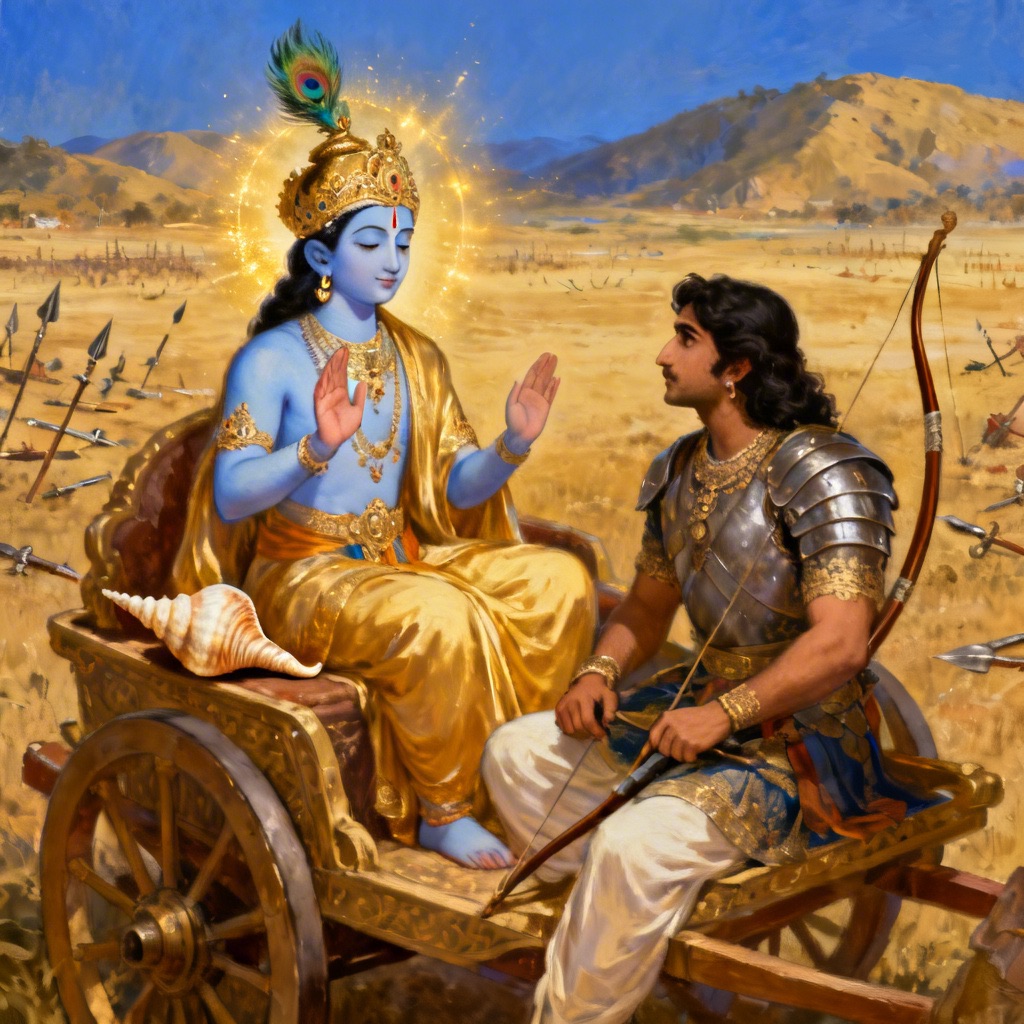
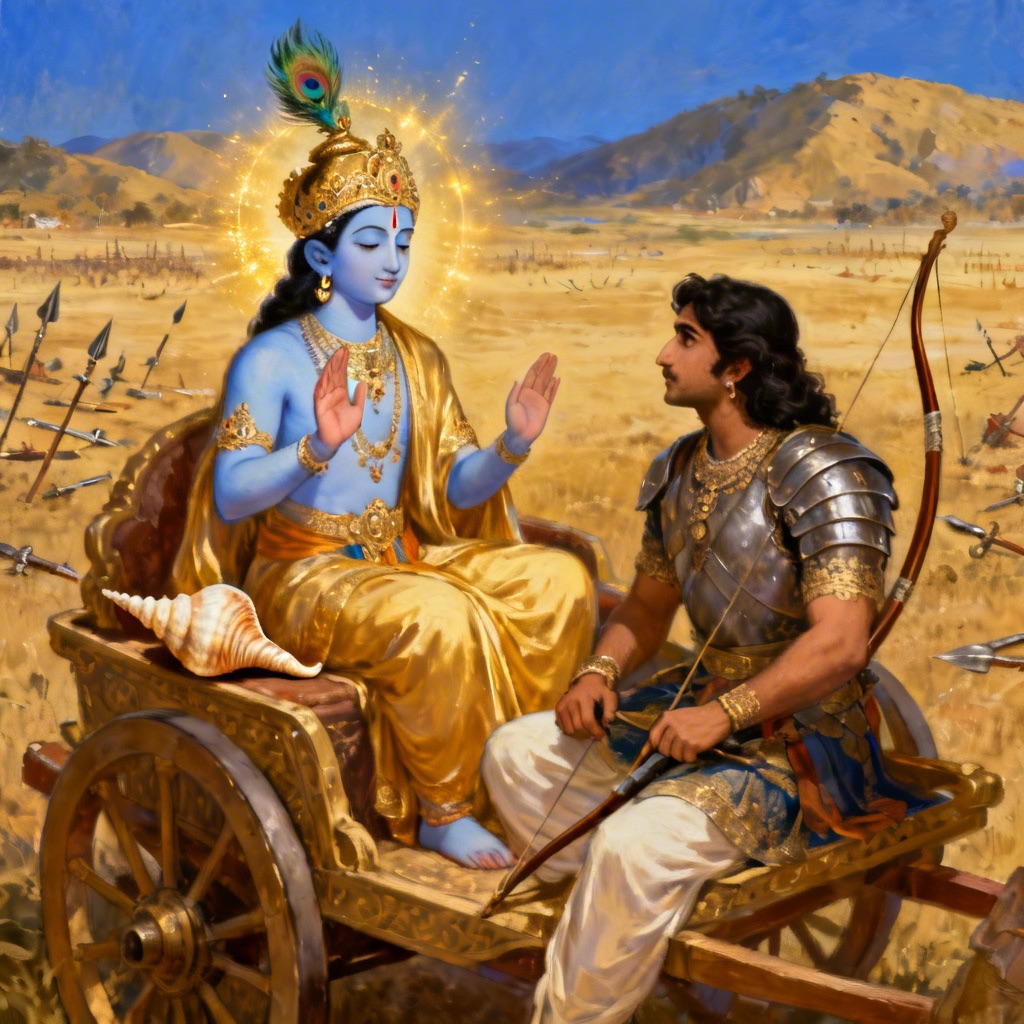
    What a 5,000-Year-Old Battlefield Conversation can teach us About Leadership.

    I used to think the Bhagavad Gita was just another religious text. Then I discovered it’s actually the most practical leadership guide ever written. Since then I have held on to this sacred book in different forms. The Printed Version, the Kindle eBook, Cards for daily reference.

    When Everything’s on the Line, when you know that moment when you’re staring at a decision that could make or break everything? I’m talking about those tough situations which everyone faces in their lives, you don’t necessarily have to be a Leader, nevertheless running through scenarios, knowing that whatever you choose tomorrow will ripple through your team, your company, maybe even your entire career.

    That’s where Arjuna was standing—literally on a battlefield, facing his cousins in what would be the bloodiest war in ancient history. And he completely froze. What happened next changed how I think about leadership forever.

    Here’s what I got wrong about the Gita for years: I thought it was some mystical conversation between holy men sitting under trees, talking about detaching from the world.

    No. This is two warriors having a very real conversation about duty, fear, and making impossible choices when lives hang in the balance. Arjuna isn’t asking for spiritual enlightenment—he’s asking for practical advice on how to lead when the stakes are crushing.

    Sound familiar?

    In today’s context it would look like this:

    – Quarterly numbers. The Agony or Ecstacy.

    – A product launch that could save or sink the company.

    – Choosing between short-term profits and long-term values.

    – Managing a team through a recession, merger, layoffs, or industry disruption. The pressure is different, but the paralysis feels exactly the same.

    The Counter intuitive Secret That Changes Everything

    Krishna’s advice to Arjuna seems backwards at first: “Do your absolute best work, then let go of the results.”

    Wait, what? Isn’t caring about results what separates leaders from… well, everyone else?

    But here’s what I’ve learned after trying this approach for years:

    When you stop being desperately attached to specific outcomes, you actually get better outcomes. Try it. It holds true.

    Why This Actually Works is, just think about it—when was the last time you made a great decision while panicking about the consequences?

    When you’re white-knuckling the steering wheel, worried about where you’ll end up, you can’t actually steer very well.

    But when you know you’ve done everything possible and you trust the process? That’s when the magic happens. You think clearer. You take smarter risks. You inspire confidence instead of spreading anxiety.

    I saw this firsthand during my company’s worst times. Not once, but many times. Instead of running around like my hair was on fire, I focused on what we could control: our response time, our communication with clients, our team’s morale. We came out stronger. And honestly? I slept better. In fact I have never lost sleep over anything ever. Whatever may have been the situation I have managed to keep my wit’s cool.

    Life Happens TO You, and you cannot stop that from happening, But You can definitely choose Your Response – on how to deal with it.

    The Gita has this concept that basically divides everything into two buckets: stuff that happens to you (prarabdha) and how you respond to it (purushartha).

    This sounds obvious until you realise how much energy we waste trying to control the first bucket. You Cannot.

    Here’s What I Mean:

    Sometime back one of our biggest and longest standing Client decided not to renew. One year of revenue, gone. That’s prarabdha—it happened, period.

    But everything else? That’s on me:

    – How I broke the news to the team- Whether I spiralled into worst-case scenarios or started planning our next move.

    – Whether I used this as a learning opportunity or just complained about “disloyal clients”!!

    You could spend days obsessing over what we could have done differently. Or you sit and analyse, make an last ditch effort to save if possible, and if even after giving it your best shot, then instead of ruminating look at alternative solutions. How to make up the lost revenue in the shortest span so that the effect is cushioned in the shortest span of time.

    The Balance That Actually Matters

    There’s this verse (Chapter 4, Verse 22, if you’re keeping track) that basically says balanced people don’t get thrown off by wins or losses. They just keep moving forward.

    This isn’t about being emotionless—it’s about being consistent.

    What This Looks Like in Practice

    Good news: Celebrate for five minutes, then ask “What’s next?”

    Bad news: Feel it for five minutes, then ask “What can we learn and Do next?”

    Uncertainty: Work with what you know, then adapt as you learn more.

    My Son figured this out before I did. He told me, “You used to be a roller coaster—amazing when things went well, impossible when they didn’t. Now we actually know what to expect from you.” He just told me to look at my old Photographs when I was younger.

    That hit harder than any performance review.

    The Best Analogy I’ve Ever Heard About Ambition.

    The Gita compares desires to paan—that sweet digestive you have after a good meal. It’s nice, but you don’t need it to feel satisfied.

    This completely reframed how I think about professional goals.

    Instead of: “I need this promotion/deal/metric to prove I’m successful”

    I started thinking: “I’m already pretty fortunate. This would be a nice bonus.”

    Why This Isn’t Just Feel-Good Philosophy

    When you’re not operating from desperation:

    – You negotiate better (you’re not afraid to walk away).

    – You make clearer decisions (you’re not clouded by need).

    Actually Trying This Stuff (Not Just Nodding Along).

    Look, reading about this is one thing. Actually doing it when your boss is breathing down your neck and wants answers is completely different.

    Practice it in your daily life. Concentrate on doing great work without bothering on specific outcome. See what happens. How it balances your stress level.

    When problems come up, spend your energy on your response, not on  not on complaining about the problem.

    Try to maintain same tone in meetings whether you’re delivering good news or bad news. It will have an impact on your Team. The energy percolates down.

    None of this is groundbreaking. But doing it consistently? That’s where the real change happens.

    Why a Battlefield Guide Still Works.

    The reason the Gita works for modern leadership isn’t because it’s ancient wisdom (though it is). It’s because it was written for someone who had to make life-or-death decisions under impossible pressure.

    The details are different, but the core challenge is the same: How do you lead effectively when the outcome matters desperately but you can’t guarantee success?

    Answer: You control what you can control, you do your best work, and you trust the process. It’s not magic. But it works.

    What’s your version of standing on that battlefield? The moment when everything you’ve worked for hangs on a decision you have to make? Remember: it’s not about predicting the future perfectly—it’s about showing up fully to the present.

    P.S. – If this resonated with you, I’d love to hear about your own battlefield moments. Because honestly, We’re all just figuring this out as we go, and sometimes it helps to know we’re not alone out there.

  • The Power of the Right People 🌟

    The Power of the Right People 🌟

    Finding Your Inner Circle: The Art of Building Your S10

    A journey toward authentic leadership and meaningful connections.

    The Power of the Few.

    In our hyper-connected world, we often forget a fundamental truth: you don’t need everyone to believe in your vision—you just need the right ones.

    Throughout history, the most impactful leaders understood this principle. They cultivated a select group of trusted advisors, confidants, and supporters who became the backbone of their success. I call this your S10**—your Strategic 10. These are the people who will stand by you, challenge you, and help you reach the culmination of your real objectives.

    The Ancient Wisdom of Oral Tradition

    There’s something profound about the spoken word that written text can never fully capture. Consider how the Vedas were passed down through generations—not through scrolls or tablets, but from mouth to ear, creating an unbroken chain of wisdom and understanding.

    When we speak our truths, when we share our visions verbally, something magical happens:

    – Our passion becomes palpable.

    – Our conviction carries weight.

    – Our humanity shines through.

    This is why great rulers maintained councils—not just for their knowledge, but for their ability to communicate, inspire, and deliver results through authentic connection.

    The S10 Project: A Labor of Love

    Like preparing the perfect biryani over a slow flame, identifying your S10 requires patience, intention, and careful attention to detail. This isn’t a process you can rush—it’s a continuous quality endeavor that deserves the same dedication you’d give to any masterpiece.

    The Selection Principles:

    No Elimination Without Cause Every person in your consideration deserves fair evaluation. Names don’t get crossed off lightly.

    Holistic Assessment One conversation, one interaction, one moment doesn’t define someone’s potential value to your circle.

    Continuous Evolution Like quality itself, this is an ongoing process. Your S10 may shift as you grow and your mission evolves.

    Time-Tested Validation Just as the finest biryanis need time to develop their full flavor, the best relationships reveal their true worth over time.

    The Multimedia Advantage

    While I write these words now, I recognise that written content only captures part of the story. The tremor in a voice when someone shares their deepest conviction, the sparkle in eyes when passion ignites, the pause that speaks volumes—these elements transform mere information into transformation.

    This is why the greatest teachers, from ancient gurus to modern thought leaders, understand that multi-sensory communication creates deeper impact:

    – Visual elements engage imagination.

    – Audio conveys emotion and nuance.

    – Written words provide structure and reference.

    – Personal interaction builds trust and connection.

    Building Your Own Council

    As you work toward becoming a thought leader who makes a real difference, ask yourself:

    Who are the people that

    – Challenge your thinking without crushing your spirit?

    – Celebrate your wins authentically?

    – Offer honest feedback when you need course correction?

    – Stand by you when others doubt?

    – Amplify your message because they truly believe in it?These are your potential S10 members. They’re not necessarily the loudest voices or the most obvious choices—they’re the ones whose values align with yours and whose presence makes you a better version of yourself.

    The Marathon Mindset

    Remember, this isn’t a sprint to a finish line—it’s a 25-year journey of continuous growth, refinement, and impact. Your S10 today might look different from your S10 in five years, and that’s not just okay—it’s expected and healthy.

    The goal isn’t perfection; it’s authentic progress toward meaningful impact.

    Closing Wisdom: The Rules for a Happy Life

    As we navigate this journey of building our circles and our influence, let’s anchor ourselves in timeless wisdom:

    1. Don’t HATE – Life is too short to waste time hating. That energy could be channeled into building something beautiful instead.

    2. Don’t COMPARE – Don’t try to be someone else. The world already has them—what it needs is the best version of YOU.

    3. Don’t WORRY trust yourself.

    The day you stop worrying will be the FIRST day of your NEW LIFE.

    Trust the process, trust your S10.

    What started as a pet project has become a profound reminder: we’re not meant to journey alone. We’re meant to find our people, nurture those relationships, and together, create the change we wish to see in the world.

    Who’s in your S10?

  • Build Your Business: Why Smart Leaders Choose Foundation Over Speed.

    Build Your Business: Why Smart Leaders Choose Foundation Over Speed.

    In the fast-paced world of entrepreneurship, it’s easy to get caught up in the rush to grow, to scale, to succeed. But what separates thriving businesses from those that collapse under their own weight? The answer lies in two fundamental leadership principles that have proven their worth time and again: building a solid foundation and understanding that scalability is a science, not a gamble.

    The most important phase is the first phase which is primarily the development stage.  It is during this time that every decision feels urgent. You’re bootstrapping, hustling, and trying to make every rupee count. In these crucial early days, it’s tempting to look for quick fixes—cheap systems that promise rapid results with minimal effort. But this is precisely where mistakes are made. Penny wise and pound foolish.

    A visionary leader understands that investing in a robust, reliable foundation is not an expense—it’s an investment in the future. It is difficult but doable. Remember Business is like a rocket that you want to send into orbit. As in any Rocket, there is the initial propulsion which takes the Rocket out of the Earth’s gravitational pull, which in terms of a Business is the first 2-3 years, and then the propulsion stage where the Rocket moves into orbit, which is the 10-12 Year phase. Both these phases are absolutely important.

    Why Foundation Matters

    Consider the foundation of building or any infrastructure. Architects don’t cut corners on the base to save money on the upper floors. They know that without a fortress-like foundation, the entire structure will eventually crumble, no matter how beautiful the facade. Your business foundation works the same way. And we know the consequences of this neglect when newly constructed flyovers or buildings collapse. The same happens for your business as well.

    When you resist the temptation for quick fixes and instead pour your resources—time, energy, capital, and talent—into building something robust and reliable, you create an ideal platform for sustainable growth Systems that can handle increased demand without breaking. A culture of excellence that attracts top talent Operational efficiency that scales naturally. The credibility and trust needed to pursue expansion plans.

    When leaders opt for sloppy, makeshift solutions to save time or money upfront, they inevitably pay a much steeper price later. Technical debt accumulates. The team becomes frustrated with unreliable systems. Customers experience inconsistencies. And when you finally try to scale, everything comes crashing down because the foundation was never adequate to support growth.

    The companies that dominate their industries—the Amazons, the Apples, the organisations that survive economic downturns and industry disruptions—are those that invested heavily in their foundations. They didn’t cut corners. They built fortresses.

    Once your foundation is solid, the next critical phase is scaling. But here’s what many leaders get wrong: they treat scalability like a lottery ticket, hoping that growth will happen if they just push harder or spend more money. The truth is far more elegant—scalability is a science. Scalability isn’t about explosive growth; it’s about linear strategic growth achieved methodically over time. When you scale a business properly, you’re not just increasing revenue—you’re doing more with proportionally less effort. You’re creating leverage.

    For a business to truly be scalable, it must focus on two core principles:

    1. Increasing efficiency: Doing more with fewer resources, time, and effort.
    2. Adding value: Ensuring that each increment of growth delivers proportional or greater value to customers and stakeholders.

    Before you make the critical decision to scale, a thorough evaluation is essential. Ask yourself these questions:

    • Are my systems and processes optimised for growth? Do I have the right team in place to support expansion?
    • Is my market large enough to justify the investment?
    • What are the financial implications of scaling?
    • How will this growth affect my brand and customer experience?

    Strategic scaling requires intentional planning. You must establish a clear growth trajectory that answers these critical questions:

    1. What speed? How fast do you want to grow—and more importantly, how fast can you grow without sacrificing quality?What route? Which markets, channels, or customer segments will drive your growth? What resources? What investments in capital, talent, and technology do you need?When to pause? Recognising when to slow down to maintain quality or reassess your strategy.
    2. When to finish? Knowing your end goal—whether it’s a specific market share, revenue target, or operational maturity.

    These two lessons aren’t separate paths—they’re interconnected. Your solid foundation enables you to scale confidently. And your understanding of scalability as a science ensures that your foundation will continue to support your growth without buckling under pressure.

    As a leader, your responsibility is to resist the siren song of shortcuts and quick wins. Build something that lasts. Be intentional about your growth. Treat scaling like the serious, scientific endeavour it truly is.

    The businesses that thrive aren’t the ones that grew fastest—they’re the ones that grew smartest. And that smartness starts with a leader who understands these two timeless principles.

    Build your fortress. Scale with science. Lead with vision.

  • The Unstoppable Force: Why Educating Women Transforms Everything.

    The Unstoppable Force: Why Educating Women Transforms Everything.

    The statistics are stark, yet inspiring: when we invest in a girl’s education, we don’t just change her life—we transform entire communities, economies, and futures. Despite centuries of progress, the fight for women’s education and advancement remains one of the most critical battles of our time, with ripple effects that extend far beyond classroom walls.

    The Foundation That Changes Everything.

    Education serves as the great equaliser, but for women, it becomes something even more powerful—a tool of liberation. When girls receive quality education, the benefits cascade through generations like stones thrown into still water, creating waves of change that touch every corner of society.

    The Immediate Impact: Lives Transformed

    The data speaks volumes about education’s transformative power:

    Health Revolution: Educated women make informed healthcare decisions, leading to lower maternal mortality rates and healthier families.

    Economic Powerhouse: Each additional year of schooling increases a woman’s earnings by 10-20%, injecting vital funds into local economies.

    Population Stability: Educated women have fewer children and invest more in each child’s future, creating a cycle of opportunity.

    Leadership Pipeline: Education builds confidence and critical thinking skills, preparing women to lead in their communities and beyond

    Breaking the Chains of Child Marriage

    In many parts of the world, education becomes a shield against harmful traditional practices. When families see their daughters gaining knowledge, skills, and confidence, the girl’s perceived value shifts dramatically. Education delays marriage, reduces teenage pregnancy, and opens doors to possibilities that seemed impossible just one generation ago.

    The Persistent Barriers: What Still Stands in Our Way.

    Despite overwhelming evidence of education’s benefits, obstacles remain stubbornly entrenched across the globe.

    In Developing Nations: The Triple Threat

    1. Poverty’s Cruel Mathematics

    Families facing survival often view girls as economic burdens rather than investments. The immediate need for income outweighs long-term benefits, forcing girls into work or early marriage.

    2. Violence and Safety Concerns

    The journey to school becomes dangerous for girls in areas where gender-based violence is common. Parents, seeking to protect their daughters, often keep them home.

    3. Cultural Resistance

    Deep-rooted beliefs about women’s roles continue to limit educational opportunities. Traditional societies may view educated women as threats to established hierarchies.

    In Developed Nations: The Paradox of Progress

    Here lies one of the most frustrating ironies of our time: countries with the highest female enrolment rates still struggle with gender equity in leadership positions.

    The Pipeline Problem

    – Women earn 60% of university degrees in the US and Europe.

    – Yet they hold only 20% of senior executive positions.

    – The gap between education and leadership roles reveals systemic barriers that persist despite formal equality.

    The Confidence Gap

    Even in nations where legal barriers have fallen, cultural expectations and unconscious biases continue to limit women’s advancement, creating what researchers call the “confidence penalty.”

    The Ripple Effect: How Educated Women Transform Society.

    When women succeed, everyone wins. This isn’t just feel-good rhetoric—it’s economic reality backed by decades of research.

    Economic Multipliers

    Community Investment

    Women reinvest 90% of their earnings back into their families and communities, compared to 35% for men.

    This means every educated woman becomes an economic catalyst, multiplying prosperity throughout her network.

    Innovation Drivers

    Companies with diverse leadership teams are 21% more likely to experience above-average profitability. Women bring different perspectives, experiences, and problem-solving approaches that drive innovation and growth.

    Social Transformation.

    Breaking Generational Cycles

    Educated mothers are more likely to educate their own children, creating positive feedback loops that elevate entire communities over time.

    Political Participation

    Education correlates strongly with civic engagement. Educated women vote more frequently, run for office more often, and advocate more effectively for social change.

    The Path Forward: From Potential to Reality

    The solution isn’t just about getting more girls into classrooms—it’s about creating comprehensive support systems that carry them from education to empowerment.

    1. Address Root Causes

    Economic Support: Conditional cash transfer programs that pay families to keep girls in school.

    Safety Measures: Safe transportation, secure school environments, and community protection programs.

    Cultural Engagement: Working with community leaders and families to shift perspectives on women’s roles

    2. Bridge the Leadership Gap

    Mentorship Programs: Connecting educated women with role models and sponsors.

    Policy Reform: Implementing family-friendly workplace policies and addressing systemic biases.

    Entrepreneurship Support: Providing access to capital and business training for women-led ventures.

    3. Sustain Long-term Change

    Institutional Reform: Ensuring educational institutions are equipped to support and advance women.

    Community Building: Creating networks that support women throughout their careers.

    Measurement and Accountability: Tracking progress and holding institutions accountable for gender equity.

    The Moral Imperative: Why This Matters Now In an interconnected world facing complex challenges—from climate change to economic inequality to global health crises—we cannot afford to waste half of our human talent. The problems we face require all minds, all perspectives, and all the innovation we can muster.

    Educating women isn’t just about fairness or equality—it’s about survival and prosperity in an increasingly competitive world. Countries that fail to fully utilise their female talent will find themselves at a significant disadvantage in the global economy.

    The Call to Action

    Every stakeholder has a role to play:

    Governments must invest in education infrastructure and remove legal barriers.

    Communities need to challenge harmful traditional practices and support girls’ aspirations.

    Employers should create pathways for women’s advancement and address workplace biases.

    Individuals can mentor, advocate, and vote for policies that support women’s education and empowerment.

    Conclusion: The Future We Can Build

    The evidence is overwhelming: educating women creates a better world for everyone. Yet millions of girls still lack access to quality education, and millions more face barriers in translating their education into meaningful opportunities.

    This isn’t just a women’s issue—it’s a human issue. It’s an economic issue. It’s a survival issue for our species and our planet.

    The question isn’t whether we can afford to invest in women’s education and advancement. The question is whether we can afford not to. The cost of inaction—in lost potential, stunted economies, and persistent

    inequality—far exceeds the investment required to create change.

    The path forward is clear. The tools are available. What we need now is the collective will to turn this knowledge into action, ensuring that every girl has the chance to fulfil her potential and contribute to our shared future.

    The time for half-measures and good intentions has passed. The future demands nothing less than our complete commitment to unleashing the full power of educated, empowered women. Our world depends on it.

    United Nations has designated the theme on International Women’s Day this year as “Rights. Justice. Action. For ALL Women and Girls.

    HAPPY WOMEN’S DAY.

  • Holi: The Festival of Colors—A Journey Through History, Tradition, and Lost Essence.

    Holi: The Festival of Colors—A Journey Through History, Tradition, and Lost Essence.

    Every spring, as winter retreats and new life blooms across India, something magical happens. Streets transform into vibrant canvases. Strangers become friends. Enemies embrace. The air fills with laughter, music, and the sweet aroma of traditional sweets. This is Holi—the festival of colors, love, and renewal.

    But have you ever wondered where this spectacular celebration originated? Or why, despite its enduring popularity, many feel that Holi has lost something essential along the way?

    Let’s journey back in time, explore the rich traditions that once defined this festival, and understand what we may be losing in our modern pursuit of celebration.

    The Ancient Roots: Where It All Began

    Holi isn’t just a festival—it’s a narrative that’s been passed down for thousands of years, embedded in mythology, philosophy, and the seasonal rhythms of Indian civilisation.

    The Legend of Holika and Prahlad

    The most celebrated legend behind Holi traces back to ancient Hindu scriptures, particularly the Bhagavata Purana. Picture this: A powerful demon king named Hiranya kashyap rules the cosmos, so arrogant that he believes himself invincible. His son, Prahlad, is different—devoted entirely to Lord Vishnu despite his father’s tyranny.

    Enraged by his son’s unwavering faith, Hiranya kashyap devises cruel punishments. Yet Prahlad survives every torment through his devotion. In desperation, the demon king enlists his sister, Holika—a demoness immune to fire—to carry Prahlad into blazing flames. But here’s where divine justice intervenes: Prahlad emerges unburned while Holika perishes in the fire.

    This triumph of good over evil, righteousness over tyranny, faith over fear—is the beating heart of Holi. The festival commemorates not just a mythological victory, but a universal truth: that devotion and goodness ultimately triumph over malice.

    The Spring Connection: Celebrating Renewal

    Beyond mythology, Holi is deeply rooted in the agricultural calendar. Celebrated at the end of the winter harvest (around March), it marks the arrival of spring—nature’s ultimate symbol of renewal, fertility, and hope. The winter crops are gathered, ensuring food security for another year. The earth stirs awake, flowers bloom, and life bursts forth in new colors.

    Ancient communities understood something profound: celebration should synchronise with nature’s cycles. Holi wasn’t arbitrary—it emerged from the land itself, reflecting humanity’s gratitude for abundance and its optimism for the future.

    The Sacred Traditions: What Made Holi Truly Special

    Understanding Holi’s original traditions is key to grasping what makes this festival spiritually significant. These weren’t just customs—they were embodiments of profound values.

    1. Holika Dahan: The Night Before

    On the evening before Holi, families gather around bonfires (Holika fires) in communal spaces. This wasn’t a recreational activity—it was deeply ceremonial. People brought wood symbolising negativity, old sorrows, and past grievances. As the fire blazed, these were symbolically burned away.

    The bonfire also had practical significance. Winter grains were roasted as offerings (called Holika Prasad) to thanking the divine for the harvest. Families shared these roasted grains—a moment of collective gratitude and bonding. The warmth of the fire, the smell of roasting grains, the gathering of the community—all created a sacred space where old enmities were forgotten.

    2. Playing with Colors: A Symbol, Not Just Fun

    When dawn broke on Holi morning, the color-play began—but with a purpose far deeper than entertainment. In traditional Holi celebrations, natural colors derived from flowers, plants, and minerals were used. Turmeric produced golden yellow, henna gave warm orange, indigo flowers offered shades of blue, and charcoal provided black.

    These colors weren’t random. Each carried symbolic meaning:

    • Red symbolised love, courage, and fertility.
    • Yellow represented purity, wisdom, and prosperity.
    • Green signified new beginnings and hope.
    • Blue embodied divinity and transcendence.

    When someone applied color to another, they weren’t just playing—they were bestowing blessings. Enemies would seek each other out, apply colors, and embrace, symbolically wiping away grudges. Masters would play with servants, erasing temporary hierarchies.

    Children would color their elders, parents would color their children. The colors were an equalizing force.

    3. Forgiveness and Reconciliation

    Perhaps the most sacred aspect of Holi was its emphasis on forgiveness. Before the festival began, people would visit neighbours, colleagues, and even estranged relatives with sincere apologies. “Holi milo”—”let’s celebrate Holi together”—became an invitation to reconciliation.

    This wasn’t superficial. It was in the belief that festivals are moments of spiritual reset. To celebrate properly, one had to clear the slate—to genuinely forgive and be forgiven. Only then could the joy of the festival be authentic.

    4. Sharing Sweets and Blessings

    Holi sweets—gujhiya, kheer, ladoos—weren’t just treats. Sharing sweets was a ritual of goodwill and affection. When you offered sweets to someone, you were offering them sweetness in your heart. The phrase “Holi Mubarak” (Holi greetings) was often accompanied by these offerings, creating bonds of community and care.

    The Modern Festival: What Has Changed?

    Fast forward to today. Holi is still celebrated with enthusiasm, but something fundamental feels different. Let’s examine what’s shifted and what we may have lost.

    1. The Shift from Natural to Chemical Colors

    The most visible change is in the colors themselves. Traditional natural colors have been replaced by synthetic, chemical-based colored powders. While convenient and vibrant, these often contain toxic compounds—heavy metals, lead, and harmful chemicals that cause skin allergies, respiratory issues, and eye problems.

    There’s a subtle irony here: A festival meant to celebrate nature and renewal now often harms it. Synthetic colors pollute water sources, affect aquatic life, and leave environmental scars. More importantly, the shift reflects our modern tendency to prioritise convenience and aesthetics over significance and sustainability.

    2. From Reconciliation to Obligation

    Holi was once a festival where reconciliation happened naturally—driven by genuine desire and spiritual conviction. Today, the emphasis has shifted. People exchange Holi greetings out of social obligation rather than heartfelt intention. A Holi greeting becomes a WhatsApp message sent to dozens of contacts. An apology becomes a perfunctory gesture rather than a sincere repair.

    The fundamental ethos—that this festival is a moment to genuinely reset relationships—has diluted. Holi has become less about inner transformation and more about external celebration.

    3. Commercialisation and Consumerism

    Walk into any city market before Holi, and you’ll see aggressive consumerism in full swing. Luxury brands release special Holi editions. Restaurants advertise “exclusive Holi menus.” Shopping malls offer “Holi sale” discounts. Sweets that once carried personal meaning are now mass-produced, often by brands more interested in profit margins than tradition.

    This commercialisation creates a new hierarchy based on what you can afford. The essence of Holi—where a servant and master were equals for a day—gets replaced by Instagram-worthy celebrations accessible primarily to the wealthy.

    4. Water Wastage and Environmental Neglect

    The color-play tradition, while joyful, now often involves water balloons, water guns, and unlimited water-throwing. In regions facing severe water scarcity, Holi has become increasingly problematic. What was once a celebration of harvest abundance now often represents careless wastage. The traditional approach used minimal water—just enough to apply colors. Modern Holi often turns into water wars, particularly in urban areas where water stress is acute.

    5. Erosion of Community Spirit

    Historically, Holi was deeply communal. Neighbours gathered around bonfires. The bonfire was a central meeting point where the entire community assembled. Today, many celebrate within their homes or among a select group of friends. The communal bonfire—a symbol of collective identity—has been replaced by apartment balconies and private parties. The festival that once broke down social hierarchies now often reinforces them—celebrated differently based on economic class, geographic location, and lifestyle choices.

    The Deeper Loss: What Holi Meant Beyond the Celebration

    Beyond the visible changes lies a more profound erosion. The fundamental philosophy underlying Holi—what made it truly sacred—seems to be fading.

    Happy Holi. And this time, let’s make it count.

    The Loss of Spiritual Intentionality

    Holi was rooted in a spiritual understanding: that humans are cyclical beings who need regular moments of renewal, forgiveness, and reset. The festival provided a structured, socially-sanctioned space to do the deep inner work of reconciliation.

    Modern Holi has become primarily about fun, colors, and photos. The spiritual architecture—the intentionality behind each ritual—has been replaced by a checklist of what you “should” do during Holi. It’s become a performance rather than a practice.

    The Forgotten Principle of Equality

    One of Holi’s most revolutionary aspects was its implicit rejection of hierarchy. On Holi, society’s built-in power structures temporarily dissolved. This wasn’t merely symbolic—it was philosophically significant. It suggested that beneath all social roles and divisions, humans are fundamentally equal.

    Today, Holi celebrates often reinforce divisions. Those with resources celebrate lavishly; others celebrate modestly. The festival has become a mirror of economic inequality rather than a momentary escape from it.

    The Disconnect from Nature

    A festival born from humanity’s intimate relationship with agricultural cycles and natural rhythms has become divorced from its ecological roots. We’ve forgotten that Holi was originally humanity saying “thank you” to the earth, celebrating abundance responsibly.

    Now, when we pollute water sources, waste resources, and use chemical colors to celebrate, we’re essentially performing a ritual in complete contradiction to its original meaning.

    Can We Reclaim the True Spirit of Holi?

    This might sound pessimistic, but there’s genuine hope. Across India and the diaspora, a growing movement is emerging—people who recognise what’s been lost and are intentionally working to reclaim authentic Holi.

    Steps Toward Authentic Celebration

    1. Use Natural Colors: Return to traditional colors made from flowers, herbs, and natural pigments. Yes, they’re less vibrant and more expensive. But they’re safer and carry symbolic meaning.
    2. Prioritize Reconciliation: Before colors and sweets, have genuine conversations with people you’ve been at odds with. Let forgiveness precede celebration.
    3. Reduce Water Consumption: Skip water guns. Enjoy the colors without making it a water-wasting spectacle. In water-stressed regions, celebrate without water entirely.
    4. Revive Community Bonfires: If possible, gather in communal spaces for Holika Dahan. Let it be a moment of shared reflection, not just a performance.
    5. Expand Your Circle: On Holi, deliberately include people from different backgrounds, economic classes, and communities. Recreate the festival’s original promise of equality.
    6. Reflect Internally: Alongside external celebration, spend time reflecting. What negativity are you burning in your metaphorical Holika fire? What relationships need healing?

    The Festival We Lost, The Festival We Can Find Again

    Holi’s deterioration isn’t inevitable. It’s a consequence of choices—choices to prioritise convenience over meaning, consumption over community, performance over practice. But choices can be reversed.

    Every Holi presents an opportunity to remember. To remember that this festival carries profound wisdom. That forgiveness and reconciliation are acts of courage. That equality isn’t just an ideal but a lived experience. That humans are part of nature, not separate from it.

    Perhaps the most beautiful aspect of Holi is its cyclical nature. Every spring, it returns. And every spring, we have a fresh chance to celebrate it authentically. The colors are waiting. The bonfire is ready. Our neighbours are waiting for genuine connection.

    The earth is waiting for our gratitude.

    This Holi, let’s not just play with colors. Let’s play with meaning. Let’s paint our celebrations with intention, our greetings with sincerity, and our actions with consciousness.

    Because the greatest gift this ancient festival offers isn’t a splash of colour on our clothes—it’s the possibility of renewal in our hearts.

    Happy Holi. And this time, let’s make it count.

  • Soaring to Success: Leadership Principles from the Majestic Eagle.

    Soaring to Success: Leadership Principles from the Majestic Eagle.

    I have personally always been in awe of Eagles. These majestic creatures of the sky stand as the chief amongst all winged beings, commanding respect and admiration across cultures and centuries. Even though a lot has been written in the past by other more accomplished writers, I could not resist writing about this favourite topic. Even though it may sound repetitive and also borrowed heavily from my more accomplished predecessors.

    Several authors and poets have explored eagle symbolism—particularly themes of leadership, strength, vision, courage, and overcoming adversity—in literature, poetry, and non-fiction.

    Alfred Lord Tennyson (“The Eagle”): Portrays the eagle as a symbol of bravery, survival, and victory, watching from mountain heights before striking like a thunderbolt.

    Robert Francis (“Eagle Plain”): Uses the American eagle to represent discipline, honesty, and hard work, unaware of its own virtues.

    Dejan Stojanovic (“The Creator”): Compares the eagle’s eyesight to human thought, symbolizing power, persistence, and success.

    Gift Gugu Mona (“The Essence of Faith”): Draws from Isaiah, likening faith to mounting wings like an eagle for strength and perseverance.

    Jack E. Davis (The Bald Eagle: The Improbable Journey of America’s Bird): Examines the bald eagle’s history as a national symbol of strength and environmental resilience, covering its cultural reverence and near-extinctions.

    EAGLES have, since ancient times been as a sacred symbol of LEADERSHIP, STRENGTH, and VISION. Throughout history, it has also been revered as an emblem of HOPE, STRENGTH, and SALVATION. From the ancient empires of Babylon and Egypt to the mighty Roman Empire and the modern United States of America, the Eagle has graced countless banners, becoming a legendary symbol of POWER, STRENGTH, and LEADERSHIP.

    There exist seven primary leadership principles that we can and should learn from these magnificent beings—principles that can help us reach the epitome of success in our personal and professional endeavours.

    The Seven Eagle Leadership Principles

    1. Eagles Fly High and Fly Alone

    The first leadership principle we can learn from eagles is their unique attitude towards life. Eagles soar to great heights and often journey alone, unperturbed by solitude. Similarly, true leaders are distinguished from the masses by their individual focus and aspirations. They understand that the path to excellence often requires traveling alone, making difficult decisions, and reaching peaks that others dare not attempt.

    Great leaders embrace the loneliness that comes with responsibility, knowing that their vision may not always be understood or supported by everyone around them.

    2. Eagles Have Great Vision – Both Penetrative and Accurate

    An eagle’s vision is both penetrative and remarkably accurate. From tremendous heights, they can spot their prey through all environmental clutter with precision that is simply astounding. As leaders, we must cultivate a similar visionary capability—maintaining a clear, long-term goal that we can focus on without becoming distracted by the noise around us. If you can maintain unwavering focus on your objectives, regardless of obstacles and distractions, success becomes inevitable.

    3. Eagles Do Not Eat Dead Things – They Feed Only on Fresh Prey

    Perhaps one of the most important lessons leaders can learn from eagles is their refusal to rely on stale sustenance. Eagles hunt fresh prey, never settling for what is old or decaying. Similarly, effective leaders must never become overly dependent on past accomplishments or outdated strengths.

    Continuous growth demands that we discover new skills, strive toward unknown frontiers, and courageously conquer fresh challenges. Living on past glory is the enemy of future success.

    4. Eagles Love the Storm

    By far the most crucial similarity between eagles and true leaders is their remarkable comfort during stormy weather. While other birds seek shelter during storms, eagles actually thrive in these conditions, using the powerful winds to soar even higher with minimal energy expenditure.

    True achievers are not afraid of challenges—they view turbulent times as opportunities for growth and advancement. They understand that storms, while difficult, often provide the strongest winds for reaching new heights.

    5. Female Eagles Test Male Eagles for Commitment

    This principle speaks directly to the human resource skills essential for effective leadership. Female eagles engage in elaborate courtship rituals that test the commitment, skill, and reliability of potential mates before choosing a partner.

    Similarly, leaders must carefully evaluate the commitment of people in their professional sphere. The ability to select the right individuals for the right positions—people who share your vision and demonstrate unwavering commitment—is crucial for organisational success.

    6. Eagles Prepare for Training

    True leaders, like eagles, are forever ready to leave their comfort zones because they understand that growth cannot occur in familiar territory. Eagles continually hone their hunting skills, adapt to new environments, and refine their techniques throughout their lives.

    Exceptional leaders maintain a similar mindset—always prepared for training, forever ready to learn something new, and willing to challenge themselves in ways that expand their capabilities and effectiveness.

    7. When Eagles Grow Old, They Undergo Renewal

    Perhaps the most profound lesson comes from the eagle’s renewal process. When eagles reach approximately 40 years of age, they face a critical decision: undergo a painful but necessary transformation or perish. They retreat to a high place and begin the arduous process of removing old feathers, breaking off worn talons, and even breaking their beaks—all to grow new, stronger replacements.

    Leaders must occasionally undergo similar renewal processes, shedding outdated habits, obsolete methods, and limiting beliefs. Those who recognise this need and courageously embrace transformation emerge as true leaders, equipped for continued success in an ever-changing world.

    Conclusion: Embracing the Eagle Spirit

    Eagle people are the visionaries and seekers who are not afraid to push the limits of self-discovery and growth. The eagle person is the true leader—ready to embark on any challenge and forever prepared to fly high above the ordinary.

    By embodying these seven principles—flying high and alone when necessary, maintaining clear vision, seeking fresh opportunities, embracing challenges, testing commitment, preparing for continuous learning, and undergoing periodic renewal—we can transform ourselves into the kind of leaders who inspire others and achieve extraordinary results.

    The eagle soars not because the journey is easy, but because it has developed the strength, vision, and courage necessary to rise above every storm. As leaders, we must cultivate these same qualities if we hope to reach our own magnificent heights.