
Tag: #Life

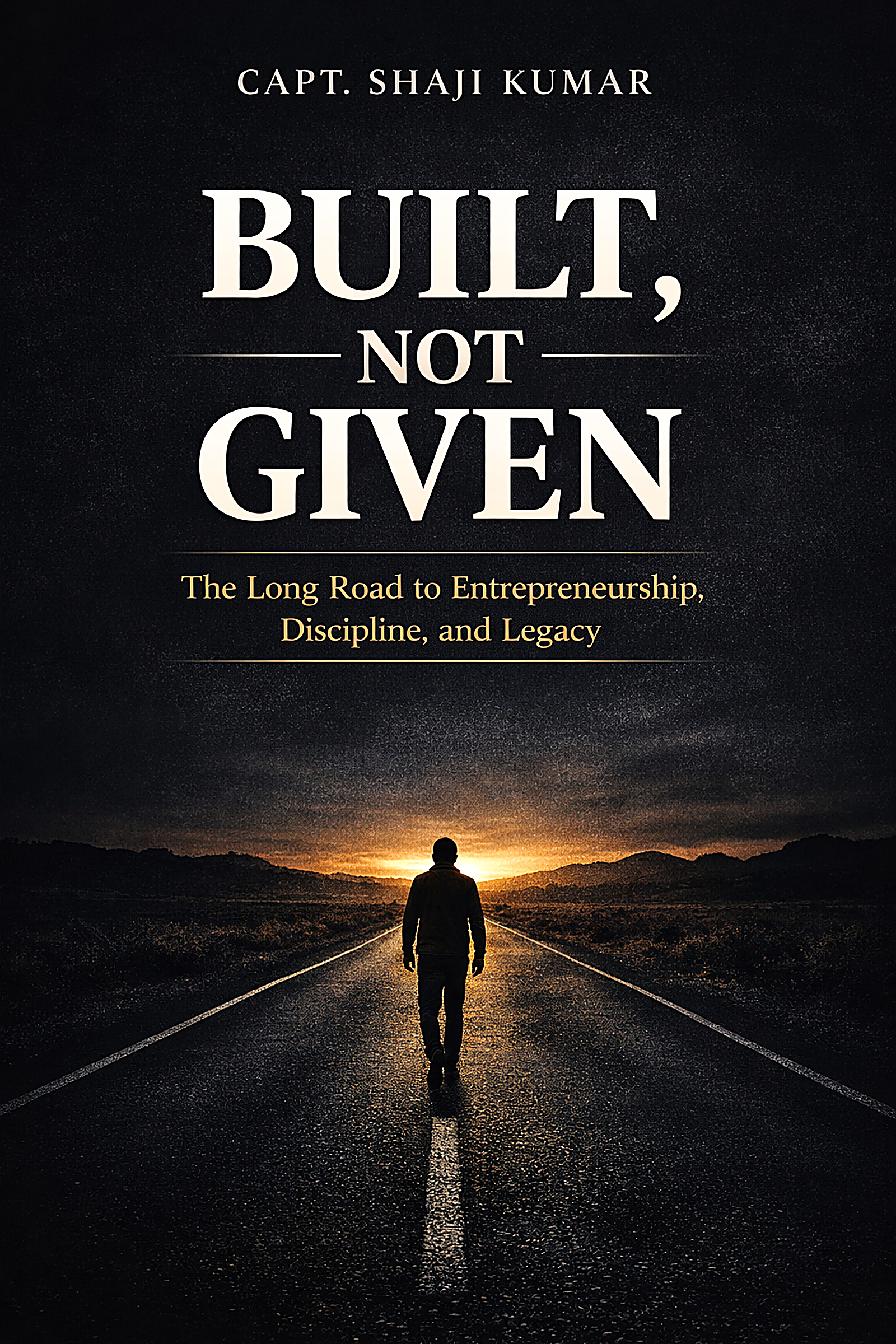
  • Built, Not Given: The Story Behind the Book.

    For the founder who was told to wait their turn.


    There’s a version of the founder story everyone tells: the idea, the risk, the breakthrough, the exit. It’s a good story. It’s also not the one that matters most.

    The one that matters most is the middle — the long stretch with no name, where you’re too far in to quit and too far out to see the end. I spent years there. Multiple times. There were mornings with no investor to call, no partner to lean on, and no certainty that things would hold. They held. I don’t always fully remember how.

    Those mornings weren’t unique to me. They’re not unique to founders, either — it’s what happens whenever someone chooses to build something with no guarantee it holds. Leaving the structure of the Army for the total uncertainty of business taught me a specific kind of discipline for exactly that stretch — not motivation, which runs out, but discipline, which doesn’t ask to feel like anything.

    I’ve spent nearly three decades building service enterprises from nothing — Chaque Jour Group now operates across 16 cities, bootstrapped from the start. Somewhere in those years, I kept meeting the same person over and over in different bodies: the first-generation founder with no safety net, the veteran wondering if the discipline that got them through service could get them through business, the MSME owner somewhere between “we started” and “we made it.” They kept asking me some version of the same question — how did you actually get through the years when nothing was working?

    I finally wrote the honest answer down. It’s called Built, Not Given.

    What the book actually is

    This isn’t a framework book, and it isn’t a highlight reel. It’s an honest, lived-in account of building something from scratch — the long middle where ventures are won by persistence, not brilliance, and by belief, not opportunity. If you’ve ever made a decision alone at an hour when no one else was awake to make it with you, this book was written for you.

    It’s for:

    • First-generation founders still in the grind, not the highlight reel
    • Veterans weighing whether the discipline of service translates to the uncertainty of business
    • MSME owners somewhere between “started” and “made it”

    Where to get it

    Built, Not Given is published wide — deliberately, so you can read it however suits you best, on whatever platform you already trust:

    Pick whichever is easiest for you. They all lead to the same book.

    Beyond the book

    Built, Not Given sits alongside my other books and the work I do now coaching founders through their own version of this middle, under the Clarity Under Pressure™ banner. If you want to see the rest — other titles, writing, or how to work with me directly — everything’s at www.shajikumar.com.

    If you read it, I’d genuinely like to know what landed. Reply, comment, or leave a review wherever you bought it — for a book this new, that’s the thing that helps it find the next reader who needs it.


    Success is not given. It is built.

    #BuiltNotGiven #FirstGenerationFounder #VeteranEntrepreneur #MSME #StartupJourney #Leadership #Entrepreneurship #IndianStartups #ClarityUnderPressure

  • Smoking Doesn’t Just Shorten Your Life. It Steals the Quality of the Years You Have Left.

    Why quitting today may be the most profitable decision you ever make.

    Every smoker knows smoking is harmful.

    Every cigarette packet says it.Doctors say it.Family members say it.Governments spend millions on campaigns saying it.

    Yet millions continue to smoke.

    Why?

    Because smoking is rarely about nicotine alone.

    It becomes a habit.A routine.A stress reliever.A companion during loneliness.A reward after work.A way of fitting in socially.

    Over time, the cigarette stops becoming a choice and starts becoming a command.

    The frightening part is that the damage begins long before you feel it.

    The Silent Damage Begins Early

    Many smokers proudly say,

    “I’ve been smoking for 20 years and I’m perfectly fine.”

    The truth is they are not.

    Human bodies are remarkably good at hiding damage until it reaches a tipping point.

    While you continue smoking, your body is quietly fighting a battle every single day.

    Inside your lungs, tiny air sacs called alveoli begin to lose their elasticity.

    Blood vessels gradually narrow.

    The heart works harder.

    Oxygen levels reduce.

    Inflammation spreads throughout the body.

    The immune system weakens.

    Cells begin accumulating genetic damage.

    Most people never notice these changes because they happen slowly.

    Then one day, climbing a flight of stairs becomes exhausting.

    A persistent cough refuses to go away.

    Breathing becomes laboured.

    The warning signs appear only after years of silent destruction.

    What Smoking Actually Does to Your Body.

    Smoking affects nearly every organ.

    Your Lungs

    Smoking destroys lung tissue permanently.

    It causes chronic bronchitis, emphysema and Chronic Obstructive Pulmonary Disease (COPD), conditions that make even simple activities like walking or talking exhausting.

    Lung cancer remains one of the leading causes of cancer deaths worldwide.

    Your Heart

    Every cigarette temporarily increases your heart rate and blood pressure.

    Over years, this dramatically increases the risk of:

    • Heart attacks
    • Stroke
    • High blood pressure
    • Peripheral artery disease

    Many smokers don’t die from lung disease.

    They die because their cardiovascular system simply gives up.

    Your Brain

    Nicotine creates one of the strongest addictions known.

    It rewires reward pathways.

    Without nicotine, the brain begins demanding another cigarette.

    This creates the illusion that smoking reduces stress.

    In reality, smoking temporarily relieves nicotine withdrawal.

    The stress returns quickly, creating an endless cycle.

    Your Mouth

    Smoking causes:

    • Bad breath
    • Yellow teeth
    • Gum disease
    • Tooth loss
    • Oral cancers

    Your smile often reveals your smoking habit before your lungs do.

    Your Skin

    Smoking accelerates ageing.

    Wrinkles appear earlier.

    Skin loses elasticity.

    Complexion becomes dull.

    Blood circulation decreases.

    Many people spend thousands on skincare while continuing to smoke.

    The two simply cannot coexist.

    The Financial Cost Nobody Calculates

    Most smokers underestimate how much they spend.

    Suppose someone smokes one pack a day costing ₹350.

    That becomes approximately:

    • ₹10,500 every month
    • ₹1,26,000 every year
    • ₹12.6 lakh in ten years

    Now imagine investing that amount instead.

    With disciplined investing and compounding, the figures become astonishing over time.

    Smoking doesn’t just burn tobacco.

    It burns wealth.

    It burns opportunities.

    It burns financial freedom.

    The Good News: Your Body Starts Healing Immediately

    This is perhaps the most encouraging part.

    Your body wants to recover.

    The moment you stop smoking, healing begins.

    Within 20 minutes, heart rate and blood pressure begin moving towards normal.

    Within 12 hours, carbon monoxide levels fall significantly and oxygen levels improve.

    Within weeks, circulation improves.

    Breathing becomes easier.

    Walking becomes less tiring.

    Within months, lung function improves noticeably.

    Within years, the risks of heart disease, stroke and several cancers decline substantially compared to continuing smokers.

    The body possesses an extraordinary ability to repair itself when given the opportunity.

    Why Most People Fail to Quit

    Most smokers don’t fail because they lack willpower.

    They fail because they fight the wrong battle.

    They focus only on resisting cigarettes.

    They don’t change:

    • their routines
    • emotional triggers
    • habits
    • environment
    • mindset

    The cigarette itself isn’t always the real addiction.

    The behaviour surrounding it is.

    Without changing that behaviour, quitting becomes unnecessarily difficult.

    Quitting Is Not About Suffering

    Many people imagine quitting means endless cravings and misery.

    It doesn’t have to be that way.

    Successful quitting follows a structured process.

    You prepare.

    You understand your triggers.

    You replace habits.

    You create accountability.

    You develop new routines.

    You learn how to manage cravings without feeling deprived.

    Once the mind accepts the decision, the body gradually follows.

    Your Future Self Is Waiting

    Imagine waking up without coughing.

    Walking without breathlessness.

    Travelling without looking for smoking zones.

    Playing with your children or grandchildren without fatigue.

    Sleeping better.

    Eating better.

    Smelling better.

    Feeling proud instead of guilty.

    Every cigarette you don’t smoke is a vote for that future.

    The Best Time to Quit Was Yesterday. The Second Best Time Is Today.

    There is never a perfect day.

    Never a perfect Monday.

    Never a perfect New Year.

    Never a perfect birthday.

    The decision begins with one cigarette not smoked.

    Then another.

    Then another.

    Eventually, the identity changes.

    You no longer become someone trying to quit.

    You become someone who simply does not smoke.

    That transformation changes everything.

    If You’re Serious About Quitting, I’ve Written the Roadmap

    Quitting smoking isn’t merely about giving up cigarettes.

    It’s about reclaiming your health, your confidence, your time and your financial future.

    That’s exactly why I wrote my book:

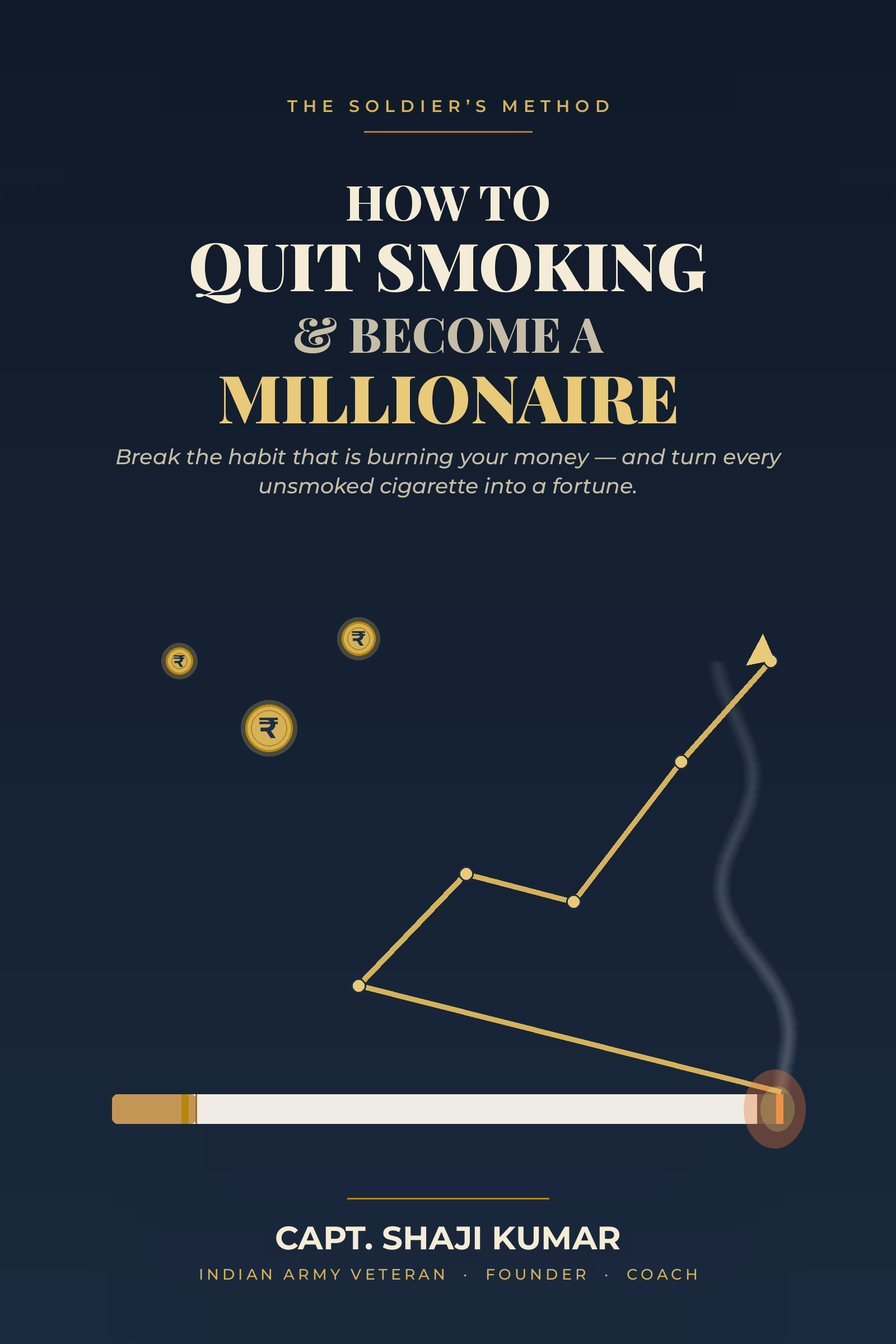
    📘 How to Quit Smoking and Become a Millionaire.https://www.amazon.com/dp/B0H4D5HN4W

    This isn’t another book filled with lectures or scare tactics.

    It is a practical, step-by-step guide that helps you:

    • Understand why you smoke.
    • Break the psychological addiction.
    • Handle cravings effectively.
    • Build habits that replace smoking.
    • Save the money you would have spent on cigarettes.
    • Turn those savings into long-term wealth through disciplined financial habits.

    Because quitting smoking is not just about living longer.

    It’s about living better.

    And becoming financially stronger along the way.

    You can get your copy on Amazon here or read for Free:

    📘 How to Quit Smoking and Become a Millionaire

    If this article made you pause and think, please share it. Someone in your network may be waiting for the one message that finally helps them make the decision to quit.

    Sometimes, changing one life begins with sharing one article.

  • Your Future Will Not Be Handed to You. It Has to Be Built.

    There comes a point in every person’s life when excuses begin to lose their meaning.

    You can continue blaming the economy, your employer, your background, your age, your qualifications, or your circumstances. Many of those reasons may even be valid. Life has never promised a level playing field.

    But at some point, one question refuses to go away.

    What are you going to do about it?

    That single question separates people who remain spectators from those who become creators of their own future. For decades we have conditioned ourselves to believe that success follows a predictable path. Study hard. Get a good job. Work for someone else. Wait for promotions. Retire comfortably.

    The world has changed.

    Jobs are changing. Industries are changing. Technology is changing. The skills that made people successful yesterday may not guarantee relevance tomorrow.

    If there was ever a time to take charge of your own future, it is now.

    Many people think entrepreneurship is only for a privileged few. They imagine billion dollar startups, venture capital funding, sophisticated offices, and teams of hundreds. Nothing could be farther from the truth.

    Entrepreneurship begins with a problem. A problem you understand. A problem that frustrates you. A problem you genuinely want to solve.

    It may be teaching children in your neighbourhood.

    Helping senior citizens use technology.

    Preparing students for interviews.

    Creating healthy food for working professionals.

    Repairing appliances.

    Building websites.

    Writing content.

    Growing organic vegetables.

    Offering bookkeeping services.

    Designing homes.

    Training people in communication.

    Helping small businesses market themselves.

    Every successful enterprise that exists today started because someone decided that a problem deserved a solution. Not every enterprise has to become a unicorn. Some simply have to become meaningful. That is enough.

    I have spent decades working with people from different walks of life. I have seen extraordinary talent hidden behind ordinary appearances. The biggest obstacle has rarely been capability. It has almost always been belief. People underestimate themselves.

    They wait until they feel ready.

    They wait for the perfect opportunity.

    They wait for more money.

    They wait for someone to discover them.

    They wait for confidence.

    Sometimes they spend years waiting.

    Confidence rarely arrives before action.

    It usually arrives because of action.

    You begin.

    You stumble.

    You learn.

    You improve.

    You grow.

    Every entrepreneur has experienced uncertainty.

    Every successful professional has made mistakes.

    Every meaningful journey begins before certainty arrives.

    Do not confuse small beginnings with small futures.

    The size of your first step has nothing to do with the distance you can eventually travel.

    What matters is whether you are moving.

    Building your own enterprise is not merely about earning an income.

    It changes something much deeper.

    It changes the way you think.

    Instead of asking, “Who will give me an opportunity?”

    You begin asking, “How can I create one?”

    Instead of asking, “Who will solve this problem?”

    You begin asking, “Can I solve it?”

    That shift changes everything.

    The future belongs to people who create value.

    It does not matter whether you are twenty-five or sixty-five.

    It does not matter whether you begin from a garage, a spare bedroom, your dining table, or a mobile phone.

    Every meaningful enterprise begins with one person deciding to act.

    Not tomorrow. Today.

    At the Global Learning Centre, this is the mindset we want to nurture. We are not trying to produce people who simply look for jobs. We want to develop people who can create opportunities for themselves and for others.

    People who think independently.

    People who solve problems.

    People who build with integrity.

    People who contribute to society while creating livelihoods.

    The world does not need more people waiting for permission.

    It needs more people willing to take responsibility.

    Your future is not hidden somewhere waiting to be discovered.

    It is built.

    One decision.

    One skill.

    One problem solved.

    One customer served.

    One day at a time.

    Take charge of your life.

    No one can build your future better than you.

  • Stress Isn’t the Problem.

    Stress Isn’t the Problem.

    Stop Managing Your Time. Start Managing the Pressure.

    A soldier-founder’s take on why your calendar isn’t the problem — and what actually is.

    There is a game at every fair. A row of holes, a soft mallet, and a plastic mole that pops its head up. You hit it. It drops. Another appears somewhere else. You hit that one. A third pops up. The faster you swing, the faster they come. You never win. You only get tired.

    That game is the most honest picture I know of how most of us manage our time.

    We feel stressed, so we go looking for a better system. A new planner. A new app. Time-blocking. The two-minute rule. Eat the frog. Inbox zero. Each one works — for about a week. The relief drains away, the pressure resurfaces somewhere else, and off we go to buy the next mallet.

    I played that game for the better part of twenty years. I want to tell you what I finally understood, because it changed how I work — and, more importantly, how I feel while I work.

    I had it backwards

    I am a former soldier and a first-generation businessman. I built a services business across India from almost nothing — no outside investor, close to four decades around people and pressure. Solving problems by force of will is, frankly, what I am good at. Give me an objective and I will take it head-on, with discipline, one task at a time.

    That approach worked on everything except one thing: the constant, low-grade hum of feeling stressed and behind.

    I treated it the way I treated every other problem — as a time problem. If I felt stressed, I must be disorganised. So I organised harder. Better lists. Tighter schedules. Earlier mornings. And every system handed me the same result: a short burst of control, then the pressure quietly seeping back in.

    It took me an embarrassingly long time to see the obvious. I was hitting moles. I was never touching whatever sent them up.

    Your to-do list is a symptom, not a cause

    Here is the distinction that finally set me free.

    Your overflowing to-do list is not the cause of your stress. It is a symptom of it.

    Sit with that for a moment, because everything turns on it.

    When you are calm, a long list is just a long list. You pick up the item on top and you start. When you are already stressed, that same list becomes a threat. Every item shouts at once. You freeze, you scatter, you refresh your inbox for the ninth time, and three hours vanish with nothing real to show for them.

    Same list. Same hours. Completely different experience.

    The difference was never the schedule. It was the state of the person reading it.

    This is why the productivity hack always disappoints in the end. It is excellent at trimming the branches — and the branches do need trimming. But it never goes near the root. So the tree keeps producing. You stay busy, you stay behind, and you stay tired.

    The hidden tax of a hot nervous system

    We talk about stress as if it were only a feeling. It is also a thief of time, and a quiet, expensive one.

    A stressed mind makes worse decisions, so you redo work. It cannot hold attention, so simple tasks take twice as long. It catastrophises, so you spend energy on problems that never arrive. It reaches for distraction, so an hour leaks away in scrolling you barely remember. None of this shows up on your calendar, but all of it is billed to your day.

    So when you feel you have no time, look closer. Often you have plenty of time — you are simply paying a heavy tax on every hour because the operator is running hot. Lower the temperature, and hours you thought were lost quietly come back.

    I have watched this in my own week, plainly. On the days I am calm, I do a full day’s work by mid-afternoon and wonder where the pressure went. On the days I am wound tight, I am at my desk from dawn to dark and finish convinced I never caught up. The workload on both days is roughly the same. The only variable that moved was me.

    Which means the real work happens on two levels at once. The branch and the root. Let me give you one practical thing for each. Today. No app required.

    The trap of the perfect system

    There is a particular cruelty in the productivity industry, and it took me years to name it. The search for the perfect system becomes a stressor of its own.

    Think about what actually happens when you adopt a new method. There is the reading. The setting up. The migrating of old lists into the new format. The learning curve. The quiet guilt the first time you fall off it. And then, when it inevitably fails to deliver the calm it promised, there is the disappointment — followed by the search for the next one. The tool that was meant to reduce your load has become another item on it.

    I am not telling you to throw your systems away. A sensible list and a clear calendar are good servants. I am telling you to stop expecting them to do a job they were never built for. A calendar can order your hours. It cannot calm your mind. Asking it to is like asking a sharper axe to make the tree stop growing. The axe is fine. You are aiming it at the wrong place.

    Once you stop demanding peace from your planner, something relaxes. The planner goes back to being a simple, useful thing. And your attention is freed for the two moves that genuinely change how a day feels.

    The branch: do one thing at a time

    We have been sold a lie about multitasking. We were told it makes us efficient. It does the opposite.

    Your attention is not a floodlight that fills the whole room. It is a torch. It points at one thing. When you “multitask,” you are not doing two things at once — you are whipping the torch back and forth, and every swing leaves a smear of the last task on the next. Researchers call it attention residue. You know it as that foggy, frazzled feeling of being busy all day and accomplishing nothing.

    Here is the fix, and it is almost insultingly simple.

    One thing. Phone in another room.

    Not on silent. Not face-down. In another room. The mere sight of it on your desk taxes you, because some part of your mind is standing guard over it. Move it, and that guard goes off duty.

    Then take the single most important task on your list and give it one clean, undivided hour. When your mind reaches for something else — and it will, within ninety seconds — notice the pull and gently bring the torch back. Drift, notice, return. That is the whole discipline.

    You will get more done in that one clean hour than in a whole frantic morning of switching. And — this is the part that matters for stress — you will finish it calmer than you started. Focus is not only productive. It is settling. A mind doing one thing is a mind at rest.

    That is branch work. It is real and it works. But it is first-aid, not the cure.

    The root: the most productive thing you will do all day is nothing

    Now the part almost nobody wants to hear.

    If your nervous system is running hot, no system on earth will hold. You will time-block a flawless day and then spend it anxious. You will clear your inbox and feel no lighter. Because the pressure was never in the inbox. It was in you — a stored backlog of stress that colours everything you look at.

    You cannot out-organise that backlog. You can only drain it. And it drains through rest — a specific, deliberate kind of rest, not collapsing in front of a screen.

    For me, that rest is meditation. Twenty minutes, twice a day. Sit comfortably, eyes closed, let your attention rest lightly on the breath or on a soft repeated word. When you drift, return. Drift, notice, return. That is all of it. No incense, no perfect posture, no belief required.

    “But I don’t have forty minutes”

    I know exactly how that sounds to a results-driven person. Forty minutes a day doing nothing, while the list is screaming? It feels like the least productive thing imaginable.

    It is the most productive thing I do, and I do not say that loosely.

    Those forty minutes change the quality of the other fifteen hours. The same workload stops feeling like a threat. I make sharper decisions. I stop reacting and start choosing. I waste far less of the day on the scattered, frantic busywork that stress manufactures. The reservoir lowers, and the moles stop popping up so fast.

    You will not feel any of this from reading about it. That is the honest truth of the thing. The reservoir does not drain because you understood the idea. It drains because you sit.

    A day rebuilt around the root

    Let me show you the shape of it. Not theory — something you could copy tomorrow.

    Begin with the rest, before the noise. Twenty minutes before the inbox owns you. You are not stealing time from your work; you are setting the temperature of everything that follows.

    Then, one clean hour on the thing that matters most. Phone in another room. Torch on one task.

    Do the small, sane things that keep the branches in check. When the work feels like too much, stop and empty your head onto a single page — every loose task, every worry, out of the mind and onto paper. Then pick the one item that, once done, makes the rest lighter. Do that one. The list shrinks faster than you expect, and the panic shrinks with it.

    In the late afternoon — when most people hit the slump and reach for caffeine and another round of frantic switching — sit again. The second rest. It carries you into the evening as a person rather than a wrung-out version of one.

    I watched a young founder I mentor try exactly this. He came to me convinced he needed a better app. His real problem was that he started every morning by opening his phone in bed, and by the time his feet hit the floor he was already behind, already reacting, already at a sprint. We changed nothing about his tools. We changed the first and the last forty minutes of his day. Within a fortnight he told me the work hadn’t got any smaller — but it had stopped feeling like it was chasing him.

    Notice what that is. It is not a tighter schedule. It is a calmer operator running an ordinary one.

    The belief to carry

    I will leave you with the line I now keep close, because it reframes the whole business.

    Stress is not happening to you. It is happening in you — and what happens in you, you can learn to tend.

    Your calendar is not your enemy. Your task list is not your enemy. The frantic swinging is. The belief that if you could just find the perfect system the pressure would finally lift — that is the mole you have to stop chasing.

    So trim the branches: one thing at a time, phone in another room. But do the quieter, harder, more valuable work as well. Tend the root. Sit. Drain the reservoir.

    Manage the pressure, and you will find the time was never really the problem.

    — Capt. Shaji Kumar

    If this landed, it’s the spine of a handbook I’ve been working on — Stress Isn’t the Problem: A Do-It-Yourself Handbook to Stop Chasing Stress and Solve It at the Source. It’s the full method: the seven branches and the one root. Out on Amazon, first week of July. I’ll share the link here the day it’s live. 🌱

  • The Gratitude Revolution: How one simple shift can transform your entire reality.

    The Hidden Crisis of Modern Dissatisfaction.

    We live in an age of unprecedented abundance, yet dissatisfaction has become our default state. Walk into any workplace, scroll through social media, or listen to casual conversations—the pattern is unmistakable: we’ve become experts at focusing on what’s wrong rather than what’s working.

    This isn’t just pessimism; it’s a dangerous form of self-sabotage that’s literally rewiring our brains for unhappiness.

    The Workplace Gratitude Gap: A 27-Year Observation

    In my two decades as a business owner, I’ve witnessed a troubling phenomenon repeat itself countless times. Employees arrive each morning carrying invisible burdens of resentment:

    -“I hate this job”

    -“This place is the worst”

    -“I can’t wait to get out of here”

    -“My boss doesn’t appreciate me”

    Yet here’s the profound irony: these same individuals depend on this “hated” job to feed their families, pay their mortgages, and fund their dreams. They’re literally biting the hand that feeds them—and wondering why they feel spiritually malnourished.

    The Subconscious Sabotage Cycle

    When we consistently broadcast negative thoughts about our source of income, we create what I call the Subconscious Sabotage Cycle:

    1. Negative manifestation → We focus on what we dislike
    2. Energy contamination → This negativity permeates our entire work experience.
    3. Reality reinforcement → Our subconscious mind finds evidence to support our negative beliefs.
    4. Expanded dissatisfaction → The negativity spreads to other life areas.

    Beyond the Workplace: The Geography of Gratitude

    This gratitude deficit doesn’t stop at office doors. It extends like ripples across every aspect of our lives:

    Our Living Environment

    – Complaining about our neighbourhood instead of appreciating shelter and community.

    – Focusing on traffic and noise rather than accessibility and connection

    Our City and Country

    – Highlighting political failures while ignoring infrastructure, opportunities, and freedom.

    – Taking for granted the safety, systems, and social structures that support our daily lives.

    Each complaint is a small act of self-harm, pushing away the very abundance that surrounds us.

    The Neuroscience of Gratitude: Why This Actually Works

    Gratitude isn’t just feel-good philosophy—it’s backed by compelling science:

    • Neuroplasticity: Regular gratitude practice literally rewires your brain for positivity.
    • Stress reduction: Grateful people show lower cortisol levels and better immune function.
    • Enhanced relationships: Gratitude improves empathy and strengthens social bonds.
    • Improved performance: Grateful employees are more productive and creative.

    When you shift from criticism to appreciation, you’re not just changing your thoughts—you’re changing your biology.

    The Practical Gratitude Revolution: 5 Daily Practices.

    1. The Morning Appreciation Ritual**

    Before checking your phone or emails, identify three specific things you’re grateful for about your upcoming day.

    2. The Work Gratitude Pause

    Instead of joining complaint sessions, ask: “What’s one thing that went well today?” Watch how this simple question transforms conversations.

    3. The Livelihood Blessing

    Each payday, take 60 seconds to acknowledge how your income—regardless of the source—enables your life goals.

    4. The Environment Appreciation

    Once weekly, notice something beautiful or functional in your neighbourhood, city, or country that you previously took for granted.

    5. The Evening Reflection

    Before sleep, mentally review your day for moments of support, kindness, or opportunity you received.

    The Transformation Promise

    Here’s what happens when you consistently practice gratitude:

    • Your work becomes more meaningful because you recognise its role in your larger life purpose.
    • Your relationships improve because you attract and appreciate positive people.
    • Opportunities expand because you notice possibilities instead of problems.
    • Your health improves through reduced stress and increased life satisfaction.
    • Your future brightens because you’re manifesting appreciation instead of lack.

    The Choice That Changes Everything.

    Every morning, you face a fundamental choice: Will you focus on what’s missing or appreciate what’s present? Will you manifest scarcity or abundance?

    Your thoughts are not neutral—they’re creative forces shaping your reality. When you choose gratitude, you’re not just changing your perspective; you’re actively redesigning your destiny.

    The source of your livelihood, the place you call home, the country that provides your opportunities—these aren’t obstacles to your happiness. They’re the foundation upon which your dreams are built.

    Start today. Choose gratitude. Watch your world transform.

  • Happiness

    Happiness is a state of mind, and we alone are responsible for how we can make ourselves happy. We seek answers outside while all the time the answer is glaring at us from within. Ours is essentially a tragic age, so we refuse to take it tragically. The cataclysm has happened, we are among the ruins, we start to build up new little habitats, to have new little hopes. It is rather hard work: there is now no smooth road into the future: but we go round, or scramble over the obstacles. We’ve got to live, no matter how many skies have fallen.”

    Unfortunately, for a majority this truth is revealed quite late, by which time we have already spent a major part of our lives fretting and worrying, about what in the hindsight can be termed as trivial. In fact the secret to success is happiness. Being happy helps us resolve problems in a much better manner and it does improves our thinking. Our brains also function better when we are happy. Happiness starts inside you. Never put your happiness in someone else’s hands. When you take stock of the situation at a later stage in life, one does wonder what was the need for all that fretting and discomfort that we spent the major part of our lives. That is when you start reflecting on What If…