Tag: #Nostaliga

  • Kaleidoscope: The Walkman Effect: When the World Finally Got a Soundtrack.

    Kaleidoscope: The Walkman Effect: When the World Finally Got a Soundtrack.

    For the fourth installment, we are moving from the “brick” in our pocket to the soundtrack in our ears.

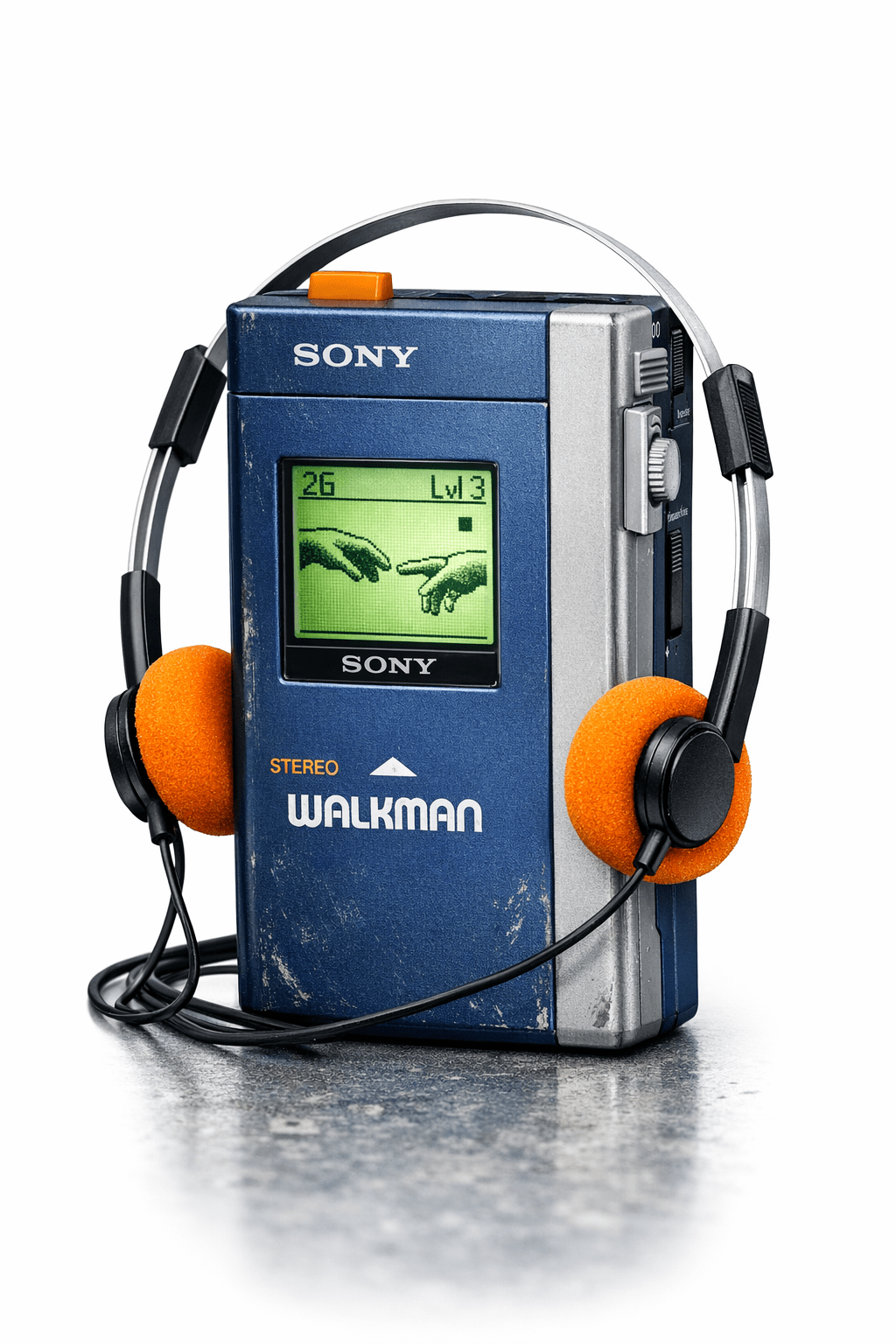
    The Sony Walkman wasn’t just a gadget; it was the first time in human history that we could curate our own reality. It took music out of the living room and onto the streets. Quite a few iterations did come out, but it was always a “catch-me-if-you-can” game with Sony.

    Before 1979, music was a destination. You went to a concert, you sat by a radio, or you stood in your living room next to a massive mahogany record player. You were tethered to the spot.

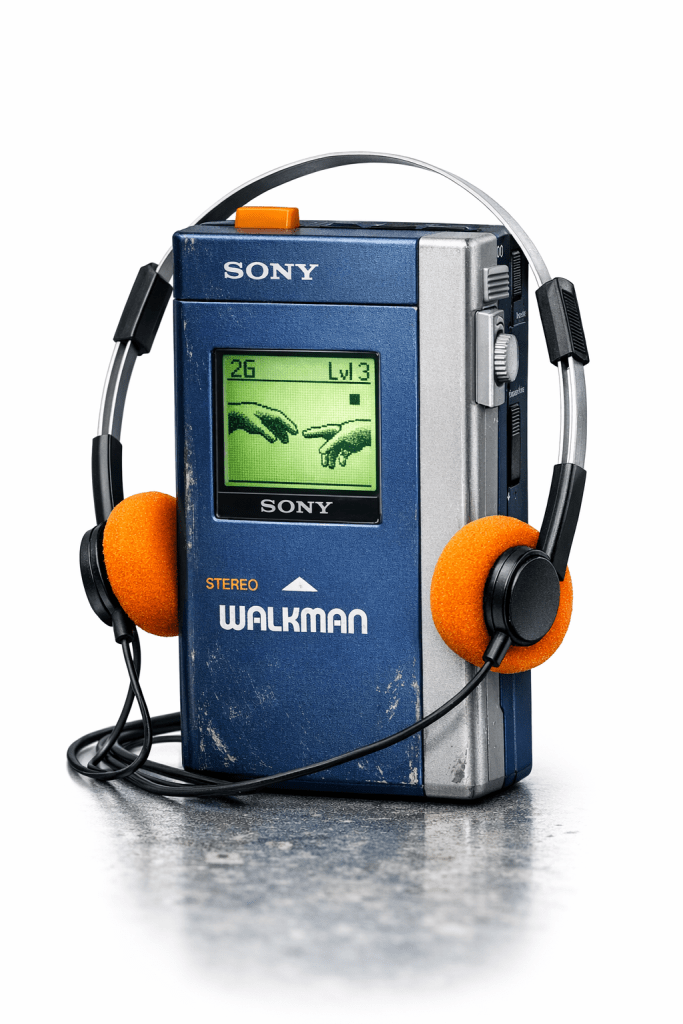
    Then came a blue-and-silver rectangle that changed the way we walked, thought, and existed in public. This week in our nostalgia series, we’re honoring the device that gave us our first taste of true mobile freedom: The Sony Walkman.

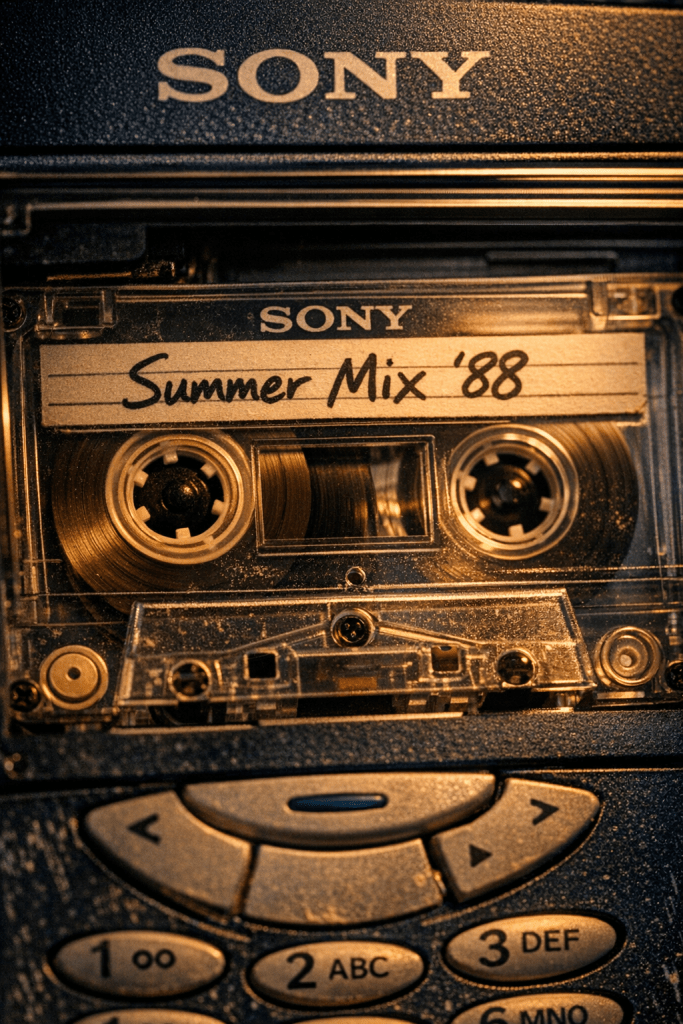
    The nostalgia of getting the assorted songs of our choice, recorded (not downloaded in a Playlist) on a 90 Minute Cassette either at home or at one of the professional “shops” dealing in this “business”.

    The gadget that Became a Legend.

    The origins of the Walkman are almost accidental. Sony’s co-founder, Masaru Ibuka, just wanted to listen to opera on long flights without lugging a giant recorder around. The engineers stripped the recording head out of a journalist’s tape recorder, added a stereo amplifier, and the TPS-L2 was born.

    It was tiny (for the time), it ran on two AA batteries, and it had those glorious, chunky silver buttons that made a deep, mechanical chunk when you hit play. It didn’t just play music; it launched a lifestyle.
    Sharing the “Guys and Dolls” Experience

    In its original version, the Walkman had something the modern iPhone would never dream of: Two headphone jacks. They were labeled “Guys” and “Dolls.” There was even a “Hot Line” button that would mute the music and turn on a tiny microphone so you could talk to your friend without taking your headphones off. Sony thought we’d want to listen together.

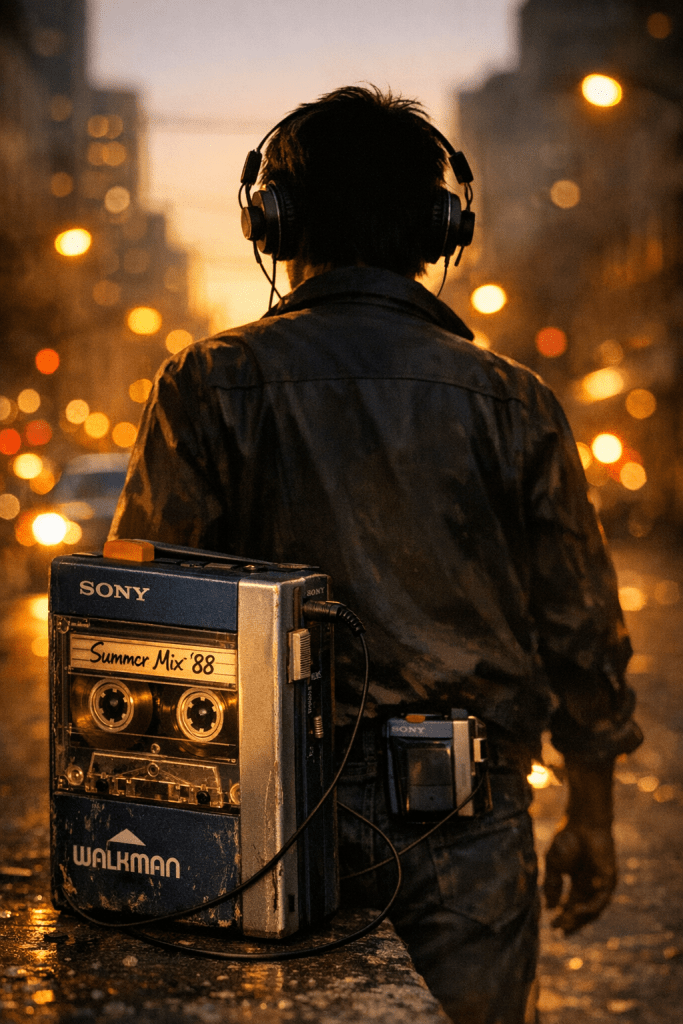
    But as it turned out, the world wanted something else. We wanted the “Walkman Effect”—the ability to put on a pair of foam-covered headphones and turn a boring commute into a cinematic experience. For the first time, you could be in a crowd but in your own world.

    Lost in Translation: The Tangible Soul of the Cassette

    To a generation that sees music as a digital “cloud,” the Walkman feels like heavy machinery. But there was a soul to the cassette.

    You didn’t just “skip” a song; you had to commit to the fast-forward. You knew the exact weight of a 90-minute TDK or SONY tape in your hand. You knew the heartbreak of the tape “spilling” and the frantic surgery required with a plastic pencil to wind it back in.
    We’ve traded that tactile connection for the infinite scroll. We’ve traded the “Hot Line” button for “Noise Cancellation.” But every time you put on your AirPods to ignore the world, you’re walking in the footsteps of the 1980s teenagers who first realized that life is just better when it has a soundtrack.

    The Walkman taught us that our inner world was just as important as the one outside.
  • Kaleidoscope: 1,000 Songs, Zero Distractions: Why the iPod Click Wheel Was the Last Great Interface.

    Kaleidoscope: 1,000 Songs, Zero Distractions: Why the iPod Click Wheel Was the Last Great Interface.

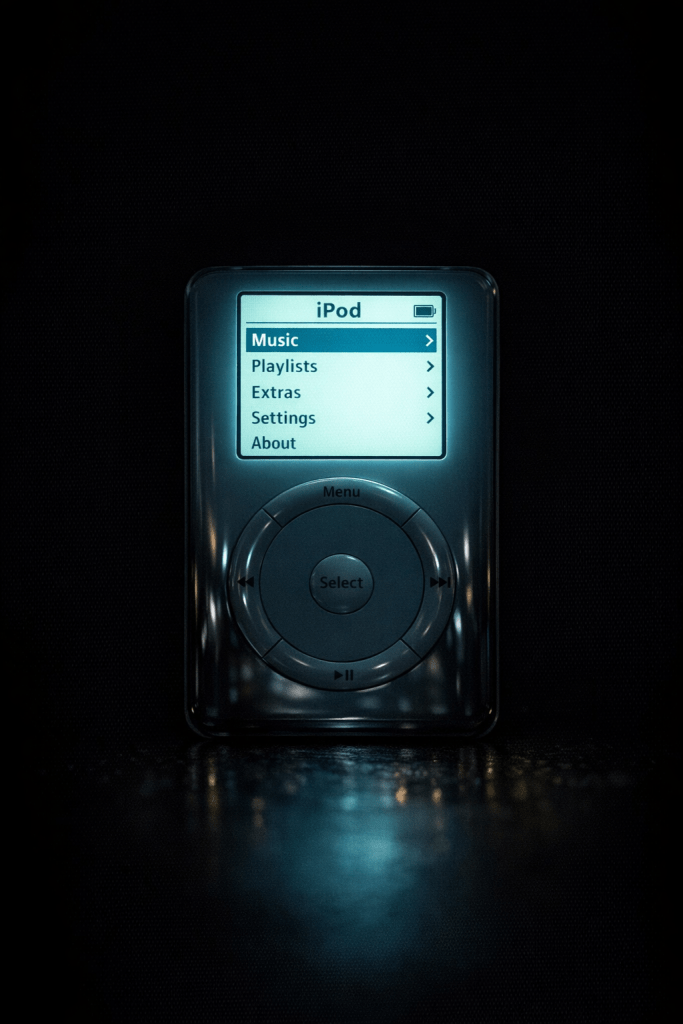
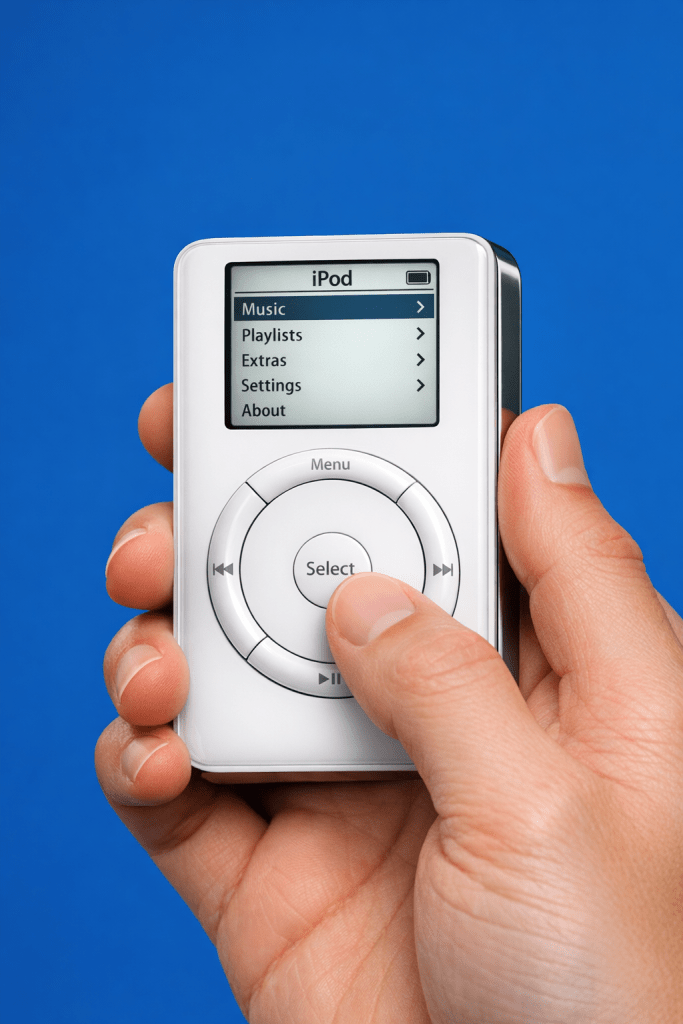
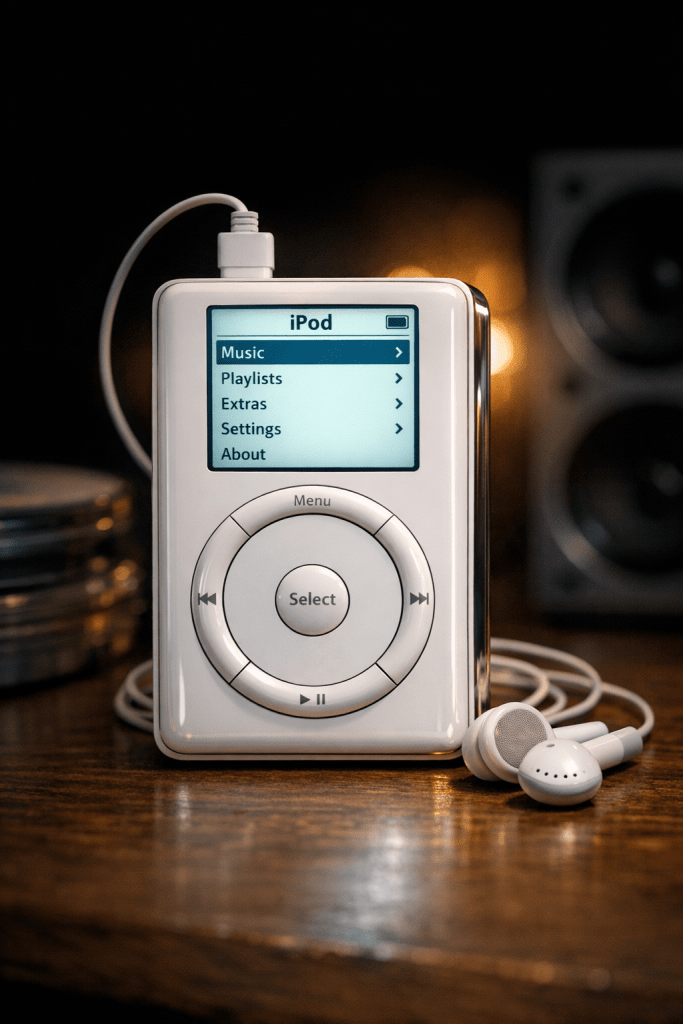
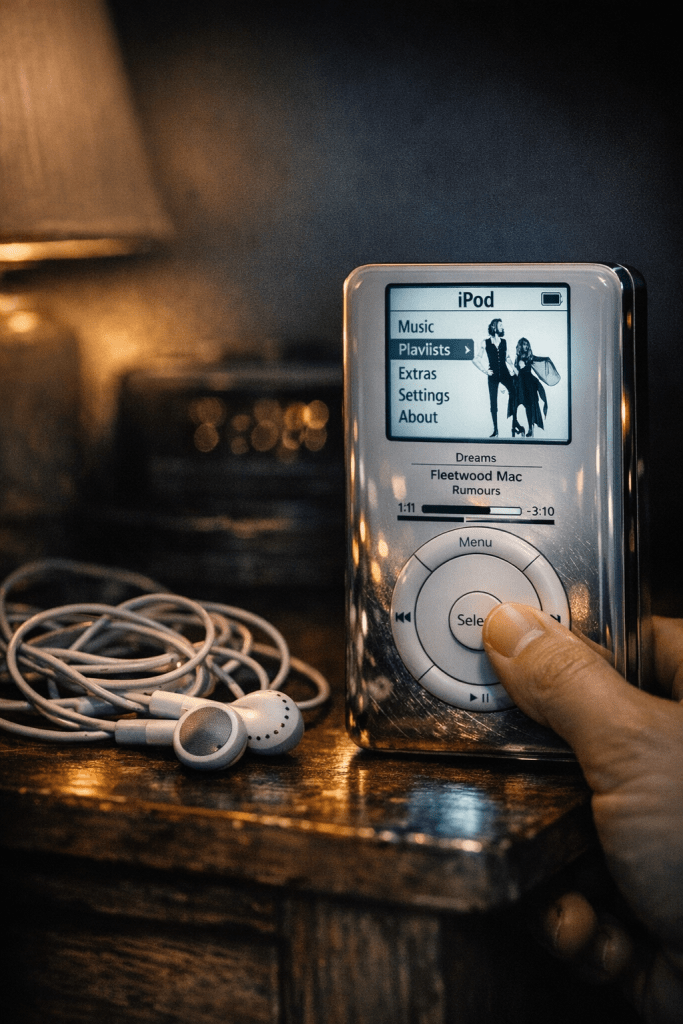
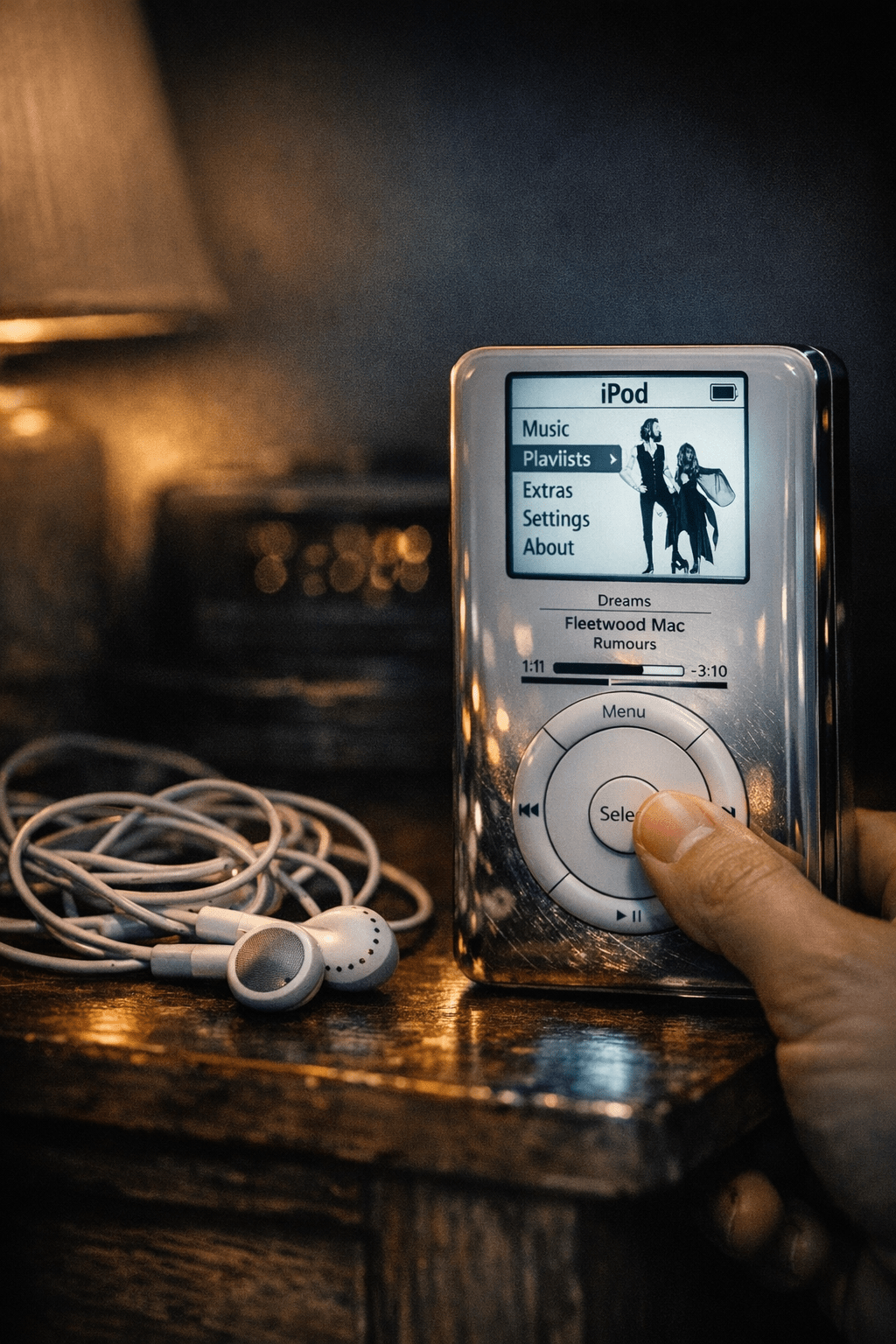
    The iPod Classic

    Since the BlackBerry was the tool of the “office,” let’s pivot to the device that owned our “leisure.” It was a revolution when Steve Jobs Introduced this sleek 1000 songs in our pocket device during one of his annual fanfares.

    For the second instalment, we’re diving into the iPod Classic. This was the device that took music out of physical binders and put it into our pockets, changing our relationship with art forever.

    There was a specific ritual to the mid-2000s. You’d sit at a desktop computer, plug in a white proprietary cable, open Apple iTunes and wait for “Syncing…” to flash across a tiny screen.

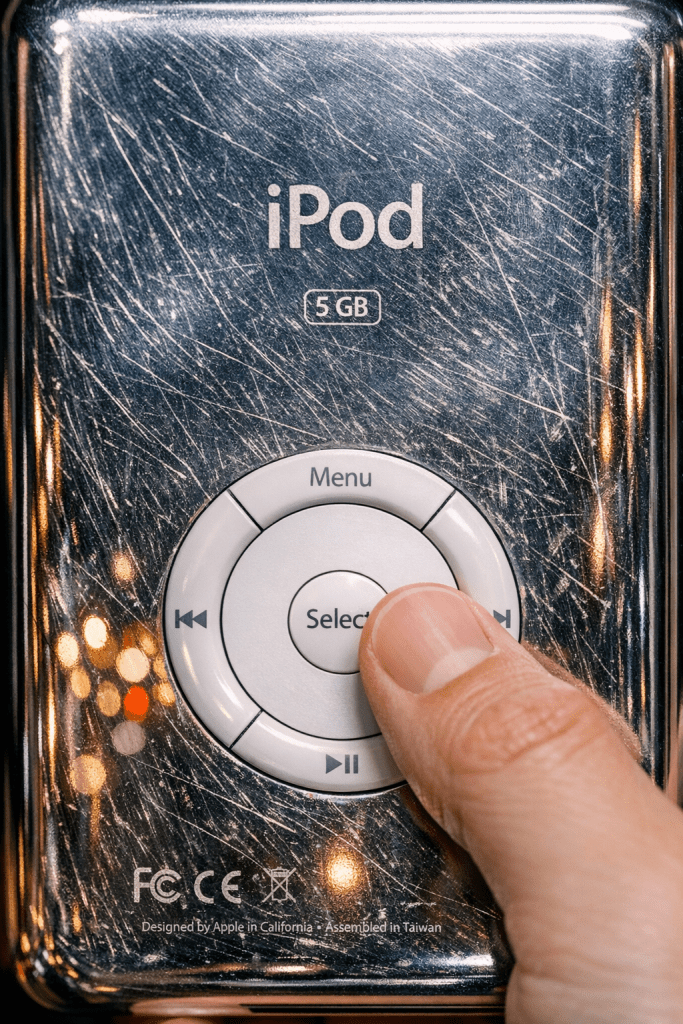
    Today, we “stream” everything. We have 80 million songs available at any second, and yet, we spend half our time skipping tracks or being interrupted by an Instagram notification. The second entry in our nostalgia series takes us back to the heavy, stainless-steel brick that taught us how to actually listen: The iPod Classic.

    The Zen of the Click Wheel

    If the BlackBerry was about the “click” of a key, the iPod was about the “whir” of the thumb.

    The Click Wheel remains, in my humble opinion, the most perfect user interface ever designed. It was intuitive. It was tactile. You could navigate from Abba to ZZ Top with a single, circular motion without ever taking the device out of your pocket.

    There was a weight to it—a literal mechanical spinning of a hard drive that you could feel in your palm. It didn’t want to show you ads. It didn’t want to track your location. It just wanted to play your favorite album, start to finish, until the battery gave up.

    Ownership vs. Access

    To the “Spotify Generation,” the idea of owning music feels almost archaic. But there was a pride in a curated iPod library. Every song on that device was a choice. You ripped CDs, you meticulously tagged the metadata, and you hunted for the perfect high-res album art.

    Your iPod wasn’t just a player; it was a digital diary of your taste. When you handed your white earbuds to a friend to hear a new track, you were sharing a piece of your identity. Now, music is a utility—like water or electricity. Then, it was a possession.

    Lost in Translation: The Death of the “Deep Listen”

    The tragedy of the modern smartphone is that it never lets you be alone with your thoughts.

    The iPod Classic was a fortress of solitude. When you put those earbuds in, the world disappeared. There were no “likes,” no “comments,” and no “breaking news” banners sliding down to ruin the bridge of your favourite song.

    We’ve traded that focus for convenience. We’ve traded the 160GB hard drive for a “cloud” that we don’t own. Looking back at the iPod today, it feels less like an old gadget and more like a reminder of a time when we weren’t “users”—we were just listeners.

    The Click Wheel is silent now, but the way it made us feel about our music? That’s a frequency we’re still trying to tune back into.